


Author of "Rich Dad Poor Dad" Reveals Secrets to Getting Rich! The Poor Sell Off Bitcoin, the Rich Are Buying Frenzily
Author Robert Kiyosaki of “Rich Dad Poor Dad” posted on February 2nd:
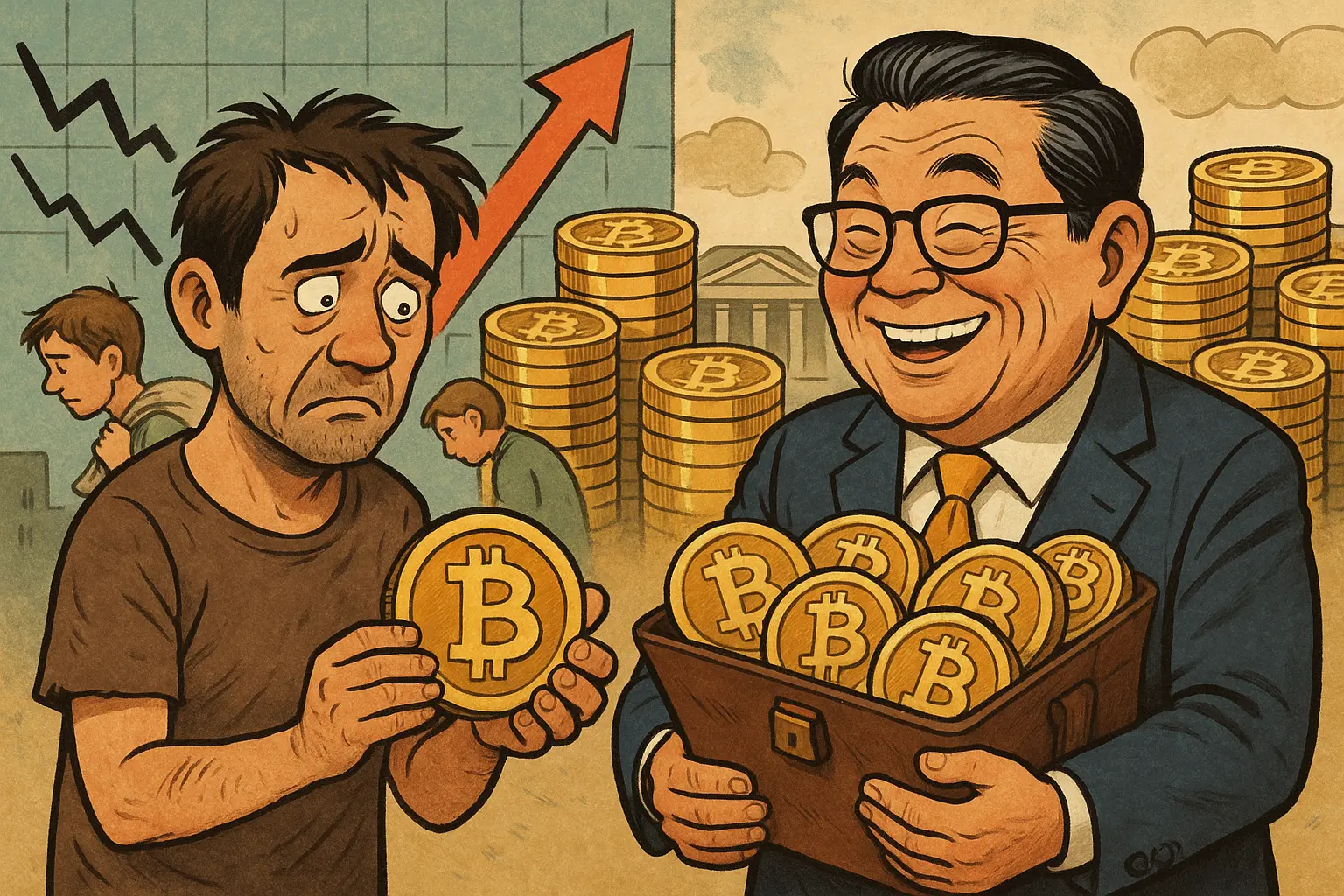
When the market crashes, the poor tend to sell off their assets, while the rich hold cash and buy. He admits that selling $2.25 million worth of Bitcoin to buy real estate was “a big mistake,” emphasizing that one should use debt to acquire income-generating properties, and then use that cash flow to continuously buy gold, silver, and Bitcoin.
The Fundamental Difference Between the Rich and the Poor: Consumption Mindset vs. Investment Mindset
Kiyosaki’s core argument revolves around deep insights from behavioral economics. On social media platform X, he directly contrasts two very different mentalities: “When Walmart has discounts, the poor rush in to buy frantically. However, when the financial asset markets crash (i.e., during a collapse), the poor sell off and flee, while the rich rush in to buy aggressively.” This analogy reveals the underlying logic difference in how wealth is accumulated.
The fundamental difference between discounts on consumer goods and discounts on assets is that the former involves buying depreciating products, while the latter involves acquiring appreciating assets. The poor are highly sensitive to retail discounts but tend to sell during Bitcoin price drops—this contradictory behavior stems from a misunderstanding of what a “discount” truly means. When asset prices fall, their intrinsic value often remains unchanged; in fact, it provides a lower entry point. Yet, fear drives retail investors to exit at the worst possible time—when prices are at their lowest.
Academic research consistently shows that retail investors tend to buy high and sell low during market euphoria, eroding long-term returns. Conversely, institutional investors and high-net-worth individuals adopt structured strategies during downturns, using volatility to lower their average entry price. Kiyosaki’s investment philosophy simplifies complex contrarian investing into an easy-to-understand framework: viewing market crashes as “asset discount days,” not signals to flee.
Behavioral Contrast During Market Collapses: The Rich vs. The Poor
Poor’s Reaction: Panic selling, chasing highs and selling lows, emotional decisions, missing low-price buying opportunities.
Rich’s Strategy: Holding cash in reserve, buying during panic, disciplined execution, lowering average costs.
Kiyosaki’s views align with Warren Buffett’s famous saying: “Be fearful when others are greedy, and greedy when others are fearful.” Although Buffett is cautious about Bitcoin, both share core principles about market psychology and contrarian investing.
The Painful Lesson of Selling $2.25 Million in Bitcoin
On January 27, Kiyosaki openly admitted a costly mistake in a post on social media. He revealed: “I sold some Bitcoin, then sold some gold to buy a new house. I really regret selling some gold and Bitcoin. Selling gold and Bitcoin was my mistake… a huge mistake.” This public apology is rare, as the author of “Rich Dad Poor Dad” is known for his steadfast investment beliefs.
Last November, Kiyosaki sold Bitcoin worth $2.25 million (which he had purchased years earlier at about $6,000 per coin), and reinvested the proceeds into income-generating businesses. He used the funds to acquire two surgical centers and invested in an advertising billboard company, which is expected to generate about $27,500 in tax-free cash flow per month. On the surface, this appears to be a rational asset allocation decision: converting appreciating assets into income-producing businesses.
However, Kiyosaki’s regret stems from a deeper realization: Bitcoin itself is a scarce asset with long-term appreciation potential that may surpass any traditional business. The Bitcoin bought at $6,000 once soared above $100,000, meaning he forfeited over 16 times the potential gains. More importantly, he views Bitcoin as a hedge against fiat currency, a strategic value that far exceeds short-term cash flow.
He further explains why he regrets selling silver and why he didn’t sell Bitcoin and gold: “Thank goodness I didn’t sell my silver. Since I used debt to buy investment real estate for positive cash flow, and then used that cash flow to buy more gold, silver, Bitcoin, and Ethereum, why would I sell silver?” This statement reveals his complete wealth cycle system: debt → real estate → cash flow → hard assets, and selling hard assets breaks this cycle.
The Wealth Formula: Leverage, Cash Flow, and Hard Assets
Kiyosaki’s core wealth philosophy isn’t just about buying Bitcoin or gold; it’s about building a self-reinforcing asset allocation system. He explains his model: “I use debt to buy income-generating real estate to get positive cash flow, then use that cash flow to buy more gold, silver, Bitcoin, and Ethereum.” This formula challenges traditional financial advice that advocates avoiding debt.
The first step is leveraging debt. Kiyosaki uses bank loans to purchase investment properties instead of paying cash. The key is: as long as rental income (cash flow) covers the loan interest and yields a surplus, debt becomes a tool for wealth creation rather than a burden. The traditional distinction between “good debt” and “bad debt” hinges on this: debt used to acquire appreciating assets or generate income is good debt; debt used for consumption of depreciating goods is bad debt.
The second step is generating positive cash flow. Rental income from investment properties, after deducting mortgage payments, taxes, and maintenance costs, results in net cash flow that provides ongoing passive income. Kiyosaki mentions his billboard company generates about $27,500 in tax-free cash flow monthly, which is reinvested rather than spent.
The third step is converting cash flow into hard assets. These passive incomes are used to continuously buy gold, silver, Bitcoin, and Ethereum. In Kiyosaki’s framework, these assets are “real money,” while fiat currency is “fake money.” He emphasizes in his latest post: “Now is a good time to sell fake dollars and buy real gold, real silver, Bitcoin, and Ethereum.” This periodic buying strategy (similar to dollar-cost averaging) reduces market timing risks.
The fourth step is holding rather than selling. This is why Kiyosaki regrets selling Bitcoin and gold. Once the cycle of “cash flow → hard assets” is broken—by purchasing consumer goods (even real estate)—the compound effect of wealth accumulation diminishes. His ideal model is: maintain perpetual debt (as long as cash flow covers), hold real estate (to generate cash flow), and accumulate hard assets permanently (to hedge against fiat devaluation).
Strategic Allocation of Gold, Silver, and Bitcoin
Kiyosaki specifically focuses on gold, silver, and Bitcoin, not randomly chosen but based on their roles in a hedging portfolio. Gold has a millennia-long history as a store of value and is the ultimate tool against currency devaluation. Silver, as a monetary metal and industrial commodity, is closely tied to technological demand, with higher volatility but greater growth potential. Bitcoin, dubbed “digital gold,” represents a store of value in the digital age—decentralized and with a limited supply.
Kiyosaki’s allocation strategy reflects a comprehensive shift from traditional to modern hedge assets. Historical data supports this diversification: post-2008 financial crisis, investors who bought precious metals and real estate near market bottoms achieved excess returns over the next decade. Although Bitcoin’s history is shorter, it has experienced multiple declines over 50%, each followed by new highs, rewarding those who bought during panic.
Currently, Kiyosaki’s strategy is “holding cash, ready to buy more gold, silver, and Bitcoin.” This stance indicates he believes current prices have not yet bottomed out, or he is waiting for more extreme panic selling. His question, “What are you going to do?” directly challenges readers: when the market crashes, are you the poor or the rich? Panic selling or rational buying?
For investors following the “Rich Dad Poor Dad” philosophy, the key isn’t copying specific timing or proportions but understanding the discipline behind it: making a plan and sticking to it, especially during market downturns. Risk tolerance, investment horizon, and personal research are essential, but the core principle remains: view market panic as an opportunity, not a threat.
Related Articles
Technical Analysis for February 21: BTC, ETH, XRP, BNB, SOL, DOGE, BCH, ADA, HYPE, XMR
Wintermute Founder: The crypto industry has deviated from the cypherpunk original intention, with most of the Ethereum ecosystem's TVL being "deposited funds"
Tom Lee's Bitmine Purchases 17,722 ETH Worth $34.74 Million
Data: If ETH drops below $1,868, the total long liquidation strength on major CEXs will reach $832 million.
BNP Paribas Launches Ethereum Money Market Fund Tokenization Pilot Project
Bottoming out and aiming for a rebound by the end of the year! Standard Chartered predicts: Bitcoin may drop to $50,000, and Ethereum could fall to $1,400