


Variant Founder: Everything is a Market, the Endgame of Finance is "Invisible"
Author: Jesse Walden, Founder of Variant
Translation: Yuliya, PANews
Editor’s Note: Jesse Walden, founder of Variant Fund, presents a forward-looking view that “everything is a market,” believing that cryptocurrencies will extend financial boundaries into the cultural realm, becoming a horizontal layer of infrastructure. Starting from three core drivers—mass participation, permissionless innovation, and market programmability—the article explores how finance is evolving into a ubiquitous foundational infrastructure and depicts a future where financial invisibility is achieved through the integration of crypto technology and artificial intelligence.
Full Text:
There has long been debate over whether cryptocurrencies are purely for finance or serve a greater purpose. My view is: yes, cryptocurrencies are for finance. But the key is that the scope of finance is becoming much broader than most people realize.
Behind this shift are three fundamental drivers:
- Mass Participation: As market access barriers lower, finance is increasingly intertwined with and influenced by culture.
- Permissionless Markets: This driver acts as a catalyst for change, allowing users worldwide to demonstrate new behaviors and pushing regulators and traditional institutions forward in the process.
- Programmable Endpoints: Financial markets are transforming from discrete venues into APIs. They embed economic data, generate real-time information that is costly to forge and that other systems cannot produce, and are seamlessly accessible to AI agents.
Mass participation changes who is using the market; permissionless innovation changes what markets can exist; and the programmability of new markets opens up new design spaces for us (and AI agents) on how to use markets.
In summary, as value in the world becomes increasingly software-based, finance is undergoing a radical transformation that requires us to adopt a more expansive view of its ultimate form.
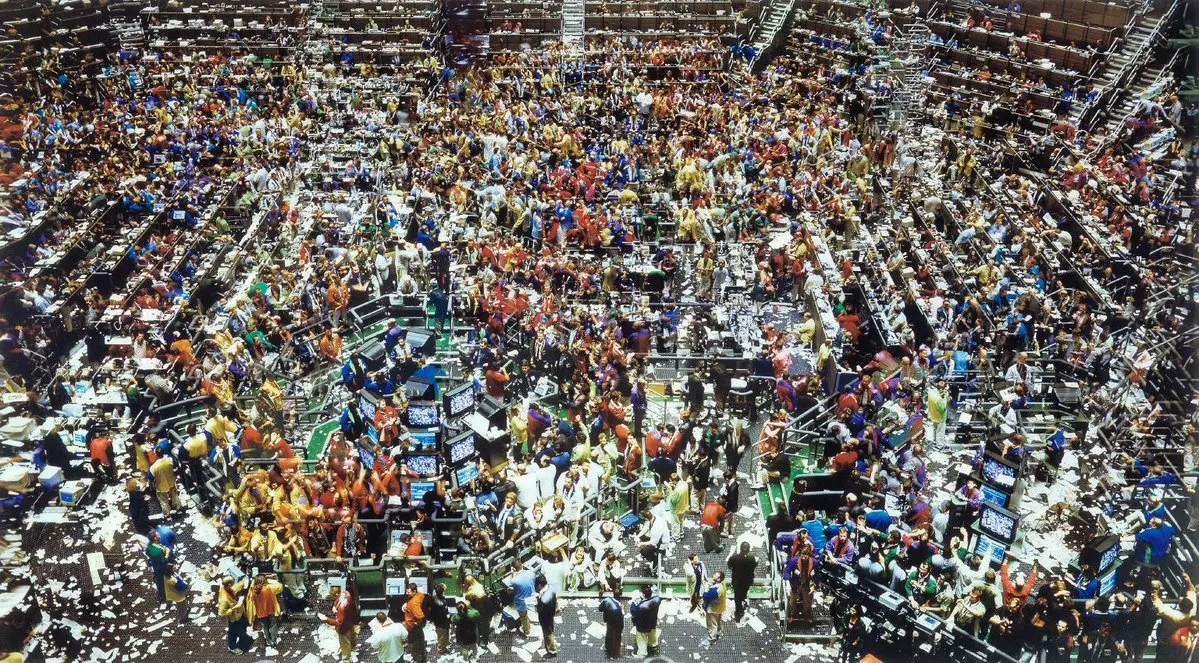
Toward One Billion Traders
In 2020, Variant articulated a vision of the “Ownership Economy,” aiming to make one billion users owners: owning their identity, funds, data, and the products and services they use daily. Today, user ownership has been realized in some key vertical software domains, primarily centered around financial attributes: store-of-value assets (BTC/ETH), decentralized blockchains, and financial markets (Solana, Uniswap, Morpho, Hyperliquid)—we are fortunate to be investors in these projects.
Looking back, the thesis from 2020 was correct: people want to earn economic upside from things they understand and care about. I initially thought this would expand like employee stock options—covering all products used daily by users—but in reality, the opportunity has become about “interests” in anything you believe in.
Today, “trading” has become a broader, less physical way for users to participate in economic upside (and downside). Evidence shows that, compared to owning digital identities, money, data, or platforms, the feedback from trading is more direct and expressive.
Trading often serves as a gateway to participating in broader markets. Many talented individuals I’ve met in crypto follow a similar growth trajectory:
- Learning lessons from a volatile altcoin;
- Managing risk like a trader;
- Ultimately becoming more mature, long-term investors.
Even failed experiences are meaningful: a gambler who loses everything but chooses to bet only on what they understand becomes a trader; a trader who develops conviction and extends their time horizon becomes an investor.
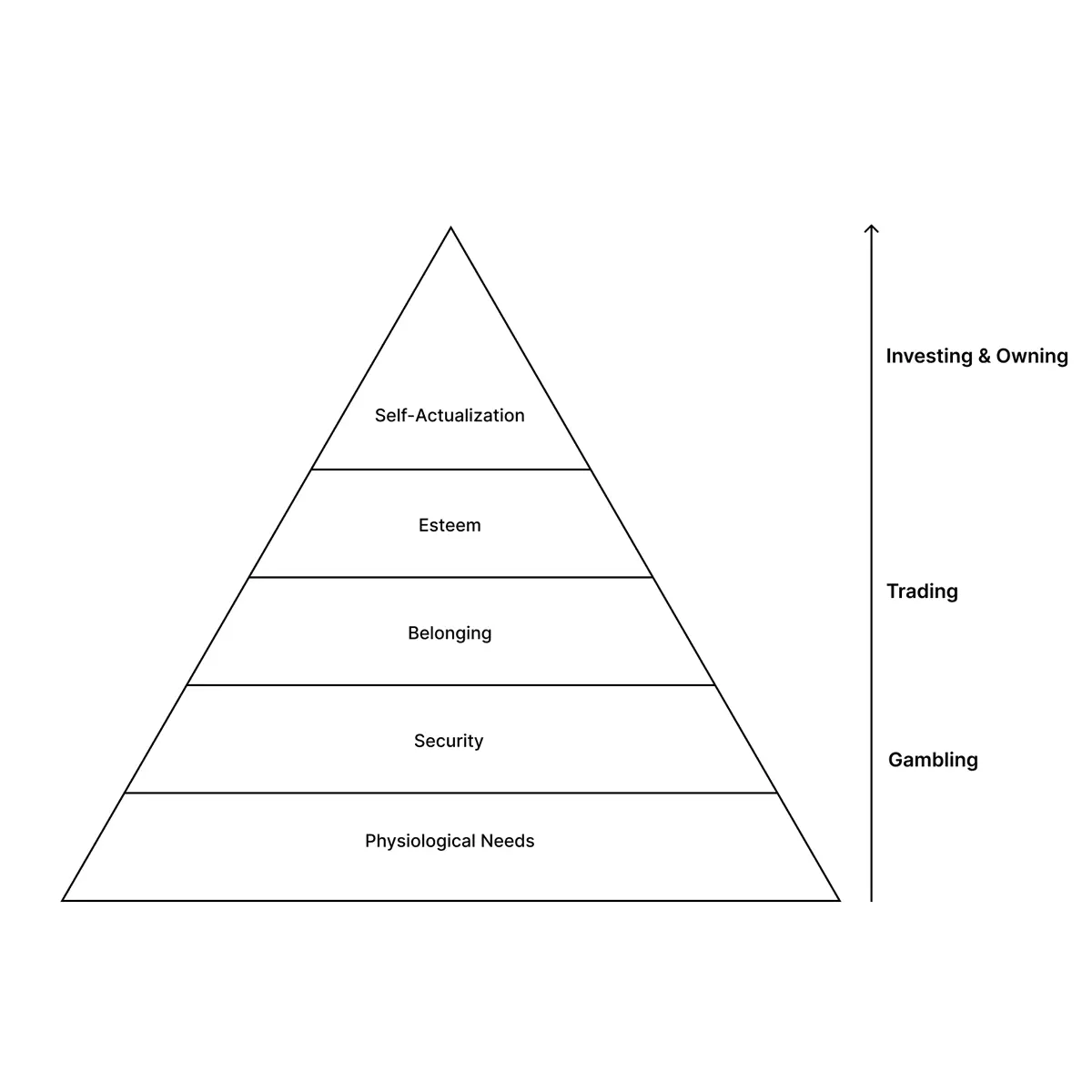
We can view this continuum of risk-taking through Maslow’s hierarchy of needs:
- Gambling and trading satisfy lower-level needs: security (escaping economic hardship through big wins) or belonging (like WallStreetBets trying to fight Citadel, or you betting with friends on a team).
- Investing aligns more with higher-level self-actualization and purpose. Owning a home is the American Dream; investing in a company is expressing belief in its future. But if your focus remains on lower needs, realizing this belief is difficult.
PANews note: WallStreetBets (WSB) is a well-known subreddit on Reddit, famous for high-risk, aggressive investing and meme stock trading. It encourages leverage options trading and short-term gains, and gained global attention in 2021 for orchestrating the GameStop (GME) short squeeze. Citadel is a top hedge fund and financial services firm known for rigorous risk control and high returns, one of Wall Street’s most influential giants.
Because of short time horizons and high volatility, trading satisfies more urgent needs for many. Moreover, permissionless markets can target nearly anything—from derivatives to memes to political outcomes—making economic gains more accessible than ever.
In many such markets, life experience can (at least temporarily) become an advantage. A kid who understands TikTok trends may know memes better than Citadel; a player immersed in virtual economies may understand games better than game analysts.
The old adage “invest in what you know” is becoming increasingly feasible today. As a result, market participation is no longer just a profession but a cultural phenomenon with its own status games, memes, heroes, villains, subcultures, and language. Due to this newfound expressiveness and accessibility, financial markets are increasingly intertwined with culture. And culture—ranging from trends to political events—is more and more expressed through markets.
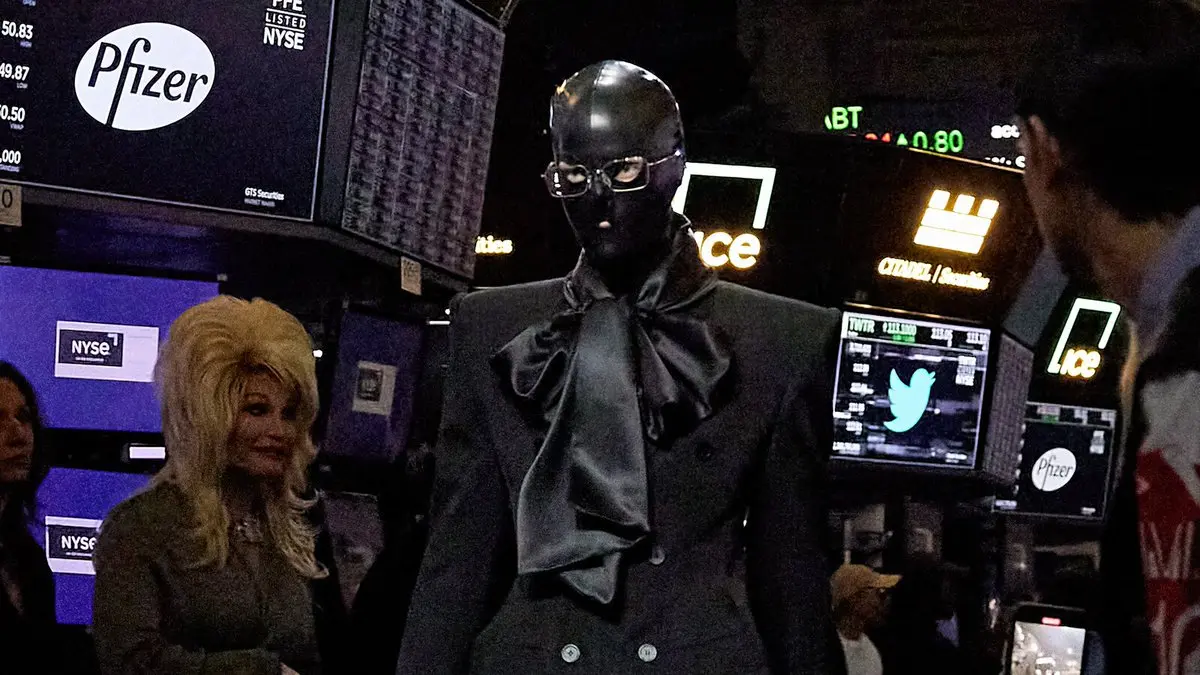
(Image: Balenciaga S2023 fashion show at the New York Stock Exchange)
We are witnessing exponential growth in global economic access via stablecoins; meanwhile, financial risk-taking through trading and markets is expanding toward a scale of one billion daily active traders.
Markets as Drivers of Change
In the 1960s, the average holding period for stocks exceeded 8 years. By 2020, that average had fallen to less than a year. This is the world we live in today: a mass-participation market where trading has become the main artery for people seeking economic gains.
This world is not entirely within the boundaries of traditional finance. Many new markets are built externally—often intentionally and out of necessity. Leveraging new technology and free markets to push regulators and institutions is one of the most reliable ways for traditional systems to adapt and evolve.
As I wrote in my initial paper:
“The pattern of protocol adoption follows a familiar pattern: early adopters use new protocols to do things that weren’t possible before the advent of new technology. These new behaviors often involve breaking rules. The founding strategy is then to build products that make these new patterns accessible to a broader audience.”
A classic example is BitTorrent, invented in 2003. It enabled streaming media, and at its peak, pirated content via the protocol accounted for one-third of all internet traffic. Later, Spotify turned streaming into a compliant product (initially also using BitTorrent technology at the core).
Cryptocurrencies are reshaping information in a similar way to BitTorrent—redefining value in a permissionless manner.
- Prediction Markets: Polymarket has operated on offshore crypto rails for years, when prediction markets were banned in the US. Now, thanks to clearer regulation, they have mobile apps in the US (though not on-chain).
- Stablecoins: Also once operating in regulatory gray areas, initially guiding liquidity on offshore exchanges. Last year, the GENIUS Act brought them into the system.
- ICOs and Fundraising: In 2017, ICOs enabled permissionless crowdfunding when early venture capital was limited. The SEC’s subsequent crackdown intensified a problem: private capture of technological innovation and growth returns, with fewer opportunities for public participation. But this year, Congress is drafting legislation in the CLARITY Act to explicitly allow founders to raise funds broadly through public token sales and share ownership.
Permissionless markets continually attempt to “break rules,” enabling people to earn from private companies’ economic upside (don’t you want a piece of Claude or ChatGPT?). Recently, Robinhood has tried to launch tokenized exposure to private companies like OpenAI and SpaceX in Europe, and applied to the SEC to bring private market funds to US retail investors. Startups are experimenting with innovative products to offer synthetic exposure to private companies.
This could be a path back to the original “ownership economy” thesis—that users can indeed gain economic exposure to the products and services they use daily. But as seen in other markets, forcing regulatory change takes time and often depends on scale and proven market demand.
More directly, I expect many entirely new net-growth markets to take off, raising a question: what is the full design space of these new markets? How do they differ from previous markets? And who—or what—is trading and consuming them?
Markets as APIs
What sets this moment apart from previous waves of financial innovation is the simultaneous expansion of two forms of software expression:
- Crypto: Providing the most powerful rails for new markets—permissionless creation, programmable settlement, composable liquidity, and global access—costs are rapidly approaching zero. Now, we can tokenize and trade things that previously lacked liquidity, were inaccessible, or didn’t exist at all.
- AI: Making it possible to build, model, and automate things previously impossible to handle.
Crypto + AI creates a combined design space: every price generated by markets is a basis for AI to act, and every new thing that AI can model is an object markets can price.
Intelligence is the ability to predict or make wise decisions. Markets and cryptocurrencies offer the best “prediction” mechanisms we know. AI can leverage these prices to understand, simulate the future, and make decisions.
This design space is precisely why markets are evolving from “outputs” to “infrastructure.” Over the past decade, crypto has built the foundational infrastructure enabling a surge of new markets. Over the next decade, markets will increasingly become infrastructure itself—endpoints for applications and agents to consume as inputs.
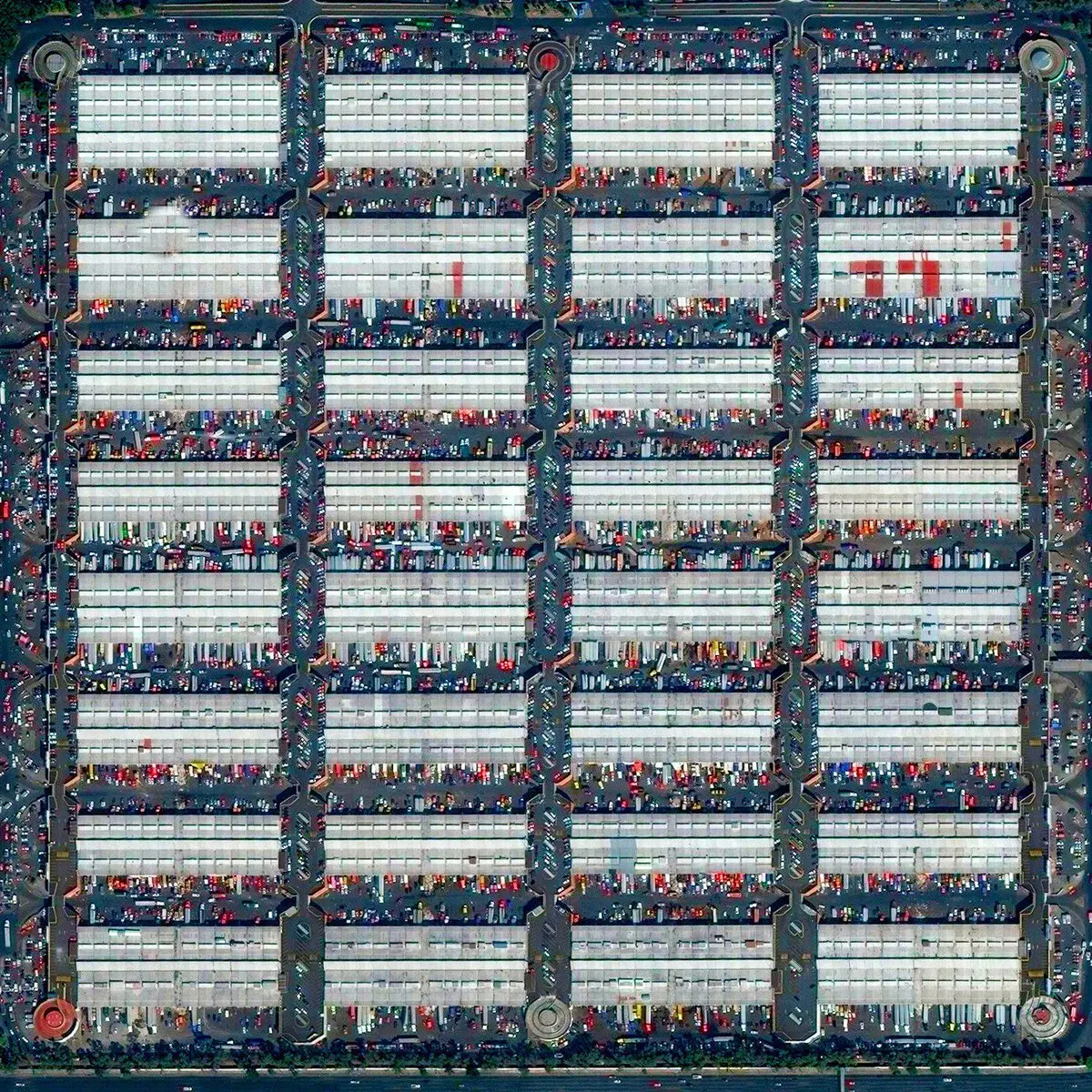
(Image: Central Food Wholesale Market, Mexico City)
Traditional APIs return stored data. As APIs, markets generate real-time data through adversarial competition among participants willing to risk capital based on their beliefs. This makes markets more expressive than ordinary APIs; they not only provide information but also produce it. And because the information generated by markets is costly to produce, it is also harder to forge.
On-chain markets are even better than traditional APIs because they are permissionless by default, composable (anyone can call), global, and use standardized interfaces.
Integrating markets directly into products has already begun in finance—what’s called “DeFi Mullet”: fintech products with familiar front-end experiences built on DeFi backend rails, like Morpho vaults. Coinbase’s lending and earning products offer dynamic interest rates, with users able to query on-chain lending markets like Morpho to pay or earn interest. Users enjoy these features without needing to understand the underlying lending dynamics.
Beyond finance, Polymarket’s odds on the Oscars is a recent illustrative example. The API provides real-time prices, which are integrated into entertainment products (this market correctly predicted 26 out of 27 winners).

As we tokenize more value worldwide and bring new markets on-chain, this pattern will extend beyond fintech packaging or live event odds. For example, Apple’s “Clean Energy Charging” is a mainstream illustration, though not on-chain. In the US, when you plug in your phone, Apple uses real-time predictions of grid carbon intensity to schedule charging for maximum energy and cost efficiency. You never see the underlying energy markets, but Apple’s product calls endpoints to fetch market data, using signals as inputs to optimize the product.
MetaDAO, a crowdfunding platform driven by prediction markets, pushes this idea further. When facing governance decisions, it creates two conditional markets: one for the token price if the proposal passes, and one if it fails. The higher of the two determines the outcome: the proposal automatically takes effect or is rejected. DAOs no longer decide via voting but call markets to make decisions, with participants betting real money on what they believe will be the better future outcome. Here, the underlying markets are not just inputs but the decision mechanism itself.
If you assume all finance and markets are becoming programmable, and AI continues to grow stronger, then holding an expansive view of the ultimate form of finance is both rational and exciting. Price signals, prediction market outcomes, on-chain flows—these will become inputs that any application or agent can read, interpret, and act upon. If an agent can profit more from creating or participating in markets than from reasoning alone, it will do so.
When we include AI agent consumption and market participation in the equation, the “one billion active traders” figure may be a gross underestimate of future scale.
The Endgame of Finance
Finance is transforming from a unique vertical industry into a horizontal foundational layer.
As markets become more expressive and accessible, finance is embedding itself into culture, and culture increasingly expresses itself through finance. Simultaneously, as markets turn into permissionless software, they accelerate their role as change agents—creating new opportunities for users to seek economic upside (and downside) in things they understand and love. Moreover, users will want their AI agents to participate in markets to improve their lives.
As markets become more programmable, finance as an informational infrastructure is becoming a new building block—one that is increasingly invisible. The most successful infrastructure is often invisible, and finance is on the path to becoming woven into the fabric of everything.
That’s why I am willing to hold an extremely expansive view of the ultimate form of “finance.”