


Putin classifies cryptocurrencies as "intangible property"! Russian court obtains legal basis for seizing Bitcoin
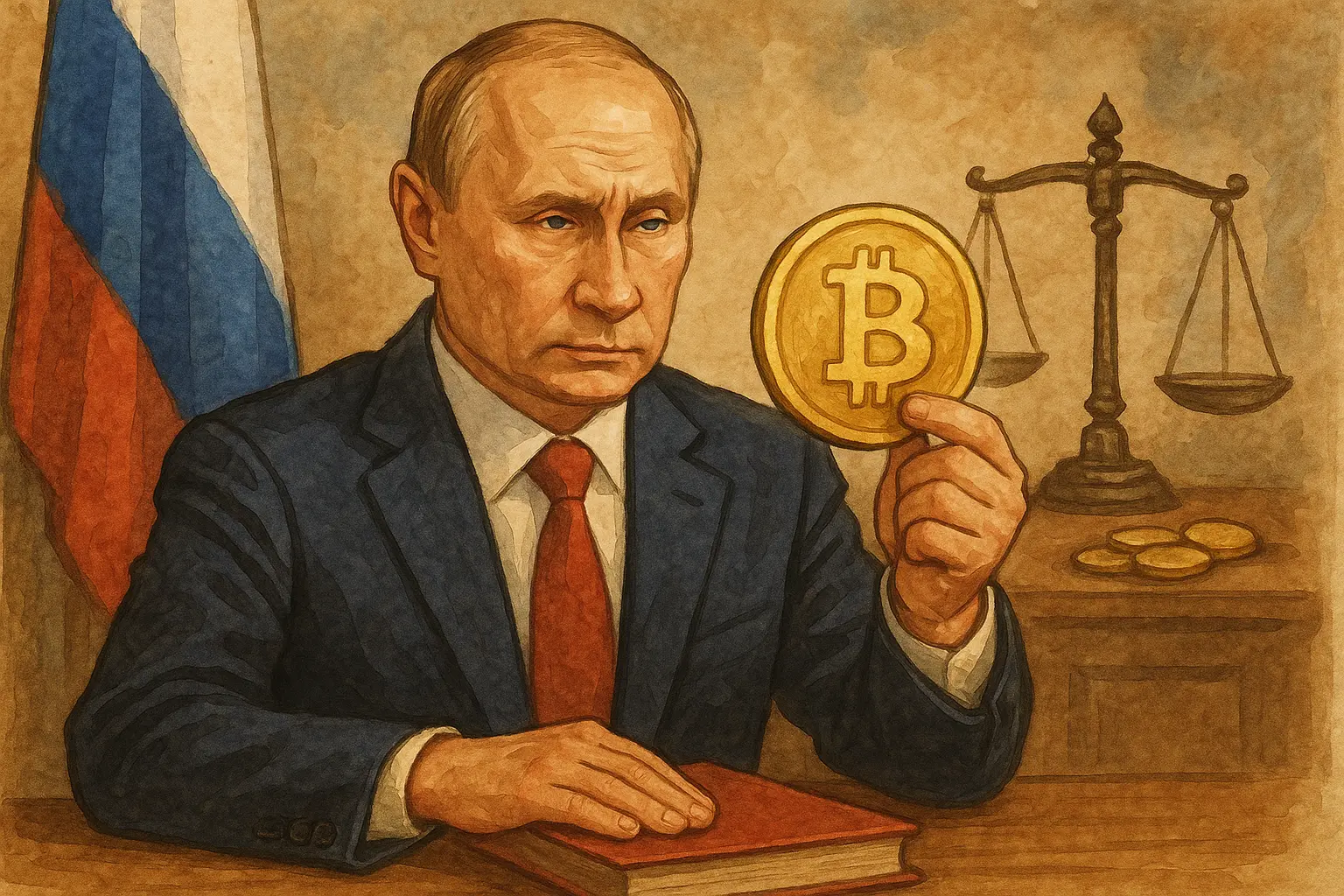
Russian President Vladimir Putin has signed a new law amending the Criminal Code, officially recognizing cryptocurrencies as “intangible property,” and granting courts the statutory authority to seize crypto assets during criminal investigations. The regulation also requires law enforcement agencies to provide detailed information such as the type of tokens, quantities, and wallet addresses when applying for confiscation.
Key Content of the New Law: The Codified Procedure for Confiscation of Crypto Assets
Elena Ardabieva, Deputy Minister of Justice of Russia, stated to the media that this legislation formalizes the existing procedures for seizing digital assets into law, ending the previous reliance on legal precedents that created uncertainty. Unlike earlier scattered rulings based on the confiscation of cryptocurrencies like Bitcoin and Ethereum, the relevant procedures now have a clear statutory basis.
The new law also permits law enforcement officials to transfer confiscated cryptocurrencies into wallets controlled by the government. It explicitly provides legal pathways for cooperation between Russian law enforcement agencies and overseas cryptocurrency exchanges, which is regarded as a significant step toward establishing an official legal framework for cross-border crypto crime investigations.
Background of the Policy Tightening on Cryptocurrency Regulation in Russia
This legislation comes amid Russia’s efforts to comprehensively regulate its long-standing gray-area cryptocurrency industry. Russian officials estimate that daily crypto trading volume by Russian citizens reaches up to $6.5 billion, a scale that the Kremlin considers an important financial activity requiring regulation.
The State Duma is simultaneously advancing several new crypto regulations this year, including mandates for traders to use domestic platforms with physical offices in Russia, potential blocking of citizens’ access to foreign exchanges, and adjustments to the tax and regulatory framework for Bitcoin miners.
On the judicial capacity front, Olga Tissen, President of the Russian State University of Justice, noted on February 24 that crimes related to cryptocurrencies “are becoming one of the key challenges facing the judiciary today,” and admitted that Russia currently lacks a systematic legal training program for professionals in this field. In response, the university has pioneered the creation of the country’s first master’s program in cryptocurrency law.
Overview of Main Provisions and Regulatory Trends of the New Law
- Legal Classification of Cryptocurrencies: Officially incorporated into criminal law as “intangible property,” establishing a legal basis for confiscation
- Confiscation Application Requirements: Law enforcement or prosecutors must specify the type of tokens, quantities, and wallet addresses when applying for confiscation
- Law Enforcement Authorization: Permits officials to transfer confiscated crypto assets into government-controlled wallets
- Overseas Cooperation Framework: Provides formal legal channels for collaboration between Russian authorities and foreign crypto exchanges
- Future Regulatory Plans: Includes discussions on mandatory use of domestic platforms, blocking access to foreign exchanges, and revising tax frameworks for Bitcoin miners
Notably, blockchain analytics firm Chainalysis reported in January that Russia, North Korea, and Iran have collectively conducted over $100 billion in sanctions-evading trade transactions. This context broadens the geopolitical perspective on Russia’s motivation to tighten crypto controls.
Frequently Asked Questions
Q: How will this legislation affect Russian citizens holding crypto assets?
A: The law primarily targets the seizure of crypto assets in criminal cases and does not directly restrict lawful holding or trading of cryptocurrencies by Russian citizens. However, combined with the Duma’s concurrent push for legislation mandating the use of domestic exchanges and potential blocking of foreign exchanges, Russian users’ ability to access global crypto services may face increasing restrictions in the future.
Q: What is the international significance of this legal revision for the crypto industry?
A: Russia’s formal classification of crypto assets as “intangible property” eligible for criminal confiscation marks a significant step in the legal recognition of cryptocurrencies by major nations. This legislative move provides a legal framework for cooperation with foreign exchanges and indicates Russia’s shift from regulatory ambiguity toward active legislative control, which will have direct compliance implications for crypto businesses operating in or related to Russia.
Q: Is Chainalysis’ figure of over $100 billion in sanctions evasion transactions related to this law?
A: Chainalysis’ data reflects the scale of Russia’s use of cryptocurrencies to evade international sanctions. However, the primary purpose of the new law is to equip domestic law enforcement with legal tools to combat crypto-related crimes, rather than directly addressing sanctions evasion. Both issues highlight the complex regulatory landscape of cryptocurrencies at the national level, but their specific policy objectives and scenarios differ.
Related Articles
Onchain Analyst Says Vitalik Buterin's Wallet Activity Reveals Ongoing ETH Liquidation Strategy
Ethereum Foundation Unveils 'Strawmap' Roadmap with Five Key Technical Goals
Data: If ETH drops below $1,974, the total long liquidation strength on major CEXs will reach $584 million.
