
The Korea National Tax Service (NTS) announced on February 26th that it had seized digital assets. A photo clearly shows a Ledger hardware wallet next to a 12-word recovery seed phrase, which was immediately exploited by unknown individuals. They transferred 4 million Pre-Retogeum (PRTG) tokens, valued at approximately $4.8 million USD, out of the wallet. The tokens have since been returned to the original wallet. This incident highlights serious operational security flaws in government agencies’ management of digital assets.
Event Summary: A Chain Reaction Triggered by a Photo
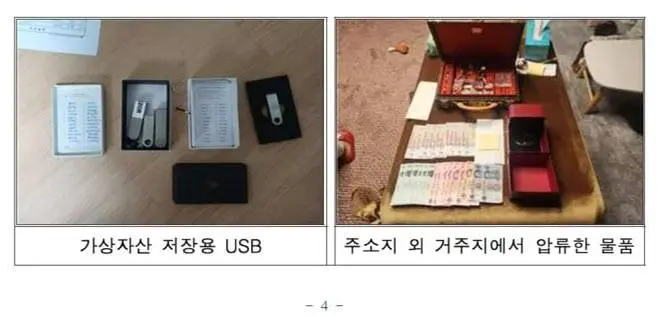
The Korean NTS announced they seized about 8.1 billion KRW (around $5.6 million USD) in crypto assets from a tax evader and published photos of the seized items in their press release. The problem lies in one photo labeled “Case 3” — it clearly shows a Ledger hardware wallet and a handwritten note beside it, listing the full 12-word recovery seed phrase.
A local professor directly compared this mistake to “an open invitation for others to empty your wallet.” Once the seed phrase is leaked, anyone can restore the wallet on any device and fully control the assets — the physical security of the hardware wallet is instantly nullified.
On-chain data shows that shortly after the photo was published, an unknown person sent a small amount of ETH to the wallet to pay gas fees, then transferred 4 million PRTG tokens to a new address. This amount accounts for about 40% of the total PRTG supply.
Token Return and Liquidity Reality
Although the tokens were later sent back to the original wallet, the incident sparked widespread discussion. It remains unclear whether this was a white-hat hacker revealing a vulnerability in good faith or an attacker realizing that PRTG’s market liquidity was extremely low and difficult to cash out, leading to the return.
There is a significant gap between the nominal value of PRTG tokens and their actual market liquidity: the only active trading pair has very low volume, and even small sell orders can drastically lower the price. Large-scale cashing out is nearly impossible. This means the $4.8 million USD nominal loss does not equate to an equivalent amount of actual liquidatable assets.
Key Data at a Glance
- Leaked Information: 12-word recovery seed phrase from Ledger hardware wallet (clearly visible in the photo)
- Transferred Tokens: 4 million PRTG, valued at about $4.8 million USD (roughly 40% of total supply)
- Seized Assets Total Value: approximately 8.1 billion KRW (~$5.6 million USD)
- Event Outcome: Tokens returned to the original wallet; PRTG market liquidity is extremely low, making actual cash-out difficult
- NTS Statement: As of this report, the NTS has not issued a detailed statement
Frequently Asked Questions
What is a seed phrase (Mnemonic Phrase), and why is its leak so serious?
A seed phrase (Mnemonic Phrase) is a recovery phrase composed of 12 to 24 English words that can restore a crypto wallet. Anyone holding this phrase can fully recover and control the wallet on any device. Physical security measures of hardware wallets like Ledger cannot prevent seed phrase leaks — once exposed, all security protections are effectively nullified.
Is the $4.8 million USD loss from PRTG tokens an actual financial loss?
Nominally, yes — about $4.8 million USD. However, due to extremely low liquidity in the PRTG market, the actual cash that could be realized is much lower than the nominal value. On-chain data shows the tokens were ultimately returned to the original wallet, so no permanent financial loss occurred. Nonetheless, the security breach and operational oversight are undeniably serious.
What are the implications of this incident for future government custody of digital assets?
This incident highlights systemic risks when government agencies handle digital assets without proper technical safeguards. Key lessons include: all sensitive information (including seed phrases and private keys) must be strictly concealed when displaying seized assets; agencies should establish professional digital asset custody procedures rather than relying on traditional physical confiscation standards.
Disclaimer: The information on this page may come from third parties and does not represent the views or opinions of Gate. The content displayed on this page is for reference only and does not constitute any financial, investment, or legal advice. Gate does not guarantee the accuracy or completeness of the information and shall not be liable for any losses arising from the use of this information. Virtual asset investments carry high risks and are subject to significant price volatility. You may lose all of your invested principal. Please fully understand the relevant risks and make prudent decisions based on your own financial situation and risk tolerance. For details, please refer to
Disclaimer.
Related Articles
Mega Bank's Director Rui-bin Zhuang tests stablecoin remittances, but the costs of blockchain are misunderstood.
Mega Financial Holding Co. held a media briefing on the 10th. Chairman Dong Rui-bin revealed that to objectively compare the efficiency of bank and blockchain remittances, Mega Bank mobilized 17 countries worldwide and 25 overseas branches last year for testing. Branch staff opened accounts at local legal exchanges and used the virtual asset trading platform BitoPro to trade USDT stablecoins, transferring 50 USDT each time back to Taiwan, and compared this with traditional bank cross-border wire transfers.
The results showed that stablecoins do have advantages for small-scale cross-border remittances. However, for remittance amounts exceeding the equivalent of NT$200,000 (about $7,000 USD), banks remain more cost-competitive.
Mega Experiment: Banks Are More Cost-Effective for Transfers Over $7,000 USD
The test results indicated that in the scenario of "paying NT$ in Taiwan and receiving local currency at the destination," bank wire transfers generally arrive within about 2 hours, with a fee of approximately
ChainNewsAbmedia1h ago
ETH drops 1.07% in 15 minutes: whale fund concentration triggers short-term pullback
March 10, 2026, 18:00 to 18:15 (UTC), ETH's return within the 15-minute candlestick was -1.07%, with price fluctuations ranging from 2049.1 to 2073.15 USDT, an amplitude of 1.16%. During the same period, market trading volume significantly increased by over 32%, large on-chain fund flows occurred frequently, triggering short-term market sentiment fluctuations, rapidly increasing attention, and intensifying volatility risks.
The main driver of this abnormal movement is the concentrated sell-off by whale funds. On-chain data shows that within this time window, there were four large transfers exceeding 5000 ETH, all flowing to a major...
GateNews1h ago
Tom Lee’s BitMine Acquires 60,976 ETH, Holdings Now $10.3B
Bitmine Immersion Technologies reports total assets of $10.3 billion, including 4.53M ETH. With 3.04M ETH staked, it generates $174M annually at a 2.91% yield. The firm seeks to reach 5% of total ETH supply and is expanding its staking infrastructure.
CryptoFrontNews4h ago


