
Bitcoin (BTC) gives back the prior overnight gains, trading at around $70,650 as of April 9. The U.S. SEC has appointed David Woodcock as the new Chief of Enforcement, after concerns were raised about how the agency has been handling crypto cases following the resignation of the previous head. The U.S. Treasury is looking to require stablecoin issuers to take on anti–money laundering and sanctions compliance obligations.
Macro Events & Crypto Market Highlights
- The U.S. Securities and Exchange Commission (SEC) has appointed David Woodcock as the new head of the enforcement division, replacing the former Margaret Ryan. Woodcock previously served as the director of the SEC’s Fort Worth office from 2011 to 2015. He is currently a partner at the law firm Gibson, Dunn & Crutcher and has no clear background in the cryptocurrency industry.
SEC Chair Paul Atkins said Woodcock’s return will help refocus on misconduct that causes the greatest harm to investors. This personnel change occurs one month after Ryan’s resignation. According to Reuters, Ryan wanted to dig deeper into fraud allegations involving the core circle of President Trump, but faced opposition from Atkins and senior Republican officials at the commission. Under the leadership of the Trump administration, the SEC has withdrawn cases against multiple major crypto companies. Democratic Senator Richard Blumenthal expressed concern about Ryan’s departure and said Trump’s conflicts of interest have created a “pay-to-play” enforcement mechanism.
- The U.S. Treasury’s FinCEN and OFAC will jointly publish a proposed rule requiring institutions issuing stablecoins in the U.S. to establish robust anti–money laundering and sanctions compliance systems, including the ability to “intercept, freeze, and refuse” suspicious transactions, and to fulfill obligations under the Bank Secrecy Act. The rule will implement the GENIUS Act passed last year, clarifying that issuers must identify high-risk customers and activities based on their own business, cooperate with FinCEN’s investigations into “primary money laundering concerns,” and identify and block transactions that may violate U.S. sanctions through risk-based measures. If a compliance program is determined to have serious or systemic deficiencies, issuers may face enforcement actions.
News Updates
-
Meta launches a new AI model, Muse Spark
-
Visa launches a smart commerce link service supporting AI agents to help consumers complete purchases and payments
-
Bitcoin Depot discloses that the company was hit by a hacker attack; $3.6 million worth of Bitcoin was stolen
-
A proposed French bill would require crypto holders to declare self-custody wallets with more than 5,000 euros; it has passed the first reading
-
Michael Saylor: Bitcoin may already be at the bottom; quantum computing risk is exaggerated
-
Morgan Stanley’s Bitcoin ETF records $34 million in net inflows on its first day
-
The 5,000 ETH planned to be sold by the Ethereum Foundation in this round has sold 3,750 ETH
-
A temporary ceasefire between Iran and Israel may break down due to Israel’s actions
-
Native Markets launches a zero-fee, zero-slippage deposit-withdrawal channel for Hyperliquid
-
Continue Capital will un-stake 603k HYPE tokens, about $23.3 million
Market Trend
-
Latest Bitcoin update: $BTC gives back the prior overnight gains, currently around $70,650. In the past 24 hours, $84.14 million has been liquidated, with long liquidations leading the way;
-
The three major U.S. stock indexes surged on April 8. The Dow Industrial Average jumped by more than 1,300 points, posting its biggest single-day gain since April 2025. With the U.S. and Iran reaching a two-week ceasefire agreement at the final moment, the market is optimistic that the Middle East conflict’s darkest moment has passed, easing concerns about the energy crisis and runaway inflation. The Dow rose by 1,325.46 points, up 2.9%, closing at 47,909.92. The S&P 500 increased by 165.96 points, up 2.5%, closing at 6,782.81. The Nasdaq Composite rose by 617.15 points, or 2.8%, closing at 22,635.00. The Philadelphia Semiconductor Index surged 6.3%, outperforming the broader market by a wide margin.
 (Source: Gate)
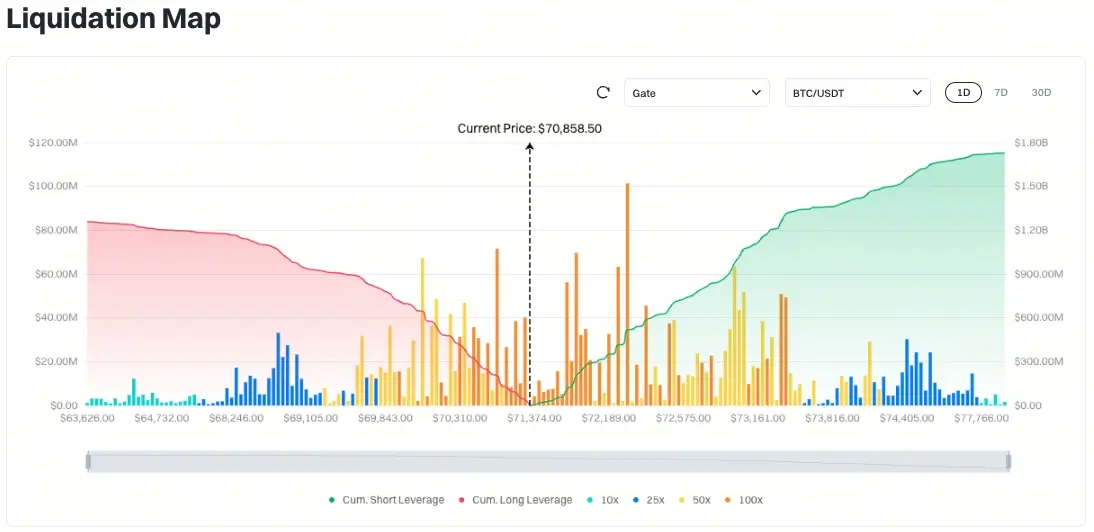
- In the Gate BTC/USDT liquidation map, using the current 70,858.50 USDT as the reference: if it falls to around $70,555, the cumulative liquidation amount for long positions exceeds $205 million; if it rises to around $72,258, the cumulative liquidation amount for short positions exceeds $518 million. The liquidation amount on the short side is significantly higher than on the long side. It is recommended to manage leverage ratios reasonably and avoid triggering large-scale liquidations when market conditions change.
 (Source: Coinglass)
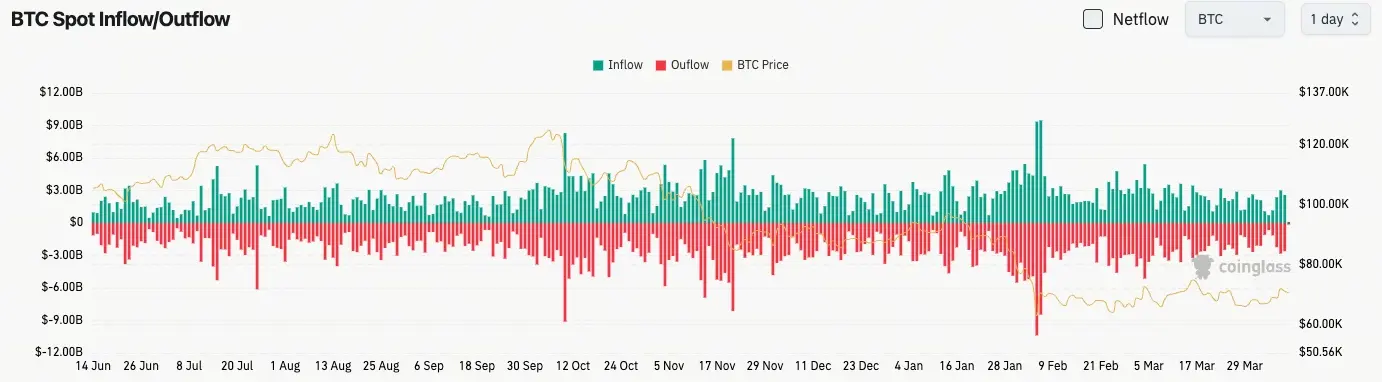
- In the past 24 hours, BTC spot inflows were $2.59 billion, outflows were $2.61 billion, for net outflows of $603k.
 (Source: Coinglass)
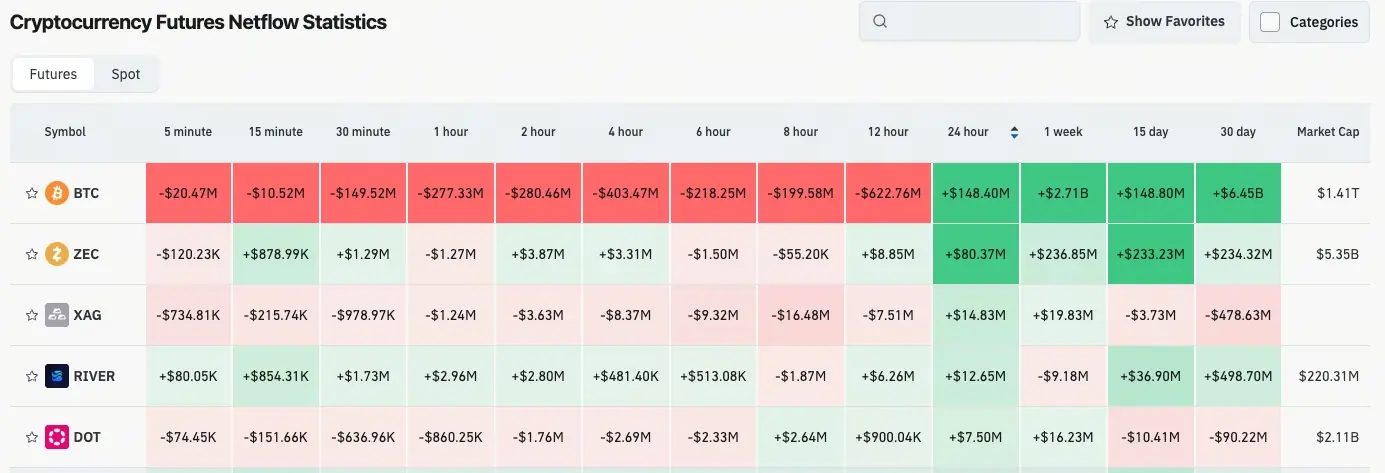
- In the past 24 hours, contract trading net outflows led for $BTC, $ZEC, $XAG, $RIVER, $DOT, and others, creating trading opportunities.
Selected Views from X KOLs
Phyrex Ni (@Phyrex_Ni): “I thought today’s homework would be pretty easy, but it turns out I underestimated it. Although the U.S.–Iran geopolitical conflict hasn’t continued to escalate further, there are still quite a few variables. In the early morning, under the steps of the Prime Minister of Pakistan, the U.S. and Iran reached a preliminary ceasefire agreement. And it’s basically the 10 conditions Iran proposed first—about two of them are related to the ownership/status regarding the Strait of Hormuz, and Iran has started preparing to charge fees for the Strait of Hormuz as well.”
“There are two more items related to stopping the war. One includes a ceasefire, including Lebanon. But the real trouble is right here. Even though the documents provided by Iran include a ceasefire agreement covering Lebanon, the U.S. and Israel say it does not include Lebanon. Israel is still carrying out more intensive bombardment of Lebanon, which has angered Iran, leading them to stop the Strait of Hormuz from being clear again.”
“Now the three sides are still playing a game. I guess the U.S. can pressure Israel a bit. Since it’s already been talked this far, continuing to fight would definitely be bad. Trump isn’t stupid. Also, there are another three items related to lifting Iran’s sanctions and freezing assets. That part shouldn’t be a big issue. And in the English version, there’s no clear answer yet about uranium enrichment—so personally, I think the most troublesome part is the U.S.’s compensation to Iran. If compensation really happens, the U.S. probably won’t be able to explain it.”
“The current market’s game isn’t that intense, but Israel’s continued strikes are basically provoking Iran. If Iran gets worked up, it will be uncomfortable again. Still, it’s good that Trump made comments and doesn’t think Israel’s ‘small moves’ will affect the overall ceasefire. They should try to persuade Israel as much as possible.”
“Going back to Bitcoin’s data, today’s turnover rate is really quite high—which is normal, because the market has been bouncing back and forth. Even though there’s still some uncertainty, I personally think when it comes to whether Iran and the U.S. want to return to war, they both don’t want to. If they really were going to do something, then with the U.S. people ignoring it, Iran could go after Israel. So the market’s stability should still be pretty good.”
“For $BTC, things can ease a bit, but the focus of the market isn’t the war between Iran and the U.S. It’s still the U.S.’s monetary policy. And that part still has a lot of headaches.”
Outlook for Today
-
Germany February seasonally adjusted trade balance (in billions of euros), prior value: 16.6
-
U.S. Q4 actual GDP advance estimate (annualized quarterly rate), prior value: 0.7%
-
U.S. February personal consumption expenditures price index (month-over-month), prior value: 0.3%
-
U.S. Q4 personal consumption expenditures price index final estimate (annualized quarterly rate), prior value: 2.8%
-
U.S. February personal consumption expenditures (month-over-month), prior value: 0.4%
-
U.S. February personal income (month-over-month), prior value: 0.4%
-
U.S. seasonally adjusted initial jobless claims last week (thousands) (to 0404), prior value: 202
-
Swiss central bank governor Schlegel delivers remarks
Disclaimer: The information on this page may come from third parties and does not represent the views or opinions of Gate. The content displayed on this page is for reference only and does not constitute any financial, investment, or legal advice. Gate does not guarantee the accuracy or completeness of the information and shall not be liable for any losses arising from the use of this information. Virtual asset investments carry high risks and are subject to significant price volatility. You may lose all of your invested principal. Please fully understand the relevant risks and make prudent decisions based on your own financial situation and risk tolerance. For details, please refer to
Disclaimer.


