 :
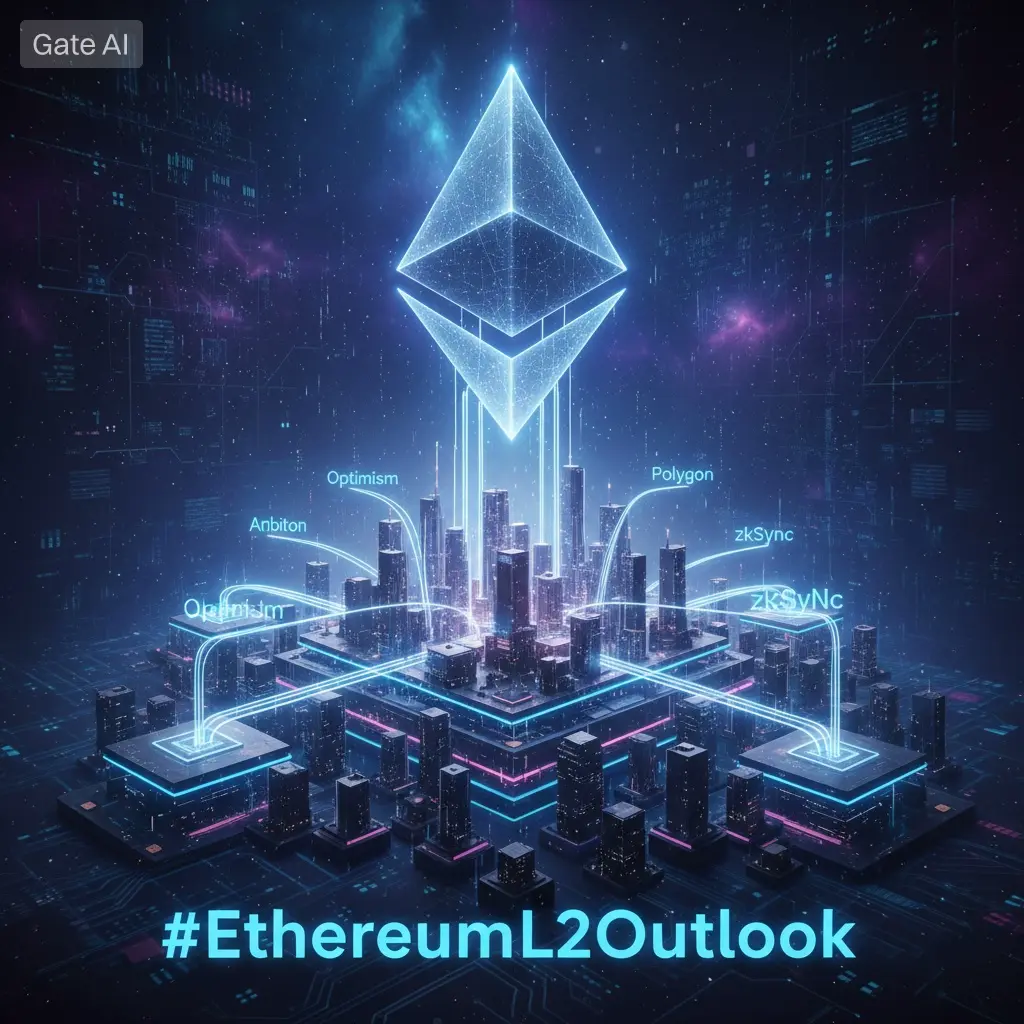
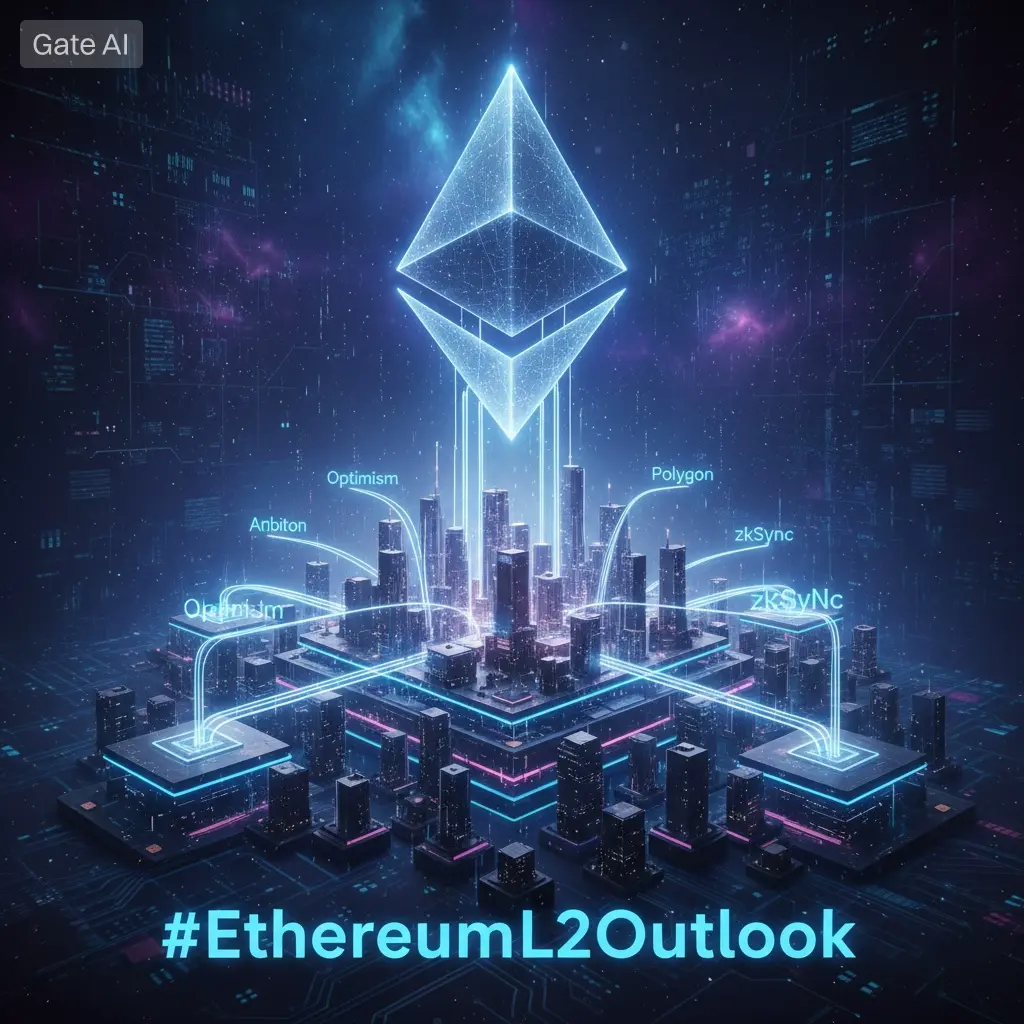
:#EthereumL2Outlook
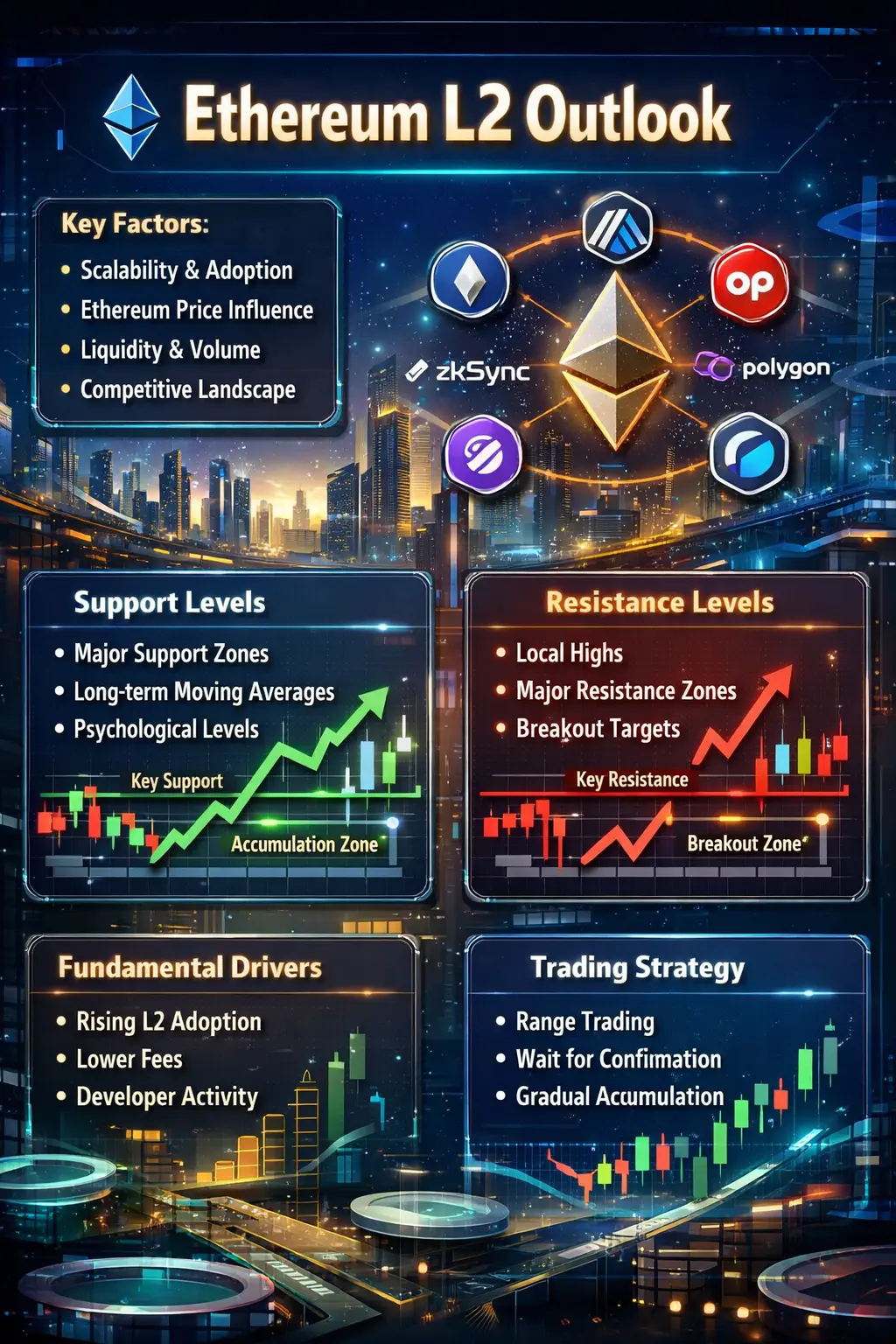
Ethereum Layer-2 Outlook (Feb 2026)
Scaling Triumphs, Fragmentation Fears, and the Crossroads Ahead
As Ethereum enters February 2026, its Layer-2 (L2) ecosystem stands at a paradoxical turning point. On one side, scaling has succeeded beyond early expectations. On the other, concerns around fragmentation, liquidity silos, and long-term cohesion are becoming increasingly difficult to ignore.
Ethereum mainnet transaction fees remain impractical for everyday use, often ranging between $2–$8 even during relatively calm network conditions. At the same time, the collective L2 ecosystem now processes roughly 15–25 times more daily transactions than Layer-1, with average fees typically below $0.05–$0.20.
Ethereum is scaling in real time, but the path forward is not without trade-offs.
Key L2 Metrics and Market Leaders (Early 2026 Snapshot)
Total L2 TVL is estimated at approximately $48–52 billion, representing around 180% year-over-year growth. Daily L2 transaction counts range between 45–65 million, while Ethereum Layer-1 processes roughly 1.1–1.4 million transactions per day.
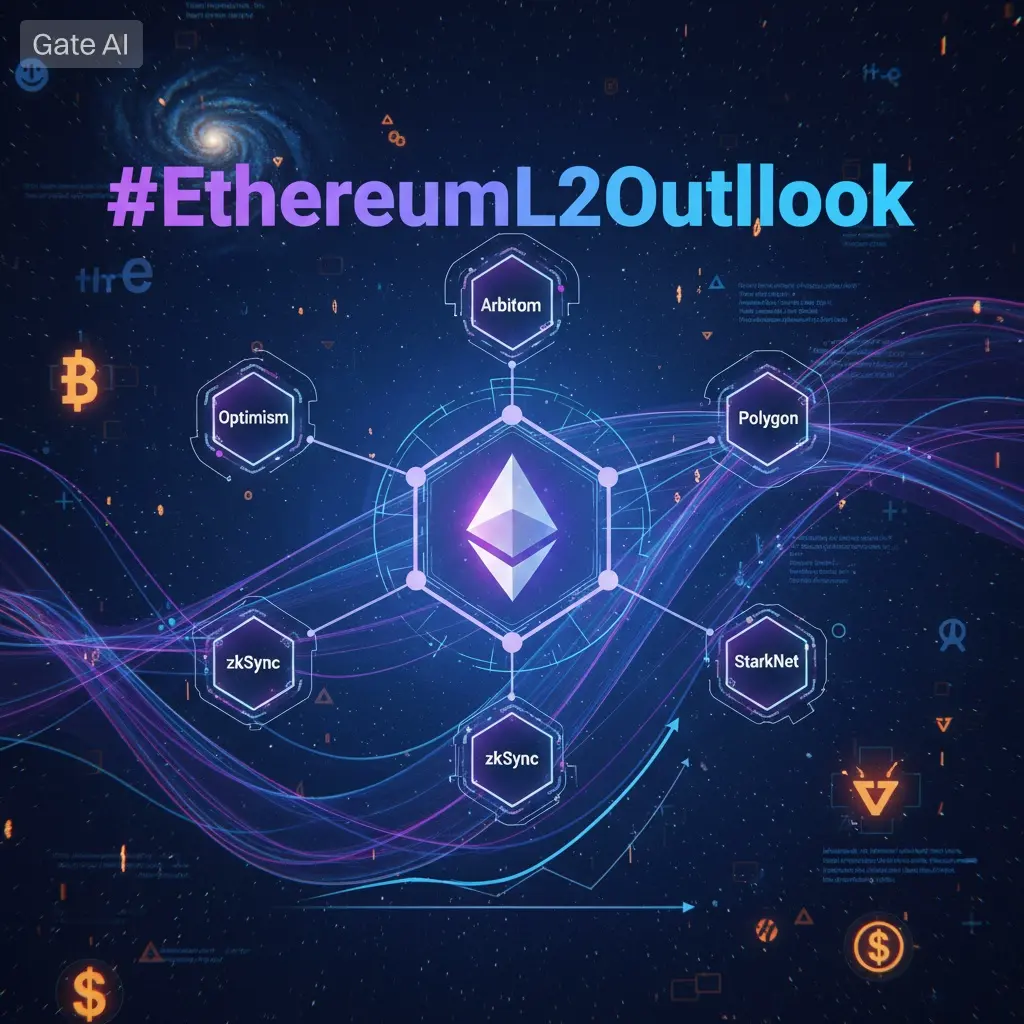
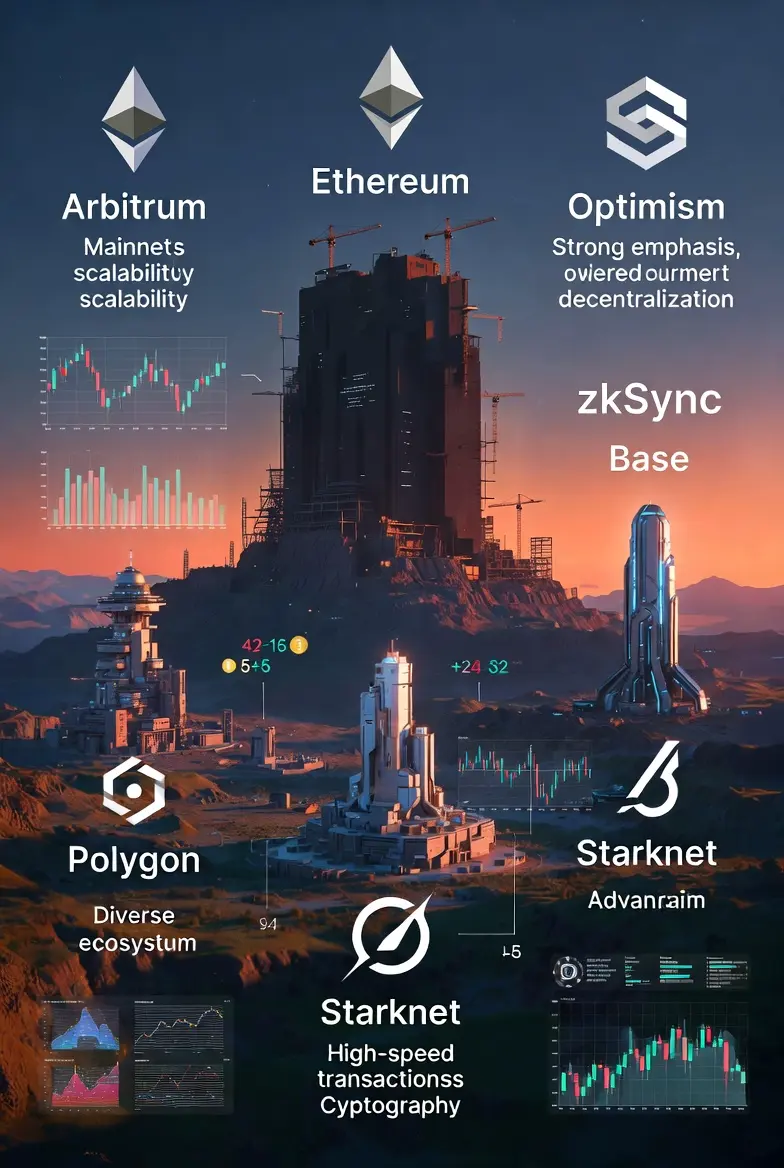
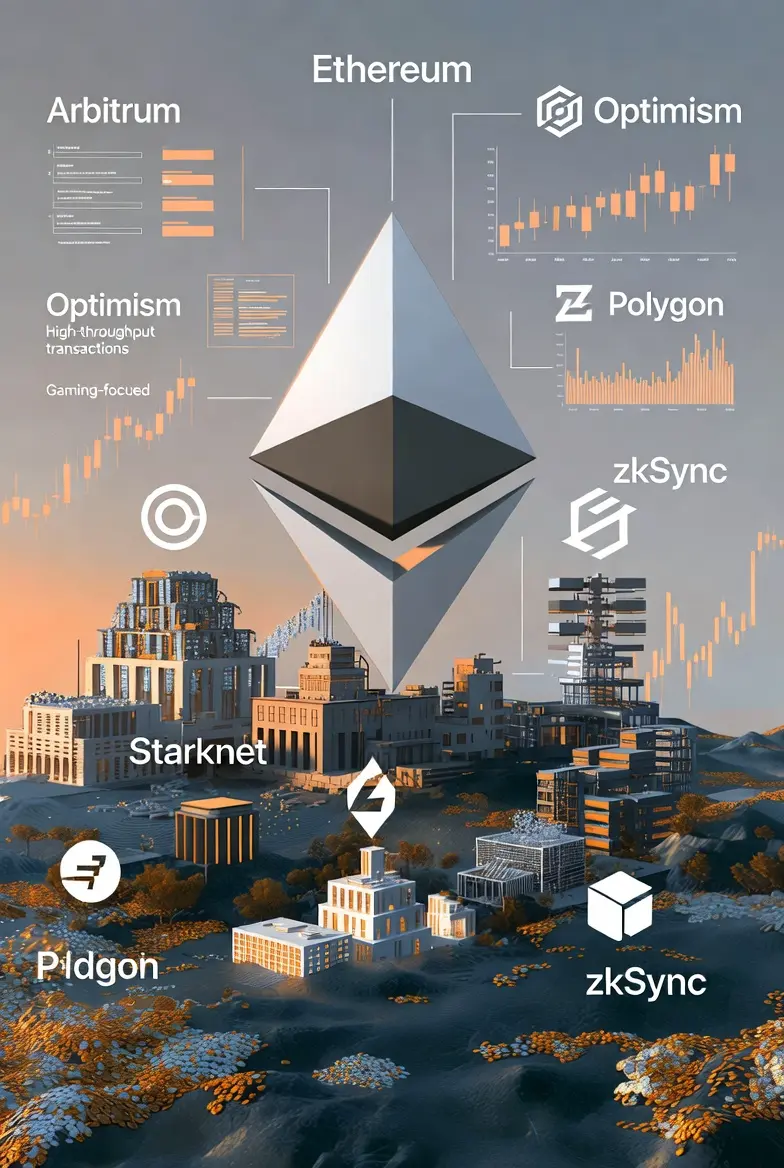
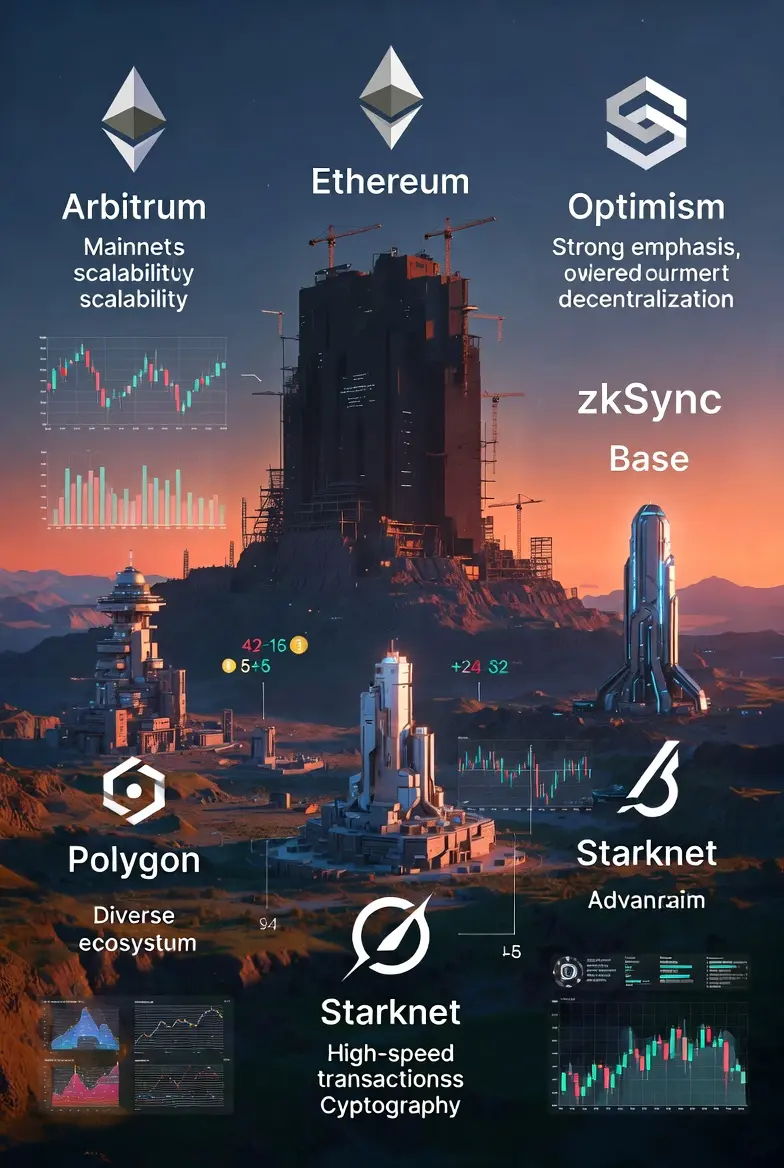
In terms of market share, Arbitrum One leads with roughly 38–42%, supported by deep DeFi liquidity and a growing gaming ecosystem. Base follows with approximately 22–26%, fueled by Coinbase-backed distribution and rapid consumer adoption. Optimism holds around 12–15% and remains influential due to its retroactive public goods funding model. zkSync Era and Polygon zkEVM continue to gain momentum as zero-knowledge technology matures. Smaller ecosystems such as Blast, Scroll, Linea, and Starknet are carving out niche use cases and steadily expanding their presence.
What’s Working: The Bright Spots
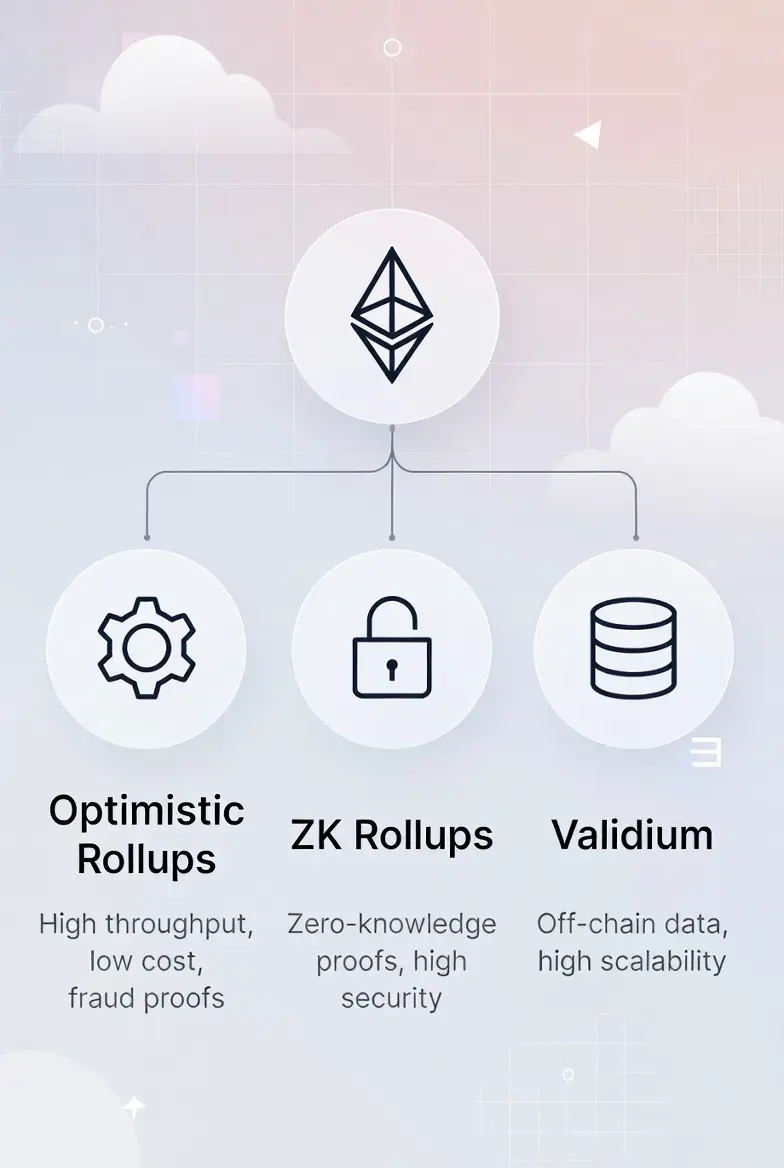
Rollup technology has matured significantly. Both optimistic and zk rollups have delivered on their core promise: fast, low-cost transactions secured by Ethereum. The introduction of EIP-4844 (proto-danksharding), combined with alternative data availability layers such as Celestia, EigenDA, and Avail, has dramatically reduced calldata costs since mid-2025.
User experience has improved substantially. Account abstraction through ERC-4337, native paymasters, gas sponsorships, and chain-agnostic wallets like Zerion, Rabby, and Ambire have simplified onboarding. When paired with fiat on-ramps from Coinbase, Ramp, and MoonPay, especially on Base and Arbitrum, the L2 experience increasingly resembles familiar Web2 flows rather than early crypto friction.
Application-level growth is accelerating. Low fees have enabled meaningful activity across DeFi and consumer applications, including Uniswap v4 hooks, Aave deployments across multiple L2s, GMX-style perpetual DEXs, Hyperliquid-inspired trading platforms, social applications, and on-chain games. Where transaction costs are negligible, experimentation and usage naturally follow.
The Core Risk: Fragmentation
Despite these successes, Ethereum’s L2 ecosystem increasingly resembles a network of semi-independent chains rather than a single, cohesive scaling layer.
Liquidity fragmentation remains a major challenge, as capital and users are spread across multiple chains and bridges, increasing friction and inefficiency. Sequencer centralization persists, with most major L2s still relying on single sequencers and full decentralization remaining largely theoretical. Interoperability gaps continue to pose risks, as bridges such as Hop, Across, Synapse, and LayerZero, while battle-tested, still represent meaningful attack surfaces. At the same time, value accrual remains unclear, with many L2 tokens trading at steep discounts relative to the TVL or fees they generate, raising questions about who ultimately captures the economic upside of scaling Ethereum.
Possible 2026 Trajectories
One potential outcome is a cohesive superchain model. Optimism’s Superchain vision, Arbitrum Orbit, and shared standards such as ERC-7683 for cross-chain intents could create a more interconnected ecosystem. In this scenario, chain abstraction and solver-based liquidity reduce fragmentation, Ethereum Layer-1 becomes primarily a settlement and data availability layer, and L2s feel like interconnected neighborhoods within a single city.
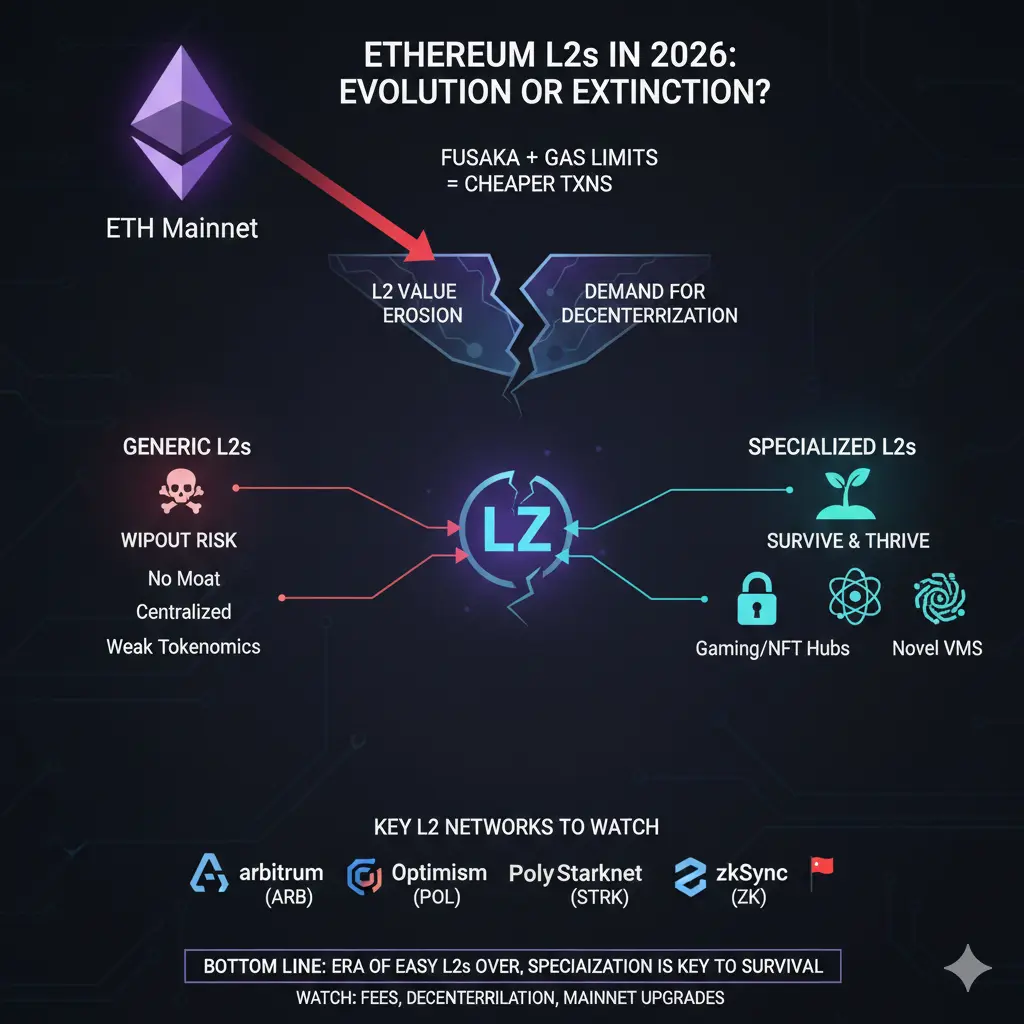
A more likely base case is a multi-chain reality with clear winners and losers. A small number of dominant L2s, potentially Arbitrum, Base, and one leading zk-based chain, could capture 70–80% of activity. Smaller chains may survive by specializing in niches such as gaming, privacy, or AI. Ethereum fees remain low on L2s but structurally high on Layer-1, while bridge UX improves without ever becoming fully seamless.
A less favorable outcome would involve a fragmentation backlash. Users may grow frustrated with managing multiple chains and balances, leading to capital concentration on just two or three dominant L2s while others steadily lose TVL and relevance. In this case, Ethereum’s rollup-centric scaling narrative could face stronger competition from alternative ecosystems such as Solana, Sui, Aptos, or emerging modular chains.
Bottom Line for 2026
Ethereum’s Layer-2 experiment is clearly working, arguably better than most skeptics expected in the 2022–2023 period. The network is scaling, throughput is rising, and transaction costs have fallen dramatically. However, the transition from cheap transactions to a truly seamless, unified Ethereum experience remains incomplete.
Key developments to watch in the coming months include the adoption rate of chain abstraction wallets, progress toward based rollups and shared sequencers, concentration trends in TVL and user activity, and any major breakthroughs in interoperability infrastructure.
The Layer-2 outlook for 2026 remains strongly positive in terms of scalability and cost efficiency. The real test, however, will be whether Ethereum can evolve from a collection of fast, fragmented chains into a cohesive, user-centric network that feels like one Ethereum rather than many separate ones.
Ethereum Layer-2 Outlook (Feb 2026)
Scaling Triumphs, Fragmentation Fears, and the Crossroads Ahead
As Ethereum enters February 2026, its Layer-2 (L2) ecosystem stands at a paradoxical turning point. On one side, scaling has succeeded beyond early expectations. On the other, concerns around fragmentation, liquidity silos, and long-term cohesion are becoming increasingly difficult to ignore.
Ethereum mainnet transaction fees remain impractical for everyday use, often ranging between $2–$8 even during relatively calm network conditions. At the same time, the collective L2 ecosystem now processes roughly 15–25 times more daily transactions than Layer-1, with average fees typically below $0.05–$0.20.
Ethereum is scaling in real time, but the path forward is not without trade-offs.
Key L2 Metrics and Market Leaders (Early 2026 Snapshot)
Total L2 TVL is estimated at approximately $48–52 billion, representing around 180% year-over-year growth. Daily L2 transaction counts range between 45–65 million, while Ethereum Layer-1 processes roughly 1.1–1.4 million transactions per day.
In terms of market share, Arbitrum One leads with roughly 38–42%, supported by deep DeFi liquidity and a growing gaming ecosystem. Base follows with approximately 22–26%, fueled by Coinbase-backed distribution and rapid consumer adoption. Optimism holds around 12–15% and remains influential due to its retroactive public goods funding model. zkSync Era and Polygon zkEVM continue to gain momentum as zero-knowledge technology matures. Smaller ecosystems such as Blast, Scroll, Linea, and Starknet are carving out niche use cases and steadily expanding their presence.
What’s Working: The Bright Spots
Rollup technology has matured significantly. Both optimistic and zk rollups have delivered on their core promise: fast, low-cost transactions secured by Ethereum. The introduction of EIP-4844 (proto-danksharding), combined with alternative data availability layers such as Celestia, EigenDA, and Avail, has dramatically reduced calldata costs since mid-2025.
User experience has improved substantially. Account abstraction through ERC-4337, native paymasters, gas sponsorships, and chain-agnostic wallets like Zerion, Rabby, and Ambire have simplified onboarding. When paired with fiat on-ramps from Coinbase, Ramp, and MoonPay, especially on Base and Arbitrum, the L2 experience increasingly resembles familiar Web2 flows rather than early crypto friction.
Application-level growth is accelerating. Low fees have enabled meaningful activity across DeFi and consumer applications, including Uniswap v4 hooks, Aave deployments across multiple L2s, GMX-style perpetual DEXs, Hyperliquid-inspired trading platforms, social applications, and on-chain games. Where transaction costs are negligible, experimentation and usage naturally follow.
The Core Risk: Fragmentation
Despite these successes, Ethereum’s L2 ecosystem increasingly resembles a network of semi-independent chains rather than a single, cohesive scaling layer.
Liquidity fragmentation remains a major challenge, as capital and users are spread across multiple chains and bridges, increasing friction and inefficiency. Sequencer centralization persists, with most major L2s still relying on single sequencers and full decentralization remaining largely theoretical. Interoperability gaps continue to pose risks, as bridges such as Hop, Across, Synapse, and LayerZero, while battle-tested, still represent meaningful attack surfaces. At the same time, value accrual remains unclear, with many L2 tokens trading at steep discounts relative to the TVL or fees they generate, raising questions about who ultimately captures the economic upside of scaling Ethereum.
Possible 2026 Trajectories
One potential outcome is a cohesive superchain model. Optimism’s Superchain vision, Arbitrum Orbit, and shared standards such as ERC-7683 for cross-chain intents could create a more interconnected ecosystem. In this scenario, chain abstraction and solver-based liquidity reduce fragmentation, Ethereum Layer-1 becomes primarily a settlement and data availability layer, and L2s feel like interconnected neighborhoods within a single city.
A more likely base case is a multi-chain reality with clear winners and losers. A small number of dominant L2s, potentially Arbitrum, Base, and one leading zk-based chain, could capture 70–80% of activity. Smaller chains may survive by specializing in niches such as gaming, privacy, or AI. Ethereum fees remain low on L2s but structurally high on Layer-1, while bridge UX improves without ever becoming fully seamless.
A less favorable outcome would involve a fragmentation backlash. Users may grow frustrated with managing multiple chains and balances, leading to capital concentration on just two or three dominant L2s while others steadily lose TVL and relevance. In this case, Ethereum’s rollup-centric scaling narrative could face stronger competition from alternative ecosystems such as Solana, Sui, Aptos, or emerging modular chains.
Bottom Line for 2026
Ethereum’s Layer-2 experiment is clearly working, arguably better than most skeptics expected in the 2022–2023 period. The network is scaling, throughput is rising, and transaction costs have fallen dramatically. However, the transition from cheap transactions to a truly seamless, unified Ethereum experience remains incomplete.
Key developments to watch in the coming months include the adoption rate of chain abstraction wallets, progress toward based rollups and shared sequencers, concentration trends in TVL and user activity, and any major breakthroughs in interoperability infrastructure.
The Layer-2 outlook for 2026 remains strongly positive in terms of scalability and cost efficiency. The real test, however, will be whether Ethereum can evolve from a collection of fast, fragmented chains into a cohesive, user-centric network that feels like one Ethereum rather than many separate ones.