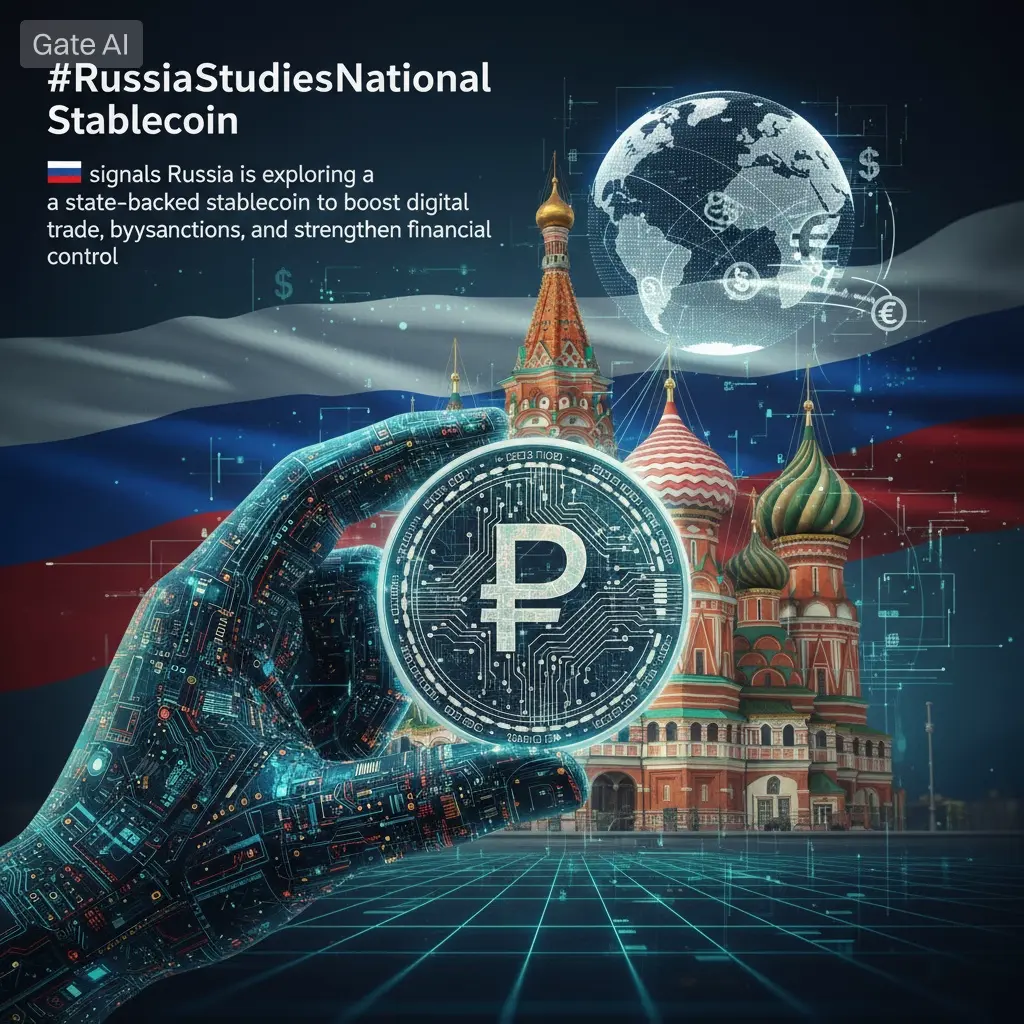
#RussiaStudiesNationalStablecoin
#RussiaStudiesNationalStablecoin 🇷🇺💰
Big Shift in Russia’s Crypto Strategy
Russia is officially studying the launch of its own national stablecoin, and this could reshape global digital finance in the coming years.
On February 12, 2026, Bank of Russia confirmed it will conduct a full study in 2026 on whether the country should issue a state-backed stablecoin. The announcement was made by First Deputy Chairperson Vladimir Chistyukhin at the Alfa Talk conference in Moscow.
This is a major policy evolution.
🔎 What Is a National Stablecoin?
A stablecoin is a cryptocurrency designed to maintain a fixed value — usually pegged 1:1 to a fiat currency.
A Russian national stablecoin would likely:
• Be pegged to the Russian ruble
• Be fully backed by reserves
• Be regulated or issued under state supervision
• Operate within Russia’s legal financial system
Unlike Bitcoin, it would not be volatile.
Unlike Tether, it would not be privately controlled offshore.
It would be sovereign, regulated, and strategically aligned with Russian policy.
🔄 Why Is Russia Changing Its Position?
For years, the Bank of Russia opposed private stablecoins. Officials argued they could:
• Weaken monetary control
• Threaten financial stability
• Compete with the ruble
So what changed?
1️⃣ Sanctions & Cross-Border Pressure
Western sanctions limited traditional banking channels. Russian businesses increasingly turned to crypto — especially stablecoins — for international trade.
Stablecoins became practical settlement tools.
2️⃣ Real-World Demand
Private ruble-linked tokens like A7A5 proved there is strong demand for digital ruble instruments in cross-border payments.
Even under restrictions, volume was significant.
3️⃣ Global Competition
Countries like China are advancing digital currency projects (e.g., digital yuan pilots). Russia does not want to fall behind in digital monetary infrastructure.
🏦 How Is This Different From the Digital Ruble?
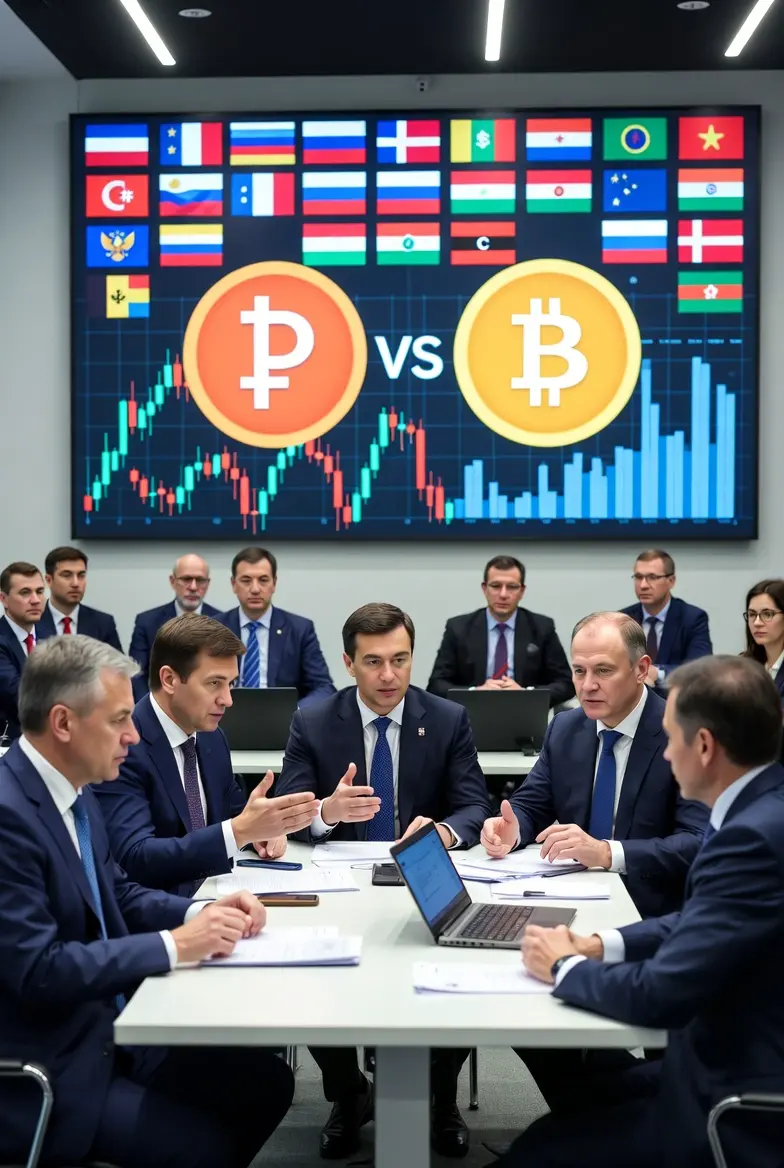
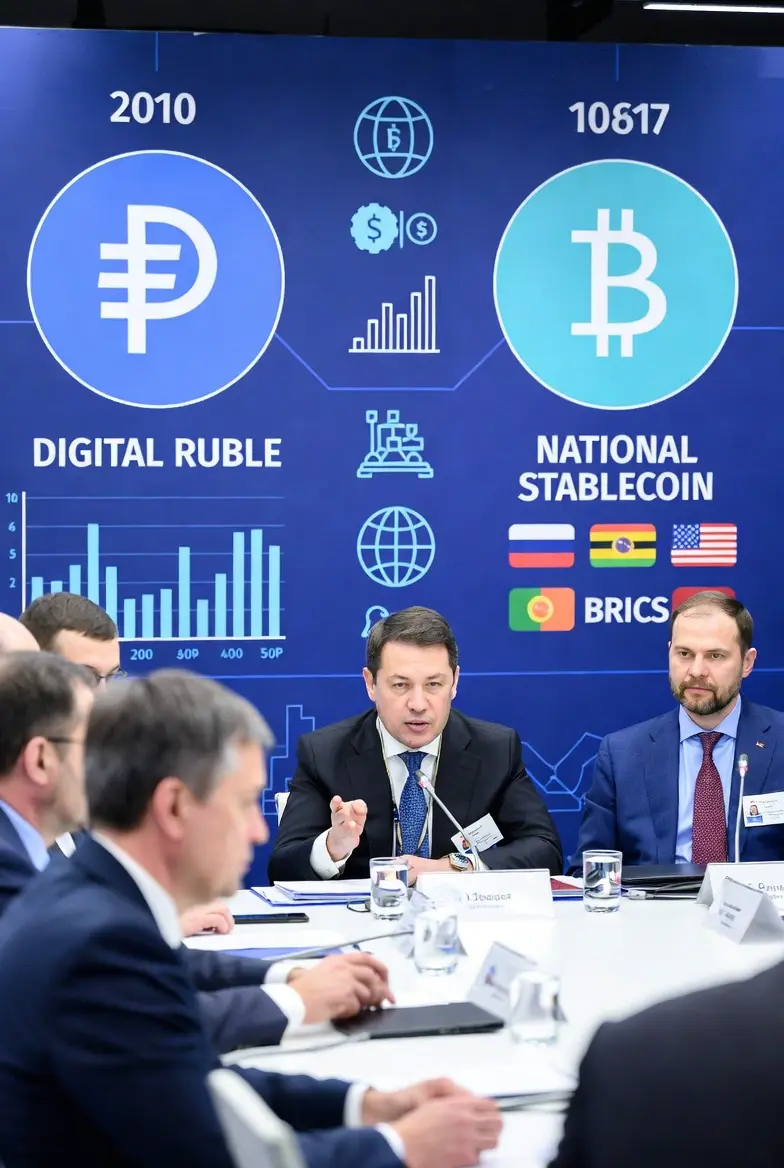
Russia is already developing a CBDC — the digital ruble.
A national stablecoin would likely:
• Be more market-driven
• Be used for trade settlements
• Operate alongside private sector institutions
• Complement — not replace — the CBDC
Think of it as a bridge between state digital money and global crypto markets.
📊 What Will the 2026 Study Examine?
The Bank of Russia will analyze:
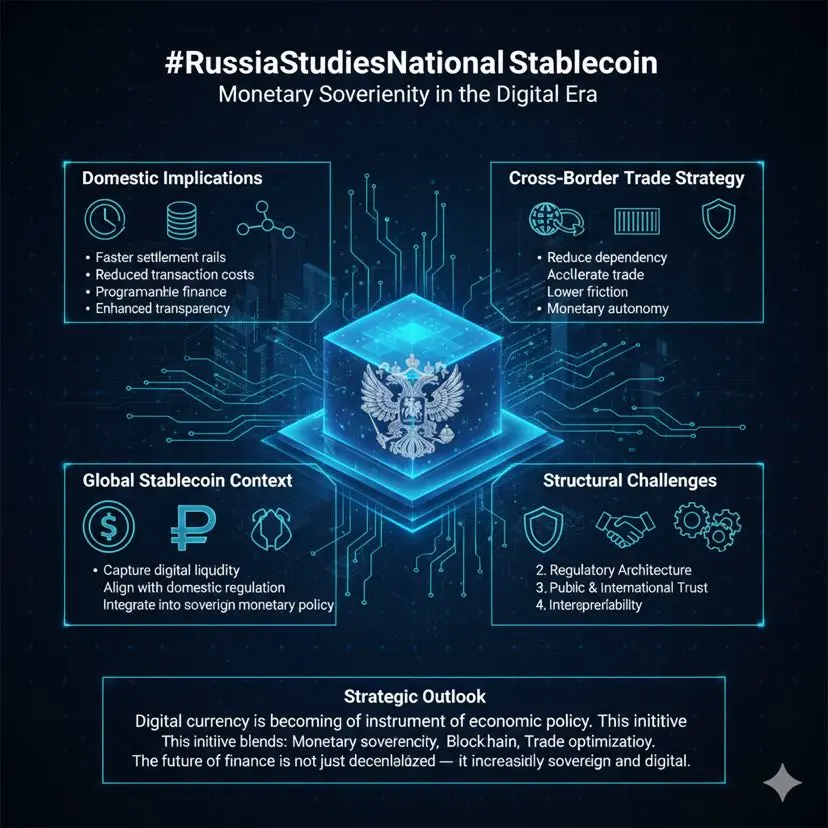
• Impact on monetary policy
• Financial stability risks
• Legal structure (who issues it?)
• Reserve transparency & backing
• Cross-border trade benefits
• AML & compliance safeguards
• International adoption potential
Public and expert discussions are expected.
🌍 Potential Benefits
If implemented correctly, a Russian national stablecoin could:
✅ Strengthen financial sovereignty
✅ Reduce reliance on foreign stablecoins
✅ Improve BRICS & emerging market settlements
✅ Increase ruble internationalization
✅ Modernize payment infrastructure
✅ Provide regulated digital tools for businesses
⚠️ Risks & Challenges
However, serious challenges exist:
• Maintaining peg stability during ruble volatility
• Avoiding competition with the digital ruble
• Ensuring global acceptance
• Managing regulatory balance
• Avoiding excessive capital flight
The study aims to address these concerns carefully.
🧠 Bigger Strategic Picture
This move fits into Russia’s broader digital finance roadmap:
• Legal crypto use in international settlements
• Expansion of crypto mining
• Development of alternative payment systems
• Digital ruble rollout
A national stablecoin would be the next logical layer — a controlled digital financial instrument designed for the new geopolitical reality.
🏁 Bottom Line
Russia is moving from a strict “no stablecoins” stance to a pragmatic “let’s evaluate and design our own” approach.
This is not hype — it’s strategic policy evolution.
If approved in coming years, a Russian national stablecoin could become a powerful tool in reshaping cross-border payments and sovereign digital finance.
The message is clear:
Russia wants a serious, regulated role in the future global digital money system.
#RussiaStudiesNationalStablecoin 🇷🇺💰
Big Shift in Russia’s Crypto Strategy
Russia is officially studying the launch of its own national stablecoin, and this could reshape global digital finance in the coming years.
On February 12, 2026, Bank of Russia confirmed it will conduct a full study in 2026 on whether the country should issue a state-backed stablecoin. The announcement was made by First Deputy Chairperson Vladimir Chistyukhin at the Alfa Talk conference in Moscow.
This is a major policy evolution.
🔎 What Is a National Stablecoin?
A stablecoin is a cryptocurrency designed to maintain a fixed value — usually pegged 1:1 to a fiat currency.
A Russian national stablecoin would likely:
• Be pegged to the Russian ruble
• Be fully backed by reserves
• Be regulated or issued under state supervision
• Operate within Russia’s legal financial system
Unlike Bitcoin, it would not be volatile.
Unlike Tether, it would not be privately controlled offshore.
It would be sovereign, regulated, and strategically aligned with Russian policy.
🔄 Why Is Russia Changing Its Position?
For years, the Bank of Russia opposed private stablecoins. Officials argued they could:
• Weaken monetary control
• Threaten financial stability
• Compete with the ruble
So what changed?
1️⃣ Sanctions & Cross-Border Pressure
Western sanctions limited traditional banking channels. Russian businesses increasingly turned to crypto — especially stablecoins — for international trade.
Stablecoins became practical settlement tools.
2️⃣ Real-World Demand
Private ruble-linked tokens like A7A5 proved there is strong demand for digital ruble instruments in cross-border payments.
Even under restrictions, volume was significant.
3️⃣ Global Competition
Countries like China are advancing digital currency projects (e.g., digital yuan pilots). Russia does not want to fall behind in digital monetary infrastructure.
🏦 How Is This Different From the Digital Ruble?
Russia is already developing a CBDC — the digital ruble.
A national stablecoin would likely:
• Be more market-driven
• Be used for trade settlements
• Operate alongside private sector institutions
• Complement — not replace — the CBDC
Think of it as a bridge between state digital money and global crypto markets.
📊 What Will the 2026 Study Examine?
The Bank of Russia will analyze:
• Impact on monetary policy
• Financial stability risks
• Legal structure (who issues it?)
• Reserve transparency & backing
• Cross-border trade benefits
• AML & compliance safeguards
• International adoption potential
Public and expert discussions are expected.
🌍 Potential Benefits
If implemented correctly, a Russian national stablecoin could:
✅ Strengthen financial sovereignty
✅ Reduce reliance on foreign stablecoins
✅ Improve BRICS & emerging market settlements
✅ Increase ruble internationalization
✅ Modernize payment infrastructure
✅ Provide regulated digital tools for businesses
⚠️ Risks & Challenges
However, serious challenges exist:
• Maintaining peg stability during ruble volatility
• Avoiding competition with the digital ruble
• Ensuring global acceptance
• Managing regulatory balance
• Avoiding excessive capital flight
The study aims to address these concerns carefully.
🧠 Bigger Strategic Picture
This move fits into Russia’s broader digital finance roadmap:
• Legal crypto use in international settlements
• Expansion of crypto mining
• Development of alternative payment systems
• Digital ruble rollout
A national stablecoin would be the next logical layer — a controlled digital financial instrument designed for the new geopolitical reality.
🏁 Bottom Line
Russia is moving from a strict “no stablecoins” stance to a pragmatic “let’s evaluate and design our own” approach.
This is not hype — it’s strategic policy evolution.
If approved in coming years, a Russian national stablecoin could become a powerful tool in reshaping cross-border payments and sovereign digital finance.
The message is clear:
Russia wants a serious, regulated role in the future global digital money system.