Trade
Basic
Futures
Futures
Hundreds of contracts settled in USDT or BTC
Options
HOT
Trade European-style vanilla options
Unified Account
Maximize your capital efficiency
Demo Trading
Futures Kickoff
Get prepared for your futures trading
Futures Events
Participate in events to win generous rewards
Demo Trading
Use virtual funds to experience risk-free trading
Earn
Launch
CandyDrop
Collect candies to earn airdrops
Launchpool
Quick staking, earn potential new tokens
HODLer Airdrop
Hold GT and get massive airdrops for free
Launchpad
Be early to the next big token project
Alpha Points
NEW
Trade on-chain assets and enjoy airdrop rewards!
Futures Points
NEW
Earn futures points and claim airdrop rewards
Investment
Simple Earn
Earn interests with idle tokens
Auto-Invest
Auto-invest on a regular basis
Dual Investment
Buy low and sell high to take profits from price fluctuations
Soft Staking
Earn rewards with flexible staking
Crypto Loan
0 Fees
Pledge one crypto to borrow another
Lending Center
One-stop lending hub
VIP Wealth Hub
Customized wealth management empowers your assets growth
Private Wealth Management
Customized asset management to grow your digital assets
Quant Fund
Top asset management team helps you profit without hassle
Staking
Stake cryptos to earn in PoS products
Smart Leverage
NEW
No forced liquidation before maturity, worry-free leveraged gains
GUSD Minting
Use USDT/USDC to mint GUSD for treasury-level yields

More


MAB350

No content yet
MAB350
GM crypto fam! 🚀
Just read this fresh drop from Watcher Guru: MicroStrategy $MSTR stock tanked as much as 8% yesterday (Tuesday), even as Bitcoin dipped back below $90K.
MSTR shares slipped hard amid broader market jitters — crypto pullback, investors rotating to gold/safe havens, plus fallout from Trump's latest tariff threats on Europe over Greenland drama.
BTC sliding to sub-$90K levels dragged the biggest corporate holder down with it.
But zoom out: MSTR is still up over 4% YTD, analysts see growth ahead, and that recent MSCI decision (not excluding BTC/crypto treasury plays from indexes)
Just read this fresh drop from Watcher Guru: MicroStrategy $MSTR stock tanked as much as 8% yesterday (Tuesday), even as Bitcoin dipped back below $90K.
MSTR shares slipped hard amid broader market jitters — crypto pullback, investors rotating to gold/safe havens, plus fallout from Trump's latest tariff threats on Europe over Greenland drama.
BTC sliding to sub-$90K levels dragged the biggest corporate holder down with it.
But zoom out: MSTR is still up over 4% YTD, analysts see growth ahead, and that recent MSCI decision (not excluding BTC/crypto treasury plays from indexes)
BTC-2,12%
- Reward
- like
- Comment
- Repost
- Share
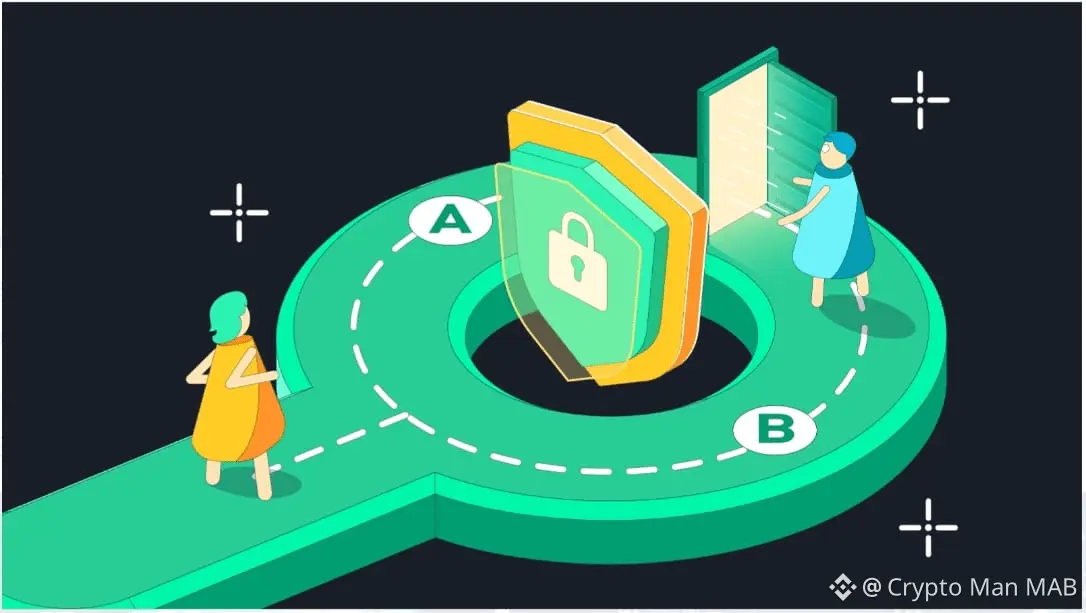
Phoenix integrates with Dusk's dual transaction architecture:
Phoenix UTXO-based, shielded/confidential transactions for maximum privacy (ideal for private settlements, RWA trades, or sensitive financial flows).
Moonlight Account-based model for transparent or compliance-oriented flows (e.g., public reporting or CEX integrations).
This duality allows developers and institutions to choose the right privacy level per application without needing separate chains or layers.
Phoenix UTXO-based, shielded/confidential transactions for maximum privacy (ideal for private settlements, RWA trades, or sensitive financial flows).
Moonlight Account-based model for transparent or compliance-oriented flows (e.g., public reporting or CEX integrations).
This duality allows developers and institutions to choose the right privacy level per application without needing separate chains or layers.

- Reward
- 1
- Comment
- Repost
- Share
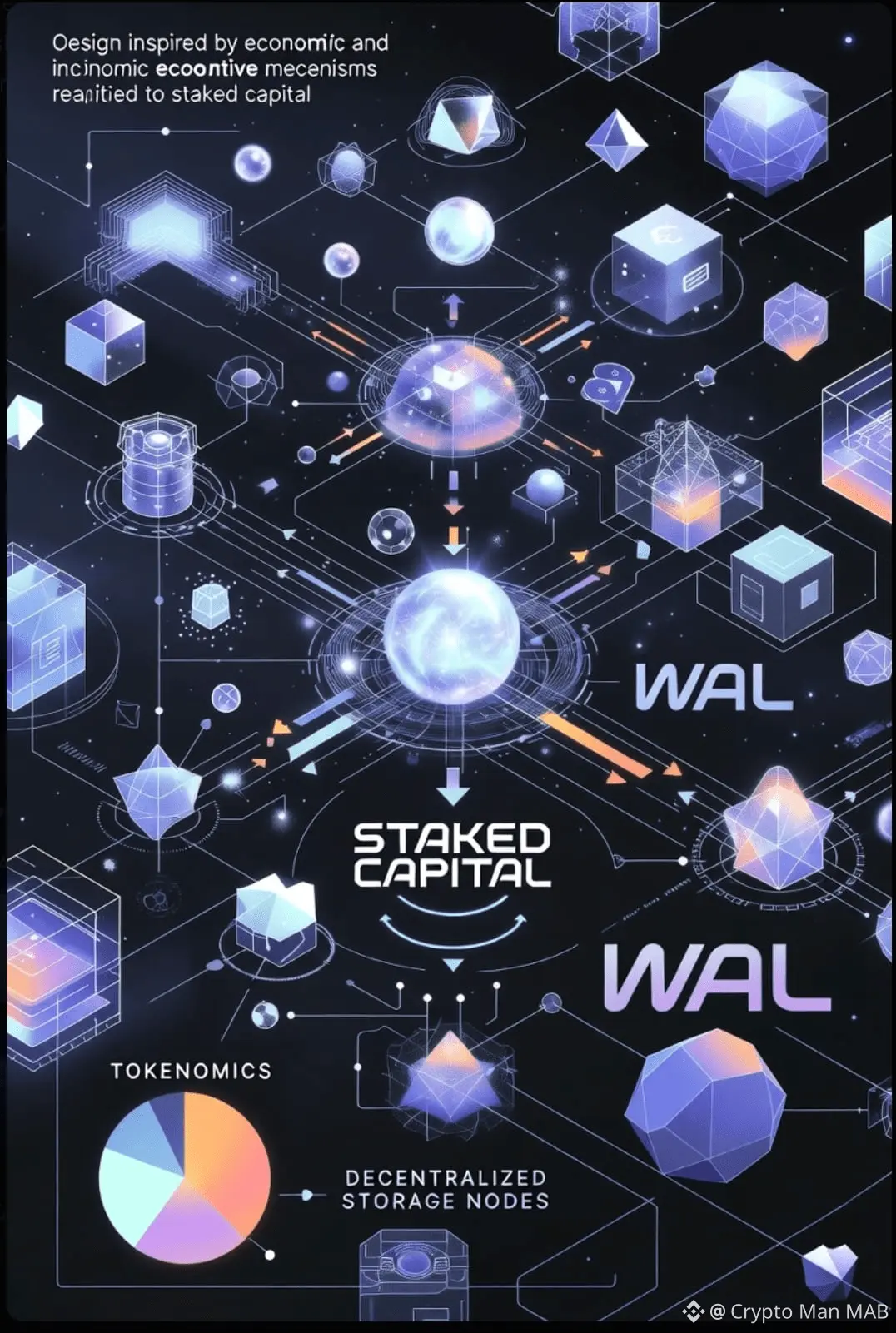
Shard migration isn't just housekeeping it's a cornerstone of Walrus's security model. By continuously rebalancing based on stake, Walrus ensures Byzantine tolerance (up to n/3 faulty control) remains effective even as nodes join, leave, or gain/lose delegations. The combination of stable assignment, low-friction cooperation, and punishing recovery creates powerful economic alignment: nodes are incentivized to stay honest, coordinate efficiently, and provision responsibly.
In a world of volatile participation and potential adversarial behavior, shard migration keeps the Walrus network fluid, s
In a world of volatile participation and potential adversarial behavior, shard migration keeps the Walrus network fluid, s
- Reward
- like
- Comment
- Repost
- Share
fixed-price model delivers two major advantages of walrus
Commitment enforcement Users cannot exit early without forfeiting payments, giving nodes confidence to lower future prices without risking mass cancellations of existing contracts.
Overall, Walrus's pricing and payment system balances competition among nodes with system-wide coordination, delivering predictable costs, strong availability guarantees, and incentives aligned toward long-term reliability in a decentralized storage ecosystem.
Commitment enforcement Users cannot exit early without forfeiting payments, giving nodes confidence to lower future prices without risking mass cancellations of existing contracts.
Overall, Walrus's pricing and payment system balances competition among nodes with system-wide coordination, delivering predictable costs, strong availability guarantees, and incentives aligned toward long-term reliability in a decentralized storage ecosystem.
- Reward
- like
- Comment
- Repost
- Share
The design aims for competitive pricing that reflects real resource costs, efficient allocation (stake directs capacity to reliable providers), and minimal adversarial behavior through economic penalties.

- Reward
- like
- Comment
- Repost
- Share
Walrus, a decentralized storage protocol built on the Sui blockchain, enables efficient, high-availability storage for large binary data (known as blobs) through a sophisticated economic model. Due to its distributed architecture, storage capacity and write operations require competitive yet collaborative pricing. Storage nodes compete to provide ample capacity at attractive rates, while the system aggregates their contributions into a unified offering for users. This mechanism ensures economic
SUI-1,44%
- Reward
- 1
- Comment
- Repost
- Share
Without effective migration, a Byzantine (malicious or faulty)
- Reward
- like
- Comment
- Repost
- Share
Walrus, a decentralized storage protocol developed by Mysten Labs and built on the Sui blockchain, tackles unique economic challenges in ensuring reliable, long-term data storage in a permissionless environment. Unlike traditional blockchains that focus primarily on transaction consensus and short-term state changes, Walrus uses a blockchain (Sui) primarily as a control plane for coordination, payments, metadata, and security enforcement. This inheritance of blockchain consensus security shifts
SUI-1,44%
- Reward
- like
- Comment
- Repost
- Share
Vanar's approach to build the blockchain is simple and efficient in terms of choosing a
battle-tested blockchain as its starting point and doing improvements and changes to the
protocol to achieve the business goals that Vanar envisions around speed, cost and user
onboarding. For this Vanar is to be built on top of the Go Ethereum codebase that is
already audited, running in production and very well tested and trusted by millions.
Vanar will make changes to the protocol to ensure:It is always cheap for the end users
Fast to build nice user experiences with quick response times
Secure and fool
battle-tested blockchain as its starting point and doing improvements and changes to the
protocol to achieve the business goals that Vanar envisions around speed, cost and user
onboarding. For this Vanar is to be built on top of the Go Ethereum codebase that is
already audited, running in production and very well tested and trusted by millions.
Vanar will make changes to the protocol to ensure:It is always cheap for the end users
Fast to build nice user experiences with quick response times
Secure and fool

- Reward
- like
- Comment
- Repost
- Share
Vanar Chain has adopted a pragmatic and highly effective strategy for developing its Layer 1 blockchain. Rather than starting from scratch, the project builds directly on a proven, battle-tested foundation: the Go Ethereum (Geth) codebase. This Ethereum client is one of the most widely used implementations of the Ethereum protocol, having undergone extensive audits, rigorous testing, and real-world deployment by millions of users and developers worldwide. By forking and customizing Geth, Vanar l
ETH-4,36%
- Reward
- like
- Comment
- Repost
- Share
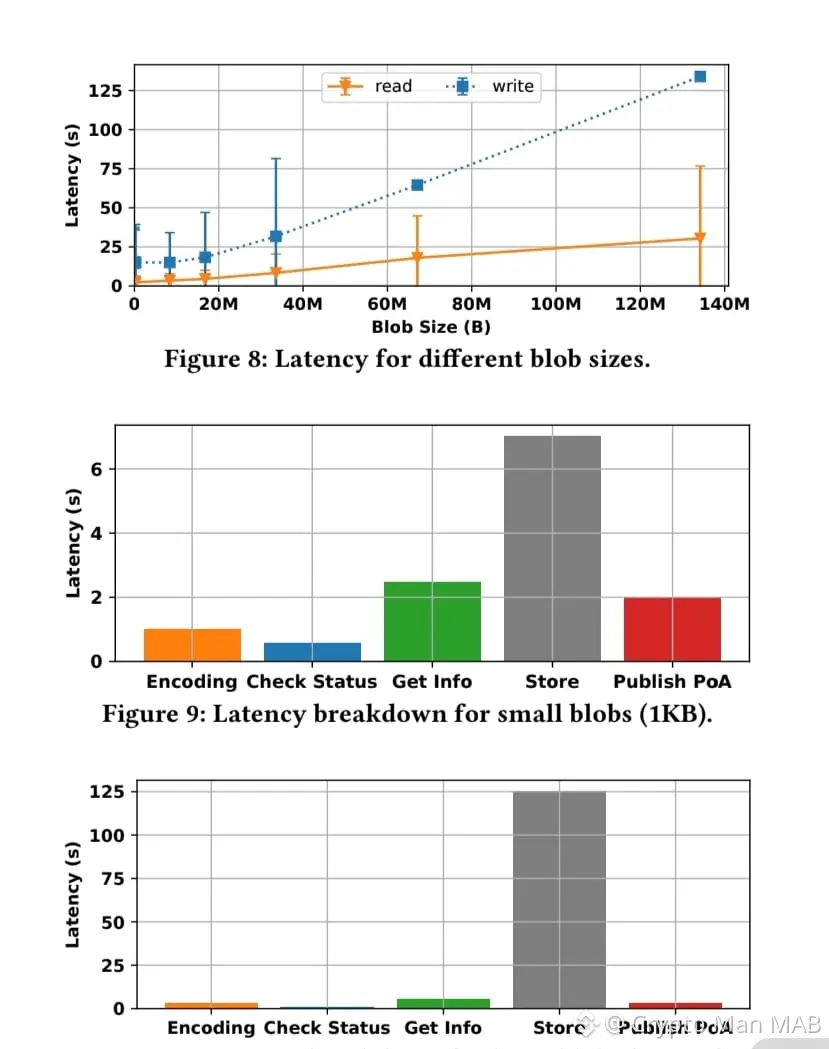
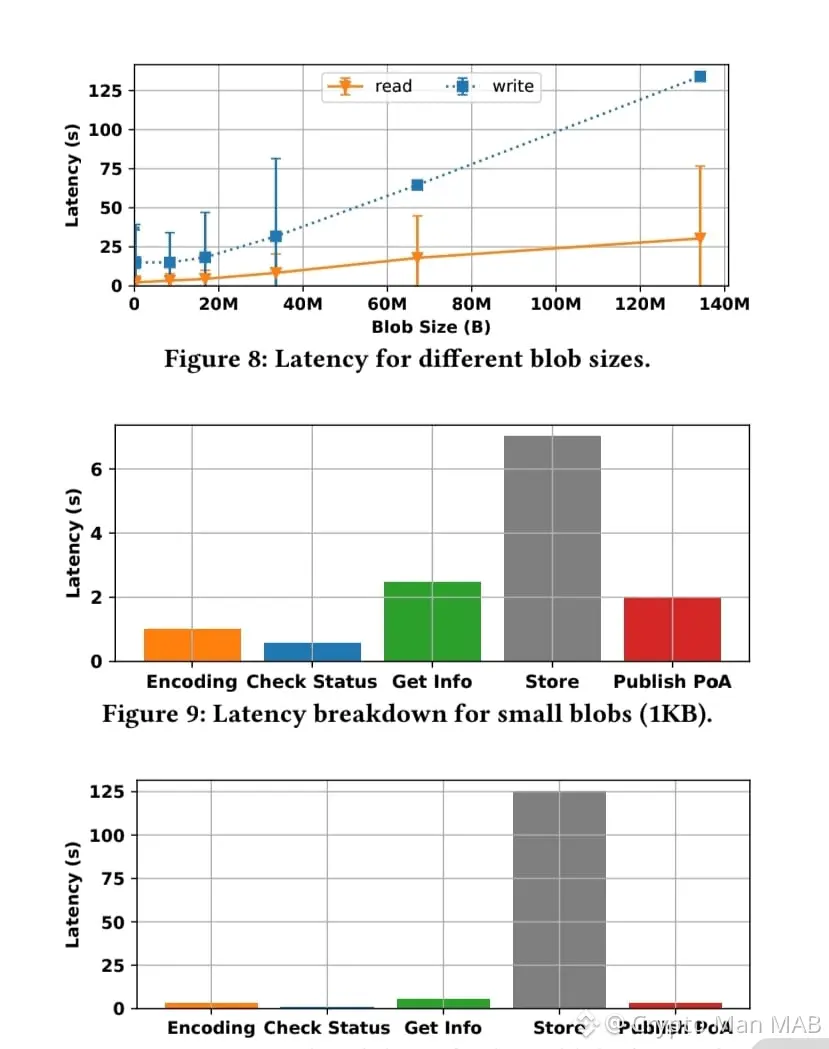
Walrus Latency. Figure 8 illustrated the end-to-end latency experienced by the client. We start measuring before the client encodesthe blob and finish when it observes a proof-of-availability confirmation on the blockchain. Each point represents the p50 over 5
minutes of runs; error bars indicate p90.
The graph shows that read latency remains low, even for large
blobs. For small blobs (less than 20 MB), the latency stays below 15
seconds. For large blobs (130 MB), the latency increases to around
30 seconds
{future}(WALUSDT)
minutes of runs; error bars indicate p90.
The graph shows that read latency remains low, even for large
blobs. For small blobs (less than 20 MB), the latency stays below 15
seconds. For large blobs (130 MB), the latency increases to around
30 seconds
{future}(WALUSDT)
- Reward
- like
- Comment
- Repost
- Share
Walrus stands out in the decentralized storage space by prioritizing **scale-optimized** and narrative-optimized design from the ground up
focusing first on rigorous technical foundations rather than hype.
These elements rarely trend on social media or spark viral threads, but they are absolutely critical for building reliable, enterprise-grade infrastructure. Walrus employs an encoding scheme—its innovative Red Stuff erasure coding—that delivers somewhat predictable overhead rather than chasing the most glamorous or cutting-edge algorithm. That predictability is exactly what enterprises and
focusing first on rigorous technical foundations rather than hype.
These elements rarely trend on social media or spark viral threads, but they are absolutely critical for building reliable, enterprise-grade infrastructure. Walrus employs an encoding scheme—its innovative Red Stuff erasure coding—that delivers somewhat predictable overhead rather than chasing the most glamorous or cutting-edge algorithm. That predictability is exactly what enterprises and

- Reward
- like
- Comment
- Repost
- Share
Withdrawals? Burn pBTC, and a Multi-Party Computation (MPC) quorum signs off with threshold signatures--no single point of failure. Security is ironclad: quorum-based validation, onchain audits, and future upgrades like zero-knowledge proofs. This isn't just a bridge; it's a portal for BTC to dance in DeFi without losing its soul.
{future}(XPLUSDT)
{future}(XPLUSDT)
- Reward
- like
- Comment
- Repost
- Share
Not full blackout secrecy. Not wide-open surveillance vibes.
It's *controlled visibility the smart way.
Sensitive deets? Hidden by default.
Authorized eyes? Verify it's legit via zk-proofs. No raw data exposed. Ever.
Phoenix protocol went LIVE post-Jan 7, 2026 mainnet drop 🚀
Sender, receiver, amounts → encrypted with zero-knowledge magic.
On-chain? Just clean mathematical commitments.
You see PROOF it's valid. Not the actual tea.
Need to prove compliance? Drop a short zk-proof:
✅ Tx followed the rules
✅ Values were correct
✅ Came from the right wallet
Truth without the receipt
It's *controlled visibility the smart way.
Sensitive deets? Hidden by default.
Authorized eyes? Verify it's legit via zk-proofs. No raw data exposed. Ever.
Phoenix protocol went LIVE post-Jan 7, 2026 mainnet drop 🚀
Sender, receiver, amounts → encrypted with zero-knowledge magic.
On-chain? Just clean mathematical commitments.
You see PROOF it's valid. Not the actual tea.
Need to prove compliance? Drop a short zk-proof:
✅ Tx followed the rules
✅ Values were correct
✅ Came from the right wallet
Truth without the receipt
- Reward
- like
- Comment
- Repost
- Share
In the landscape of decentralized storage, security is paramount. Walrus, the high-performance blob storage protocol built on the Sui blockchain, stands out for its robust defenses against faults and malicious actors. At its core, Walrus employs advanced Byzantine Fault Tolerance (BFT) mechanisms and a sophisticated node incentive system to ensure data integrity, availability, and long-term reliability. This deep dive explores how Walrus achieves these through its innovative Red Stuff encoding p
SUI-1,44%
- Reward
- like
- Comment
- Repost
- Share
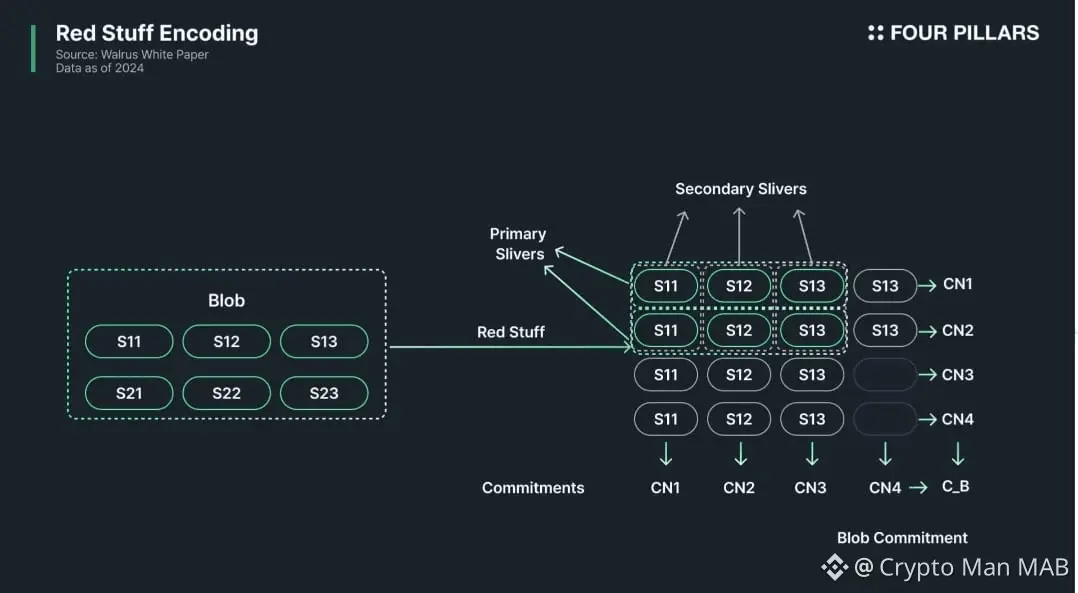
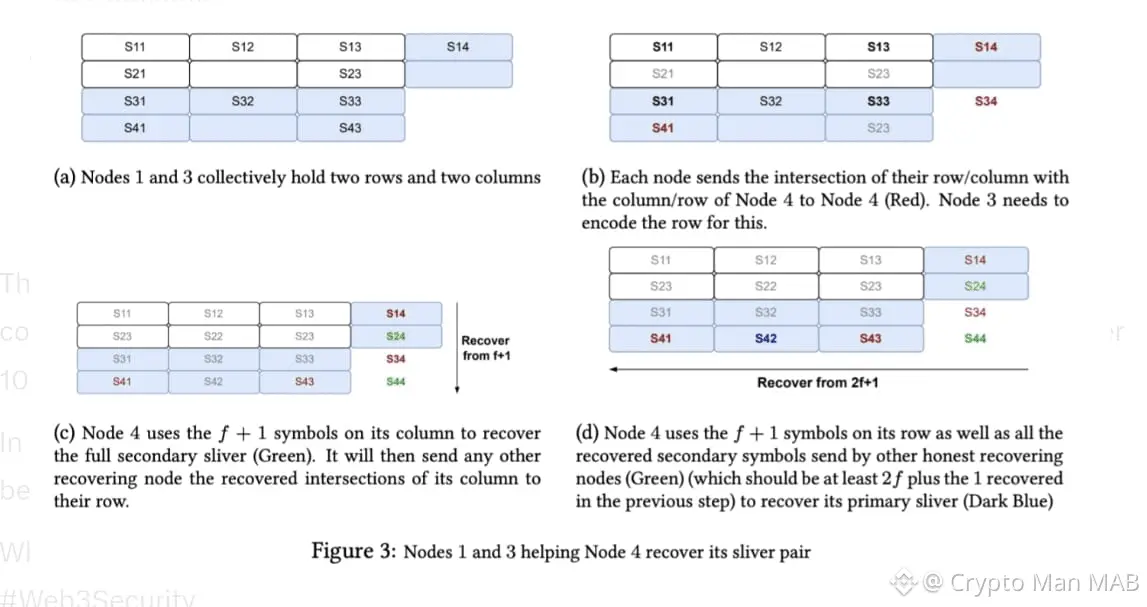
Decentralized storage isn't just about uptime—it's about surviving Byzantine faults, lazy nodes, and real economic attacks. Walrus nails this on Sui with Red Stuff erasure coding + hardcore incentives. Here's the breakdown in 2026:
🔒 Byzantine Fault Tolerance (BFT) at its core
Walrus tolerates up to 1/3 malicious or failing nodes (standard BFT threshold) while keeping data fully recoverable.
Red Stuff uses 2D erasure coding → splits blobs into slivers across shards with only ~4.5x replication overhead (vs 10-30x in naive systems).
Result? 80-99% cheaper than Filecoin/Arweave for equival
🔒 Byzantine Fault Tolerance (BFT) at its core
Walrus tolerates up to 1/3 malicious or failing nodes (standard BFT threshold) while keeping data fully recoverable.
Red Stuff uses 2D erasure coding → splits blobs into slivers across shards with only ~4.5x replication overhead (vs 10-30x in naive systems).
Result? 80-99% cheaper than Filecoin/Arweave for equival
- Reward
- like
- Comment
- Repost
- Share
The US dollar is falling but crypto isn't here to bury it... it's here to absorb it!
Fiat won't vanish. It migrates into digital assets. Stablecoins pegged to the USD? They're locking in dollar dominance worldwide massive Treasury buyers spreading Uncle Sam's reach phone-by-phone, not bank-by-bank.
As Scott Bessent puts it: "Crypto doesn't kill the dollar it locks it in."
Geopolitical chaos, BRICS moves, inflation the old fiat is flailing... but crypto is the upgrade that keeps the dollar in the game, just digitized.
The future isn't fiat vs. crypto.
It's fiat IN crypto.
Who's ready for the
Fiat won't vanish. It migrates into digital assets. Stablecoins pegged to the USD? They're locking in dollar dominance worldwide massive Treasury buyers spreading Uncle Sam's reach phone-by-phone, not bank-by-bank.
As Scott Bessent puts it: "Crypto doesn't kill the dollar it locks it in."
Geopolitical chaos, BRICS moves, inflation the old fiat is flailing... but crypto is the upgrade that keeps the dollar in the game, just digitized.
The future isn't fiat vs. crypto.
It's fiat IN crypto.
Who's ready for the

- Reward
- like
- Comment
- Repost
- Share
In the dynamic intersection of artificial intelligence and blockchain technology, the emergence of on-chain autonomous agents is poised to revolutionize digital economies. As of early 2026, platforms like Talus Network are leveraging the Sui blockchain and Walrus decentralized storage to create AI agents that operate independently, execute complex workflows, and generate value without constant human intervention. This synergy between Walrus's verifiable data storage and Talus's agentic framework
- Reward
- like
- Comment
- Repost
- Share