#美联储利率不变但内部分歧加剧 April 30 Bitcoin Watch: Fed’s 8:4 Rare Split, Powell’s “Last Dance” Ends, $75,000 Defense Line in the Final Showdown
Internal Fed Disagreement Reaches 30-Year High, Powell Warns of “Significantly Elevated” Inflation Before Departure, Bitcoin Tests $75,000 Support and Ranges — A Storm Is Brewing.
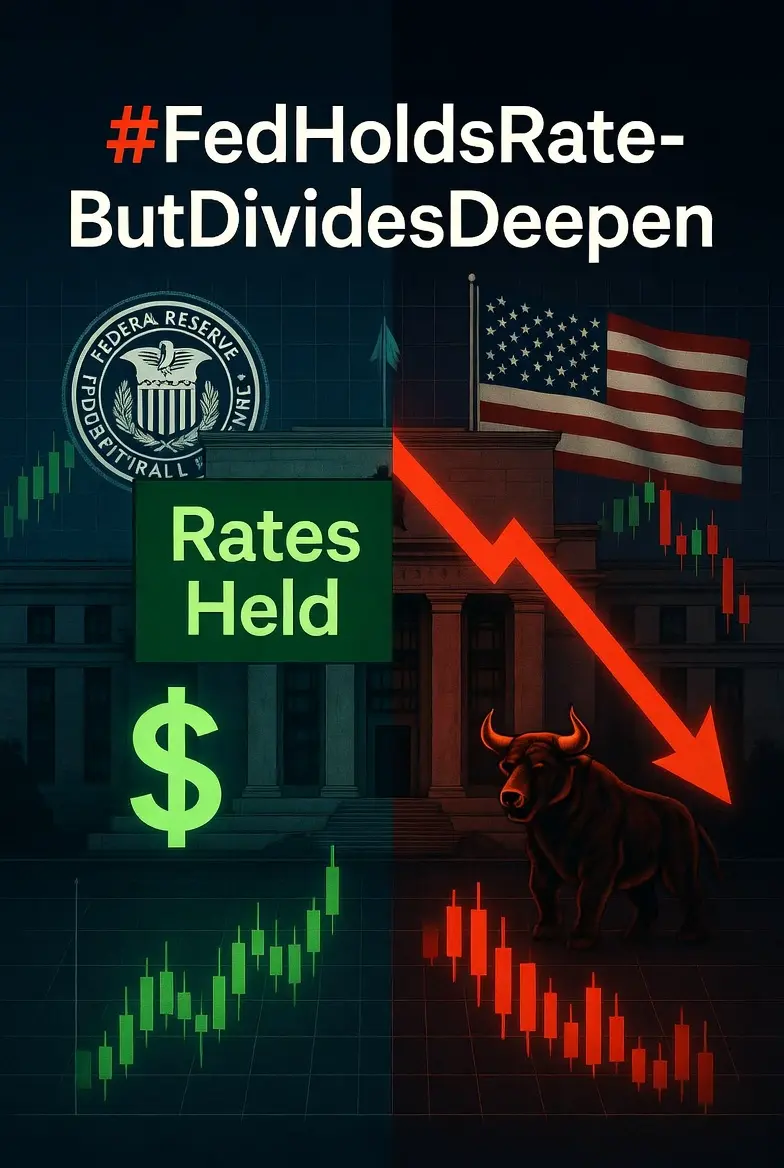
In the early hours of April 30 Beijing time, the Federal Reserve announced as scheduled to keep the federal funds rate in the 3.50%–3.75% range, marking the third consecutive pause in rate cuts, in line with market expectations.
But beneath the “as expected” surface, a split shook the global markets.
I. Fed Internal Division: 4 Votes Against and Powell’s “Last Dance”
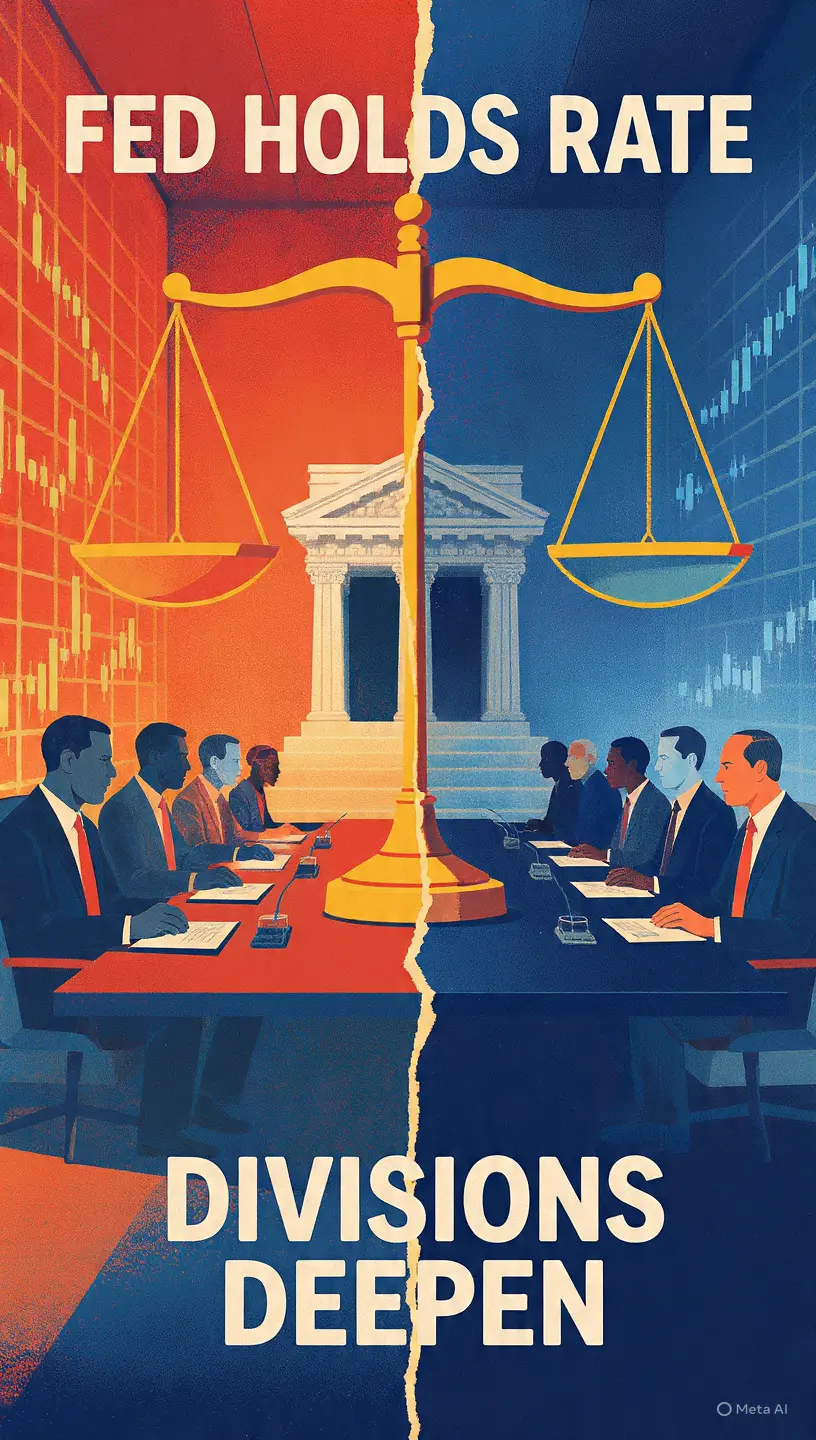
After the 8-4 voting result was announced, the entire market felt the tension erupting within the Fed.
The four dissenting votes set a record for the most severe internal split since October 1992. Fed Governor Mester advocated for a 25 basis point rate cut; Cleveland Fed President Mester, Minneapolis Fed President Kashkari, and Dallas Fed President Logan opposed including language in the statement indicating a “dovish tilt.” The three officials opposing a “dovish tilt” agreed that inflation remains above target and risks are skewed upward, so wording should not suggest rate cuts.
Powell, in his final press conference as Chair, admitted that the number of officials supporting a neutral to slightly hawkish stance has increased, and that rate guidance might change at the next meeting.
This meeting also marked a significant moment as Powell’s tenure as Fed Chair ended. He briefly said at the press conference, “Wishing Kevin W. all the best. This is my last press conference as Chair.” He then confirmed that after stepping down in May, he will remain on the Fed Board of Governors, becoming the first official since 1948 to stay on the board after resigning as Chair.
He explained, “I had planned to fully retire, but the events of the past three months left me with no choice — I will stay until the matter is resolved.”
He then warned that political interference would bring catastrophic consequences to markets and the economy, and directly stated that the Fed’s independence is under threat, “If the Fed makes politically motivated decisions, markets will lose confidence.”
The inflation outlook is even more alarming. The Fed’s statement significantly upgraded its wording, changing inflation from “moderately elevated” to “significantly elevated,” citing recent global energy price increases.
II. Market Immediate Reaction: Oil Prices Surge, Bitcoin Plunges, Largest Volatility in Four Years
Following the rate decision, markets quickly shifted to risk aversion.
As the decision failed to ease inflation concerns, Brent crude futures surged 6.08%, settling at $118.03 per barrel; WTI futures rose 6.95%.
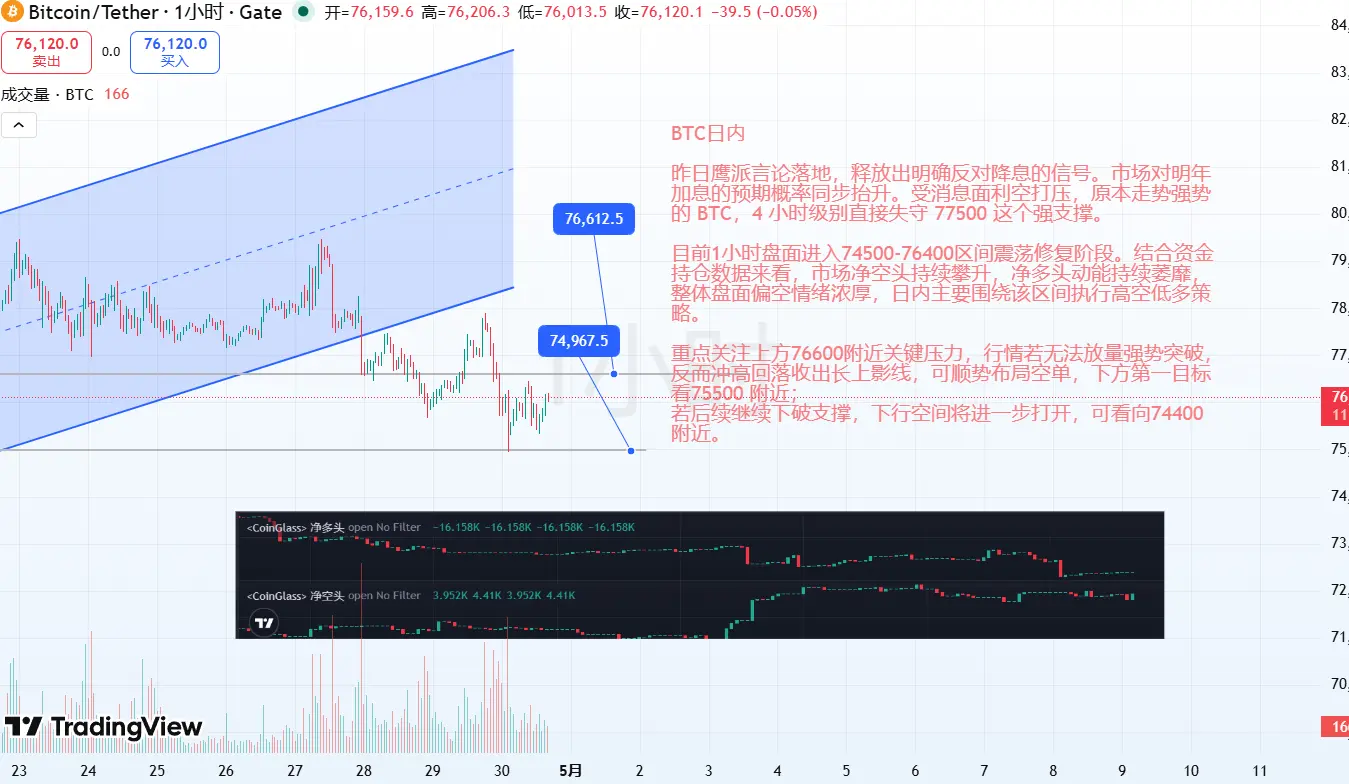
Cryptocurrency markets came under pressure. Bitcoin briefly dropped to a low of $75,337.4, after trading near $78,000 the previous day. As of 10:30 a.m. that day, Bitcoin traded around $76,000, Ethereum fell about 3.2% to $2,250.65; XRP declined 1.6% to $1.37, with most altcoins continuing downward. The Fear & Greed Index stood at 40, in the “neutral” zone.
III. Capital Flows: Institutions Continue Buying $1.2 Billion for Four Weeks, But Sentiment Is Changing?
Despite macro pressures, inflows of institutional funds remain high.
CoinShares’ weekly report shows that as of the week ending April 26, digital asset investment products saw a net inflow of $1.2 billion, marking the fourth consecutive week of inflows, with total assets under management rising to $155 billion — the highest since February 1. The US led with $1.1 billion, with Germany, Switzerland, and Canada also recording positive inflows, indicating broad demand.
Bitcoin led the inflows, with $933 million, bringing year-to-date inflows to $4 billion. Ethereum products saw inflows for the third straight week exceeding $190 million; XRP also returned to net inflow after a week of outflows.
However, on the flip side, on April 28, the US Bitcoin spot ETF recorded a net outflow of $263 million, ending nine consecutive days of net inflows. BlackRock’s iShares Bitcoin Trust (IBIT) did not see new funds that day; earlier, on April 27, IBIT experienced its first outflow since launch in January 2026 — $112 million in a single day.
The continuous inflows into ETFs have paused for the first time, coupled with IBIT’s first “bloodletting,” signaling a subtle cooling in market liquidity.
IV. On-Chain Chip Transfer: Retail Investors Exit, Institutions Take Over
Despite price volatility, on-chain data reveals a two-tiered picture.
April data shows short-term holders (less than 155 days) reduced holdings by about 290k BTC over 30 days, while long-term holders, ETFs, and strategic institutions absorbed over 370k BTC. The supply from long-term holders shifted from distribution to accumulation — a core indicator of market confidence as defined by Glassnode.
ARK Invest’s Q1 report also indicates that “believers” increased holdings from 2.13 million to 3.6 million BTC, a 69% quarterly growth, the fastest absorption since the 2020 Bitcoin cycle.
More notably, as of the end of April, the proportion of long-term holder addresses with balances reaching 74%-76% hit a record high. Institutional holdings of circulating BTC account for about 24%-28%, up roughly 17 percentage points from the 2020 halving. The era of “hype retail chasing rallies” is giving way to long-term institutional pricing.
In Q1, the main selling pressure came from miners, with listed miners selling over 32k BTC — the largest quarterly outflow ever, mainly due to reduced block rewards after the halving. As miner selling pressure gradually diminishes, recent April data further confirms a new on-chain paradigm where institutions are now the primary price setters.
V. Geopolitical Shadows: Oil Prices Cast a Shadow Over Bitcoin
The upgraded wording in the Fed statement is not without reason.
Oil prices remain high, with Brent surging past $118 per barrel. The Strait of Hormuz shipping disruptions and the resulting inflation transmission are the biggest concerns for US officials. The Fed directly acknowledged that evolving Middle East tensions are increasing economic uncertainty.
If the Iran conflict escalates further and oil prices continue rising, the Fed’s rate cut window could be further squeezed, and the crypto market will continue to face liquidity tightening expectations.
CICC analysts pointed out that amid Iran tensions and high oil prices, CME rate futures have delayed expectations for rate cuts until December 2027. Huatai Securities suggested that the Fed might even directly remove the rate cut guidance in the dot plot at the June meeting. Bloomberg’s U.S. economic analysis team summarized that unless there is a major deterioration in the labor market, “it’s hard to imagine this divided committee will act quickly to cut rates.”
VI. $75,000 Defense Battle: The Final Showdown Before the U.S. East Coast Weekend
Against the backdrop of the Fed’s “wait-and-see,” ongoing geopolitical conflicts, and subtle shifts in institutional funds, market volume remains subdued, with buyers and sellers still on the sidelines. Many analysts believe that $75,000 is a critical support level for Bitcoin:
· If held effectively, market confidence will rebound, prompting cautious institutional re-entry, with the next target again challenging the $80,000 psychological barrier;
· If confidence further collapses, prices may range sideways briefly before breaking below, with the next technical support near the dense trading zone around $72,000.
Conclusion: Calm Before the Storm, a Test of Conviction
The Fed’s 30-year record of internal dissent, Powell’s departure but continued role as a board member, ongoing Middle East tensions, and the divergence between institutional holdings and rising prices — Bitcoin stands at a crucial crossroads.
On-chain data shows long-term holders and institutions are “buying the dip,” while short-term holders and retail investors are exiting. This polarization suggests that regardless of who wins the $75,000 battle, the longer-term narrative for Bitcoin’s valuation has quietly shifted amid market confusion.
Internal Fed Disagreement Reaches 30-Year High, Powell Warns of “Significantly Elevated” Inflation Before Departure, Bitcoin Tests $75,000 Support and Ranges — A Storm Is Brewing.
In the early hours of April 30 Beijing time, the Federal Reserve announced as scheduled to keep the federal funds rate in the 3.50%–3.75% range, marking the third consecutive pause in rate cuts, in line with market expectations.
But beneath the “as expected” surface, a split shook the global markets.
I. Fed Internal Division: 4 Votes Against and Powell’s “Last Dance”
After the 8-4 voting result was announced, the entire market felt the tension erupting within the Fed.
The four dissenting votes set a record for the most severe internal split since October 1992. Fed Governor Mester advocated for a 25 basis point rate cut; Cleveland Fed President Mester, Minneapolis Fed President Kashkari, and Dallas Fed President Logan opposed including language in the statement indicating a “dovish tilt.” The three officials opposing a “dovish tilt” agreed that inflation remains above target and risks are skewed upward, so wording should not suggest rate cuts.
Powell, in his final press conference as Chair, admitted that the number of officials supporting a neutral to slightly hawkish stance has increased, and that rate guidance might change at the next meeting.
This meeting also marked a significant moment as Powell’s tenure as Fed Chair ended. He briefly said at the press conference, “Wishing Kevin W. all the best. This is my last press conference as Chair.” He then confirmed that after stepping down in May, he will remain on the Fed Board of Governors, becoming the first official since 1948 to stay on the board after resigning as Chair.
He explained, “I had planned to fully retire, but the events of the past three months left me with no choice — I will stay until the matter is resolved.”
He then warned that political interference would bring catastrophic consequences to markets and the economy, and directly stated that the Fed’s independence is under threat, “If the Fed makes politically motivated decisions, markets will lose confidence.”
The inflation outlook is even more alarming. The Fed’s statement significantly upgraded its wording, changing inflation from “moderately elevated” to “significantly elevated,” citing recent global energy price increases.
II. Market Immediate Reaction: Oil Prices Surge, Bitcoin Plunges, Largest Volatility in Four Years
Following the rate decision, markets quickly shifted to risk aversion.
As the decision failed to ease inflation concerns, Brent crude futures surged 6.08%, settling at $118.03 per barrel; WTI futures rose 6.95%.
Cryptocurrency markets came under pressure. Bitcoin briefly dropped to a low of $75,337.4, after trading near $78,000 the previous day. As of 10:30 a.m. that day, Bitcoin traded around $76,000, Ethereum fell about 3.2% to $2,250.65; XRP declined 1.6% to $1.37, with most altcoins continuing downward. The Fear & Greed Index stood at 40, in the “neutral” zone.
III. Capital Flows: Institutions Continue Buying $1.2 Billion for Four Weeks, But Sentiment Is Changing?
Despite macro pressures, inflows of institutional funds remain high.
CoinShares’ weekly report shows that as of the week ending April 26, digital asset investment products saw a net inflow of $1.2 billion, marking the fourth consecutive week of inflows, with total assets under management rising to $155 billion — the highest since February 1. The US led with $1.1 billion, with Germany, Switzerland, and Canada also recording positive inflows, indicating broad demand.
Bitcoin led the inflows, with $933 million, bringing year-to-date inflows to $4 billion. Ethereum products saw inflows for the third straight week exceeding $190 million; XRP also returned to net inflow after a week of outflows.
However, on the flip side, on April 28, the US Bitcoin spot ETF recorded a net outflow of $263 million, ending nine consecutive days of net inflows. BlackRock’s iShares Bitcoin Trust (IBIT) did not see new funds that day; earlier, on April 27, IBIT experienced its first outflow since launch in January 2026 — $112 million in a single day.
The continuous inflows into ETFs have paused for the first time, coupled with IBIT’s first “bloodletting,” signaling a subtle cooling in market liquidity.
IV. On-Chain Chip Transfer: Retail Investors Exit, Institutions Take Over
Despite price volatility, on-chain data reveals a two-tiered picture.
April data shows short-term holders (less than 155 days) reduced holdings by about 290k BTC over 30 days, while long-term holders, ETFs, and strategic institutions absorbed over 370k BTC. The supply from long-term holders shifted from distribution to accumulation — a core indicator of market confidence as defined by Glassnode.
ARK Invest’s Q1 report also indicates that “believers” increased holdings from 2.13 million to 3.6 million BTC, a 69% quarterly growth, the fastest absorption since the 2020 Bitcoin cycle.
More notably, as of the end of April, the proportion of long-term holder addresses with balances reaching 74%-76% hit a record high. Institutional holdings of circulating BTC account for about 24%-28%, up roughly 17 percentage points from the 2020 halving. The era of “hype retail chasing rallies” is giving way to long-term institutional pricing.
In Q1, the main selling pressure came from miners, with listed miners selling over 32k BTC — the largest quarterly outflow ever, mainly due to reduced block rewards after the halving. As miner selling pressure gradually diminishes, recent April data further confirms a new on-chain paradigm where institutions are now the primary price setters.
V. Geopolitical Shadows: Oil Prices Cast a Shadow Over Bitcoin
The upgraded wording in the Fed statement is not without reason.
Oil prices remain high, with Brent surging past $118 per barrel. The Strait of Hormuz shipping disruptions and the resulting inflation transmission are the biggest concerns for US officials. The Fed directly acknowledged that evolving Middle East tensions are increasing economic uncertainty.
If the Iran conflict escalates further and oil prices continue rising, the Fed’s rate cut window could be further squeezed, and the crypto market will continue to face liquidity tightening expectations.
CICC analysts pointed out that amid Iran tensions and high oil prices, CME rate futures have delayed expectations for rate cuts until December 2027. Huatai Securities suggested that the Fed might even directly remove the rate cut guidance in the dot plot at the June meeting. Bloomberg’s U.S. economic analysis team summarized that unless there is a major deterioration in the labor market, “it’s hard to imagine this divided committee will act quickly to cut rates.”
VI. $75,000 Defense Battle: The Final Showdown Before the U.S. East Coast Weekend
Against the backdrop of the Fed’s “wait-and-see,” ongoing geopolitical conflicts, and subtle shifts in institutional funds, market volume remains subdued, with buyers and sellers still on the sidelines. Many analysts believe that $75,000 is a critical support level for Bitcoin:
· If held effectively, market confidence will rebound, prompting cautious institutional re-entry, with the next target again challenging the $80,000 psychological barrier;
· If confidence further collapses, prices may range sideways briefly before breaking below, with the next technical support near the dense trading zone around $72,000.
Conclusion: Calm Before the Storm, a Test of Conviction
The Fed’s 30-year record of internal dissent, Powell’s departure but continued role as a board member, ongoing Middle East tensions, and the divergence between institutional holdings and rising prices — Bitcoin stands at a crucial crossroads.
On-chain data shows long-term holders and institutions are “buying the dip,” while short-term holders and retail investors are exiting. This polarization suggests that regardless of who wins the $75,000 battle, the longer-term narrative for Bitcoin’s valuation has quietly shifted amid market confusion.