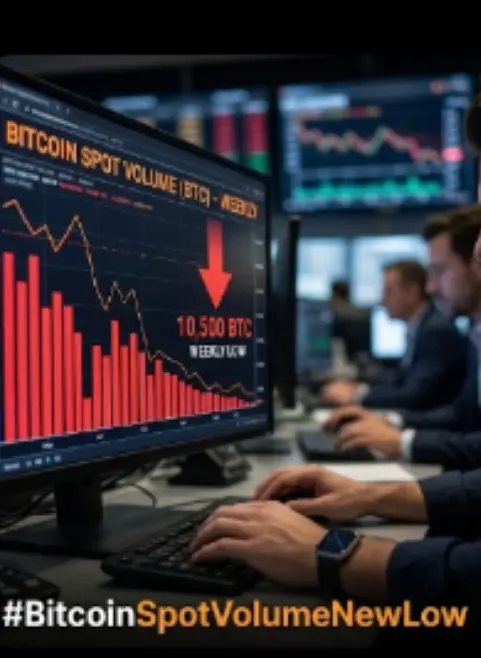
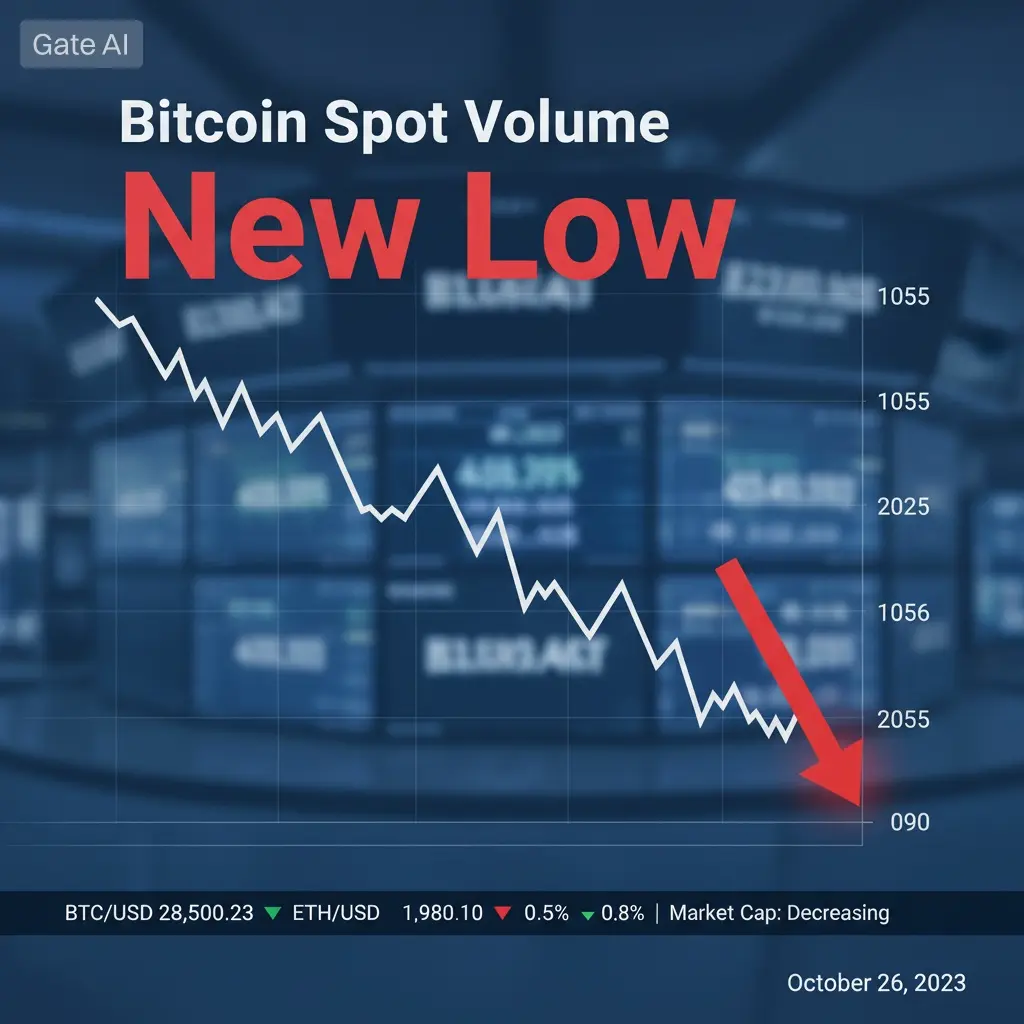
#BitcoinSpotVolumeNewLow
The crypto market is entering one of its most interesting phases of 2026. Prices continue moving, traders remain active on social media, and headlines still dominate every corner of the digital asset world — yet beneath the surface, one major signal is quietly flashing caution: Bitcoin spot trading volume has dropped to a new low.
At first glance, many people ignore spot volume. Most traders focus only on price. If Bitcoin pumps, they celebrate. If it dumps, they panic. But experienced market participants understand something deeper. Price alone never tells the full story. Volume is what reveals the real strength behind a move. It shows conviction, participation, confidence, and momentum.
Now the market is facing a situation where Bitcoin continues to attract attention globally, but actual spot buying and selling activity has weakened significantly. This creates an unusual environment where volatility can suddenly explode even when the market appears calm.
The decline in spot volume is not happening in isolation. It comes during a period where macro uncertainty, ETF dominance, institutional caution, and heavy derivatives trading are reshaping the entire structure of the crypto market. The old market cycle dynamics are evolving, and traders who fail to adapt may struggle in the months ahead.
For years, spot trading was considered the heartbeat of Bitcoin. It represented genuine demand. Real buyers purchasing BTC and holding it in wallets. Real investors entering positions based on conviction rather than short-term leverage. When spot activity was strong, rallies often became sustainable because they were supported by organic accumulation.
Today the picture looks very different.
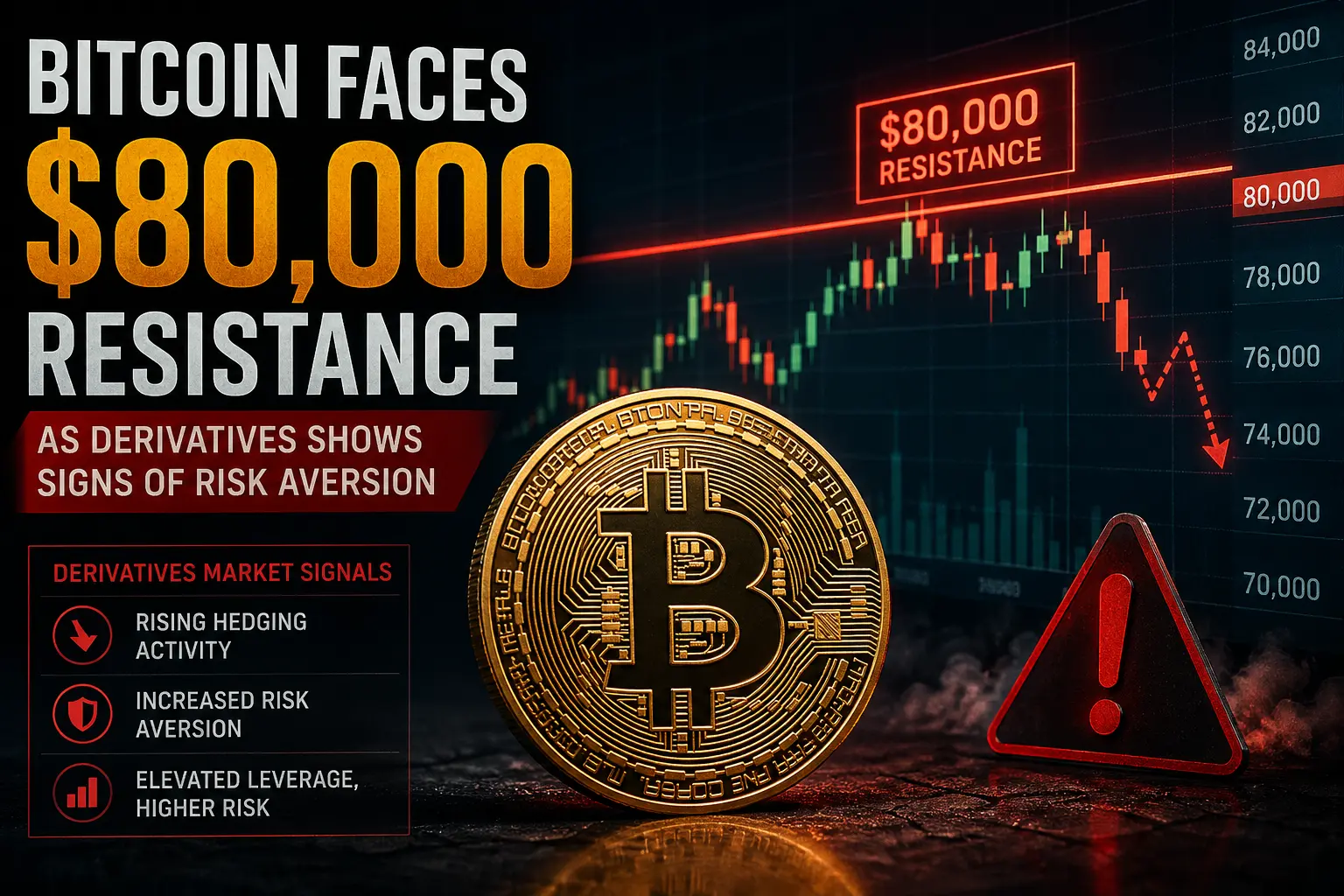
A huge portion of market activity is now dominated by leveraged derivatives. Futures markets are controlling short-term direction while spot participation continues fading. This means price can move aggressively without strong real demand underneath. In simple words, the market is becoming increasingly driven by speculation instead of actual ownership transfer.
That shift changes everything.
When spot volume reaches new lows, it signals hesitation. Investors are no longer rushing aggressively into the market. Retail traders appear exhausted after months of volatility. Many newcomers who entered during previous hype cycles are now waiting on the sidelines. Some lost confidence after repeated fake breakouts and liquidation events. Others are simply uncertain about the global economic outlook.
At the same time, institutions are behaving differently than many expected.
Back in earlier years, the narrative was simple: institutional adoption would bring endless liquidity into Bitcoin. But reality is more complicated. Large funds operate strategically. They hedge positions. They rotate capital. They respond to interest rates, macro risks, geopolitical tensions, and broader market conditions. Institutional participation does not always mean nonstop buying pressure.
In fact, during periods of uncertainty, institutions often reduce aggressive exposure and wait for clearer direction. That cautious behavior can heavily impact spot volumes because large players contribute enormous liquidity to the market.
Another important factor behind declining spot activity is the rise of Bitcoin ETFs.
ETFs have changed how many investors gain exposure to BTC. Instead of buying directly through exchanges, investors can now access Bitcoin through traditional financial products. While this expands adoption in one sense, it also changes market mechanics. A significant amount of demand that previously flowed directly into spot exchanges is now being redirected through ETF channels.
As a result, exchange-based spot activity appears weaker even while Bitcoin remains widely discussed globally.
This creates confusion for many traders.
Some see low spot volume and immediately become bearish. Others argue that ETF accumulation replaces traditional exchange activity. The truth likely sits somewhere in the middle. Low spot volume does not automatically mean Bitcoin will collapse, but it does mean the market lacks broad conviction right now.
And conviction matters more than hype.
History shows that sustainable bull runs are usually supported by strong and expanding spot demand. When retail investors, institutions, and long-term holders collectively accumulate BTC, momentum strengthens naturally. But when price rises mainly because of leverage-driven speculation, rallies often become fragile.
That fragility is exactly what traders are watching today.
The current environment feels highly reactive. Markets are jumping rapidly on headlines, Federal Reserve comments, geopolitical developments, oil price movements, and ETF flow data. One strong catalyst can trigger sudden upside momentum, while one negative surprise can cause sharp liquidations within hours.
Low spot liquidity amplifies these moves.
When fewer participants are actively trading spot markets, order books become thinner. Thin liquidity allows large orders to move price more aggressively. This means volatility can increase unexpectedly even during periods of reduced participation.
Ironically, quiet markets often become the most dangerous.
Many traders mistake low activity for stability. But experienced participants know low-volume environments can produce violent breakouts because there is insufficient liquidity to absorb sudden buying or selling pressure.
This is especially important for leveraged traders.
In 2026, leverage has become one of the dominant forces in crypto. Traders are using high-risk futures positions chasing quick profits in both directions. While leverage creates opportunities, it also increases instability. A single sharp move can trigger cascading liquidations across the market.
Without strong spot demand acting as a stabilizing force, those liquidation chains become even more powerful.
This is why analysts are paying close attention to Bitcoin spot volume right now. It is not just a technical metric. It reflects the emotional and structural condition of the market itself.
Another reason behind weaker spot activity may be psychological fatigue.
The crypto market has matured significantly, but it has also become emotionally exhausting. Retail traders have survived multiple boom-and-bust cycles. Many experienced extreme volatility, sudden crashes, exchange failures, regulatory fears, and unpredictable macro conditions over recent years.
As a result, participation patterns are changing.
Instead of blindly chasing every rally, investors are becoming more selective. Many prefer waiting for confirmation rather than buying aggressively during uncertain conditions. This cautious mindset naturally reduces spot trading volume.
At the same time, long-term holders continue playing a major role.
One fascinating aspect of Bitcoin is that a large percentage of supply remains inactive for extended periods. Long-term holders are refusing to sell despite market fluctuations. While this demonstrates strong conviction, it also contributes to lower circulating liquidity on exchanges.
When fewer coins move actively between buyers and sellers, spot volume declines further.
This creates a unique contradiction in the market.
On one side, declining spot volume suggests weaker participation. On the other side, reduced selling pressure from long-term holders can support prices during corrections. The battle between these forces is shaping Bitcoin’s current structure.
Social sentiment is also behaving differently this cycle.
In previous bull markets, retail excitement exploded rapidly. Viral hype flooded every platform. New traders entered daily hoping for overnight wealth. But the current environment feels more cautious and analytical. Traders are watching macroeconomics, liquidity conditions, and institutional flows more closely than ever before.
The market is becoming smarter — but also more hesitant.
That hesitation explains why spot activity remains subdued despite Bitcoin maintaining global relevance.
Meanwhile, whales continue influencing market direction behind the scenes.
Large holders often thrive during periods of uncertainty because reduced retail participation creates opportunities for accumulation. When public excitement fades and spot volume weakens, smart money frequently positions itself quietly before larger moves emerge.
This does not guarantee immediate bullish momentum, but it reminds traders that low activity periods often precede major transitions.
Crypto markets rarely stay silent forever.
Another layer affecting spot demand is global monetary policy.
Interest rates remain one of the most important forces across all financial markets. When borrowing costs stay elevated, risk appetite tends to weaken. Investors become more conservative. Capital flows shift toward safer assets. Speculative markets like crypto face additional pressure.
Bitcoin increasingly behaves as a macro-sensitive asset. It no longer moves independently from global finance the way it once did. Inflation expectations, central bank decisions, energy prices, recession fears, and geopolitical instability all influence investor behavior.
This broader macro connection partly explains why spot demand has cooled.
People are waiting for clarity.
Some traders believe lower rates later in the year could reignite stronger capital flows into crypto. Others remain cautious, fearing prolonged economic uncertainty. Until a stronger narrative dominates, spot activity may continue struggling to regain explosive momentum.
Yet despite all these concerns, Bitcoin’s long-term relevance remains powerful.
Even during periods of declining volume, Bitcoin continues attracting attention from governments, institutions, corporations, hedge funds, and retail investors worldwide. Adoption discussions continue expanding globally. Infrastructure keeps improving. Regulatory frameworks are gradually evolving.
The market may be quieter right now, but it is far from dead.
In fact, many seasoned investors believe silent periods often build the foundation for future expansion. Extreme euphoria rarely appears immediately after chaotic market conditions. Confidence rebuilds slowly. Liquidity returns gradually. Participation increases step by step.
That process may already be unfolding beneath the surface.
For traders, the key lesson is adaptation.
This is no longer a market where hype alone guarantees success. Understanding liquidity, volume dynamics, macro trends, derivatives positioning, and investor psychology has become essential. Spot volume is not just another chart indicator — it is a window into the health and sustainability of market movement.
If spot participation eventually returns strongly, Bitcoin could regain powerful momentum with broader conviction supporting price action. But if low volume persists while leverage dominates, volatility risks may continue increasing.
Either way, the current environment demands patience and awareness.
Many traders are searching desperately for certainty, but markets rarely provide clear answers during transitional phases. Sometimes the smartest move is observing carefully rather than forcing aggressive positions.
Bitcoin has survived countless periods of fear, doubt, and skepticism throughout its history. Every cycle introduces new challenges. Every phase reshapes market behavior. The decline in spot volume is simply the latest signal traders must learn to interpret.
The crypto market is entering one of its most interesting phases of 2026. Prices continue moving, traders remain active on social media, and headlines still dominate every corner of the digital asset world — yet beneath the surface, one major signal is quietly flashing caution: Bitcoin spot trading volume has dropped to a new low.
At first glance, many people ignore spot volume. Most traders focus only on price. If Bitcoin pumps, they celebrate. If it dumps, they panic. But experienced market participants understand something deeper. Price alone never tells the full story. Volume is what reveals the real strength behind a move. It shows conviction, participation, confidence, and momentum.
Now the market is facing a situation where Bitcoin continues to attract attention globally, but actual spot buying and selling activity has weakened significantly. This creates an unusual environment where volatility can suddenly explode even when the market appears calm.
The decline in spot volume is not happening in isolation. It comes during a period where macro uncertainty, ETF dominance, institutional caution, and heavy derivatives trading are reshaping the entire structure of the crypto market. The old market cycle dynamics are evolving, and traders who fail to adapt may struggle in the months ahead.
For years, spot trading was considered the heartbeat of Bitcoin. It represented genuine demand. Real buyers purchasing BTC and holding it in wallets. Real investors entering positions based on conviction rather than short-term leverage. When spot activity was strong, rallies often became sustainable because they were supported by organic accumulation.
Today the picture looks very different.
A huge portion of market activity is now dominated by leveraged derivatives. Futures markets are controlling short-term direction while spot participation continues fading. This means price can move aggressively without strong real demand underneath. In simple words, the market is becoming increasingly driven by speculation instead of actual ownership transfer.
That shift changes everything.
When spot volume reaches new lows, it signals hesitation. Investors are no longer rushing aggressively into the market. Retail traders appear exhausted after months of volatility. Many newcomers who entered during previous hype cycles are now waiting on the sidelines. Some lost confidence after repeated fake breakouts and liquidation events. Others are simply uncertain about the global economic outlook.
At the same time, institutions are behaving differently than many expected.
Back in earlier years, the narrative was simple: institutional adoption would bring endless liquidity into Bitcoin. But reality is more complicated. Large funds operate strategically. They hedge positions. They rotate capital. They respond to interest rates, macro risks, geopolitical tensions, and broader market conditions. Institutional participation does not always mean nonstop buying pressure.
In fact, during periods of uncertainty, institutions often reduce aggressive exposure and wait for clearer direction. That cautious behavior can heavily impact spot volumes because large players contribute enormous liquidity to the market.
Another important factor behind declining spot activity is the rise of Bitcoin ETFs.
ETFs have changed how many investors gain exposure to BTC. Instead of buying directly through exchanges, investors can now access Bitcoin through traditional financial products. While this expands adoption in one sense, it also changes market mechanics. A significant amount of demand that previously flowed directly into spot exchanges is now being redirected through ETF channels.
As a result, exchange-based spot activity appears weaker even while Bitcoin remains widely discussed globally.
This creates confusion for many traders.
Some see low spot volume and immediately become bearish. Others argue that ETF accumulation replaces traditional exchange activity. The truth likely sits somewhere in the middle. Low spot volume does not automatically mean Bitcoin will collapse, but it does mean the market lacks broad conviction right now.
And conviction matters more than hype.
History shows that sustainable bull runs are usually supported by strong and expanding spot demand. When retail investors, institutions, and long-term holders collectively accumulate BTC, momentum strengthens naturally. But when price rises mainly because of leverage-driven speculation, rallies often become fragile.
That fragility is exactly what traders are watching today.
The current environment feels highly reactive. Markets are jumping rapidly on headlines, Federal Reserve comments, geopolitical developments, oil price movements, and ETF flow data. One strong catalyst can trigger sudden upside momentum, while one negative surprise can cause sharp liquidations within hours.
Low spot liquidity amplifies these moves.
When fewer participants are actively trading spot markets, order books become thinner. Thin liquidity allows large orders to move price more aggressively. This means volatility can increase unexpectedly even during periods of reduced participation.
Ironically, quiet markets often become the most dangerous.
Many traders mistake low activity for stability. But experienced participants know low-volume environments can produce violent breakouts because there is insufficient liquidity to absorb sudden buying or selling pressure.
This is especially important for leveraged traders.
In 2026, leverage has become one of the dominant forces in crypto. Traders are using high-risk futures positions chasing quick profits in both directions. While leverage creates opportunities, it also increases instability. A single sharp move can trigger cascading liquidations across the market.
Without strong spot demand acting as a stabilizing force, those liquidation chains become even more powerful.
This is why analysts are paying close attention to Bitcoin spot volume right now. It is not just a technical metric. It reflects the emotional and structural condition of the market itself.
Another reason behind weaker spot activity may be psychological fatigue.
The crypto market has matured significantly, but it has also become emotionally exhausting. Retail traders have survived multiple boom-and-bust cycles. Many experienced extreme volatility, sudden crashes, exchange failures, regulatory fears, and unpredictable macro conditions over recent years.
As a result, participation patterns are changing.
Instead of blindly chasing every rally, investors are becoming more selective. Many prefer waiting for confirmation rather than buying aggressively during uncertain conditions. This cautious mindset naturally reduces spot trading volume.
At the same time, long-term holders continue playing a major role.
One fascinating aspect of Bitcoin is that a large percentage of supply remains inactive for extended periods. Long-term holders are refusing to sell despite market fluctuations. While this demonstrates strong conviction, it also contributes to lower circulating liquidity on exchanges.
When fewer coins move actively between buyers and sellers, spot volume declines further.
This creates a unique contradiction in the market.
On one side, declining spot volume suggests weaker participation. On the other side, reduced selling pressure from long-term holders can support prices during corrections. The battle between these forces is shaping Bitcoin’s current structure.
Social sentiment is also behaving differently this cycle.
In previous bull markets, retail excitement exploded rapidly. Viral hype flooded every platform. New traders entered daily hoping for overnight wealth. But the current environment feels more cautious and analytical. Traders are watching macroeconomics, liquidity conditions, and institutional flows more closely than ever before.
The market is becoming smarter — but also more hesitant.
That hesitation explains why spot activity remains subdued despite Bitcoin maintaining global relevance.
Meanwhile, whales continue influencing market direction behind the scenes.
Large holders often thrive during periods of uncertainty because reduced retail participation creates opportunities for accumulation. When public excitement fades and spot volume weakens, smart money frequently positions itself quietly before larger moves emerge.
This does not guarantee immediate bullish momentum, but it reminds traders that low activity periods often precede major transitions.
Crypto markets rarely stay silent forever.
Another layer affecting spot demand is global monetary policy.
Interest rates remain one of the most important forces across all financial markets. When borrowing costs stay elevated, risk appetite tends to weaken. Investors become more conservative. Capital flows shift toward safer assets. Speculative markets like crypto face additional pressure.
Bitcoin increasingly behaves as a macro-sensitive asset. It no longer moves independently from global finance the way it once did. Inflation expectations, central bank decisions, energy prices, recession fears, and geopolitical instability all influence investor behavior.
This broader macro connection partly explains why spot demand has cooled.
People are waiting for clarity.
Some traders believe lower rates later in the year could reignite stronger capital flows into crypto. Others remain cautious, fearing prolonged economic uncertainty. Until a stronger narrative dominates, spot activity may continue struggling to regain explosive momentum.
Yet despite all these concerns, Bitcoin’s long-term relevance remains powerful.
Even during periods of declining volume, Bitcoin continues attracting attention from governments, institutions, corporations, hedge funds, and retail investors worldwide. Adoption discussions continue expanding globally. Infrastructure keeps improving. Regulatory frameworks are gradually evolving.
The market may be quieter right now, but it is far from dead.
In fact, many seasoned investors believe silent periods often build the foundation for future expansion. Extreme euphoria rarely appears immediately after chaotic market conditions. Confidence rebuilds slowly. Liquidity returns gradually. Participation increases step by step.
That process may already be unfolding beneath the surface.
For traders, the key lesson is adaptation.
This is no longer a market where hype alone guarantees success. Understanding liquidity, volume dynamics, macro trends, derivatives positioning, and investor psychology has become essential. Spot volume is not just another chart indicator — it is a window into the health and sustainability of market movement.
If spot participation eventually returns strongly, Bitcoin could regain powerful momentum with broader conviction supporting price action. But if low volume persists while leverage dominates, volatility risks may continue increasing.
Either way, the current environment demands patience and awareness.
Many traders are searching desperately for certainty, but markets rarely provide clear answers during transitional phases. Sometimes the smartest move is observing carefully rather than forcing aggressive positions.
Bitcoin has survived countless periods of fear, doubt, and skepticism throughout its history. Every cycle introduces new challenges. Every phase reshapes market behavior. The decline in spot volume is simply the latest signal traders must learn to interpret.