Irys Enabling Programmable Data for Web3 Infrastructure

Irys Enabling Programmable Data for Web3 Infrastructure

Irys is a newly positioned Programmable Datachain, breaking through the traditional storage chain concept, transforming on-chain data from "static storage" into a callable and rewriteable data layer. It combines smart contracts with permanent storage technology, allowing data to be directly applied, used by AI models and dApps, and becoming an important milestone in Web3 data infrastructure.
2026-01-22 08:30:04
Is Electroneum (ETN) a good investment? A Comprehensive Analysis of Price Potential, Market Adoption, and Risk Factors in 2024

Is Electroneum (ETN) a good investment? A Comprehensive Analysis of Price Potential, Market Adoption, and Risk Factors in 2024

This comprehensive guide evaluates whether Electroneum (ETN) represents a viable investment opportunity in 2026 and beyond. As a Layer 1 EVM-compatible blockchain serving over 4 million users, ETN trades at $0.0013054 with a $23.47 million market capitalization. The article examines ETN's technical infrastructure featuring 5-second transaction speeds and instant finality, analyzes its real-world utility through AnyTask.com freelance platform, and reviews historical price trends showing 43.66% annual decline. Investment scenarios project 2026 prices ranging from $0.00082 (conservative) to $0.00179 (optimistic), with long-term 2031 forecasts reaching $0.00342 under favorable conditions. Critical considerations include limited liquidity across 5 exchanges, elevated volatility risk, regulatory uncertainties, and validator concentration risks. The analysis provides tiered investment strategies for beginner, experienced, and institutional investors, emphasizing portfolio allocation guidelines (1-10%), risk manageme
2026-01-22 08:26:10
Is Sophon (SOPH) a good investment?: A Comprehensive Analysis of Market Potential, Risk Factors, and Future Prospects

Is Sophon (SOPH) a good investment?: A Comprehensive Analysis of Market Potential, Risk Factors, and Future Prospects

Sophon (SOPH) is a consumer-focused blockchain platform designed to onboard mainstream users through practical applications that monetize everyday data. Trading at $0.01176 with a $23.52 million market cap, SOPH presents both opportunities and risks worth evaluating. This comprehensive analysis examines the token's price history, showing an -85.45% decline from its $0.0799 peak, alongside market dynamics shaped by only 20% circulating supply. The article explores key investment factors including token scarcity, institutional adoption potential, and ecosystem development across consumer applications. Multiple investment scenarios range from conservative to optimistic price outlooks through 2031, supported by detailed risk assessments covering market volatility, regulatory uncertainty, and technical challenges. Practical investment strategies cater to new, experienced, and institutional investors, while emphasizing robust security practices and position sizing aligned with risk tolerance. The analysis provides
2026-01-22 08:24:07
What is on-chain data analysis and how can active addresses, transaction volume, and whale movements predict crypto market trends

What is on-chain data analysis and how can active addresses, transaction volume, and whale movements predict crypto market trends

This comprehensive guide explores on-chain data analysis as a powerful tool for predicting cryptocurrency market trends before price movements materialize. By analyzing active addresses as leading indicators, transaction volume dynamics, and whale behavior patterns, traders gain early signals of market inflection points. Active address growth correlates with network adoption and bullish momentum, while transaction volume spikes reveal whale accumulation strategies. Large holder distribution patterns and network fee trends provide additional predictive insights. The guide demonstrates how platforms like Gate enable real-time monitoring of these metrics across blockchains such as Solana, helping market participants identify bottoms, tops, and trend reversals. Combining multiple on-chain indicators with off-chain factors creates a comprehensive market analysis framework, essential for informed cryptocurrency trading decisions.
2026-01-22 08:14:58
ZKP vs AVAX: Which Layer-1 Blockchain Protocol Offers Better Scalability and Security?

ZKP vs AVAX: Which Layer-1 Blockchain Protocol Offers Better Scalability and Security?

This comprehensive investment analysis compares ZKP and AVAX as Layer-1 blockchain protocols, examining their scalability and security profiles. ZKP, launched in 2024, pioneers privacy infrastructure bridging Web 2.0 and Web 3.0 through advanced cryptography (Three-Party TLS, MPC, IZK), while AVAX operates as an established high-performance platform since 2020. The article evaluates historical price performance (ZKP: $0.1168 current vs AVAX: $12.43), market liquidity disparities ($283,893 vs $1,862,703 trading volumes), and long-term price projections through 2031. Key sections address tokenomics, institutional adoption, technology ecosystems, macroeconomic factors, and tailored investment strategies for conservative, aggressive, beginning, and institutional investors. Risk analysis covers market volatility, technical considerations, regulatory uncertainties, and liquidity constraints. The guide provides actionable insights helping investors determine optimal allocation strategies between emerging privacy inf
2026-01-22 08:14:27
What is a token economy model and how do allocation mechanisms, inflation design, and governance affect crypto value

What is a token economy model and how do allocation mechanisms, inflation design, and governance affect crypto value

This article explores the fundamental mechanisms driving cryptocurrency value through three core pillars: token allocation mechanisms that balance team, investor, and community distributions; inflation and deflation design strategies that control supply dynamics and price stability; and governance token utilities that empower holders with voting rights and fee distribution benefits. The guide examines how projects like XRP implement sustainable tokenomics through vesting schedules, burn mechanisms, and transparent supply capping to reduce dilution risks and maintain long-term value sustainability. By analyzing allocation fairness, inflation sustainability, and decentralized governance participation, readers gain insights into evaluating healthy token economy models and understanding how supply constraints, deflationary mechanisms, and community alignment collectively drive investor returns and ecosystem resilience across market cycles.
2026-01-22 08:10:27
What is the core technology and team background behind this crypto project's fundamentals?

What is the core technology and team background behind this crypto project's fundamentals?

This comprehensive guide examines the fundamental pillars of a successful cryptocurrency project. The article explores the core technology architecture, including distributed consensus mechanisms, cryptographic innovations, and P2P network design that eliminate centralized intermediaries. It demonstrates real-world adoption through market metrics, showcasing how decentralized payment systems drive institutional and retail acceptance. The analysis evaluates team expertise through GitHub contributions, open-source engagement, and blockchain development track records. Finally, it measures project credibility via transparent development roadmaps and verified milestone achievements. By combining technological robustness, experienced team execution, and proven market adoption, this framework helps investors and users assess crypto project fundamentals on Gate and evaluate whether underlying innovations translate into sustainable ecosystem growth and practical utility.
2026-01-22 08:08:40
What is the difference between cryptocurrency competitors: performance, market cap, and user adoption in 2026

What is the difference between cryptocurrency competitors: performance, market cap, and user adoption in 2026

This article provides a comprehensive analysis of cryptocurrency competitors in 2026, examining three critical dimensions: performance metrics, market capitalization, and user adoption rates. Bitcoin maintains 55.52% market dominance with $1.79 trillion market cap, prioritizing security over speed with 7 TPS. Solana leads performance with 65,000 TPS and fees under $0.001, while Ethereum Layer 2 solutions process 4,000 TPS. The article compares active addresses, daily transactions, and ecosystem expansion across blockchains, revealing that successful cryptocurrencies balance technological innovation with network effects. Differentiation strategies vary—Bitcoin emphasizes decentralized security, Ethereum dominates smart contracts, and Solana excels in throughput. User adoption directly drives competitiveness, with scaling solutions and regulatory clarity emerging as key competitive factors determining market positioning throughout 2026.
2026-01-22 08:07:08
What is a token economic model and how do allocation mechanisms, inflation design, and governance tokenomics affect crypto value

What is a token economic model and how do allocation mechanisms, inflation design, and governance tokenomics affect crypto value

This comprehensive guide explores token economic models—the fundamental frameworks defining how cryptocurrencies are created, distributed, and utilized within blockchain ecosystems. The article examines three critical mechanisms: token allocation (optimal 50-70% community, 20-30% team, 10-20% investors), inflation design (emission schedules balanced with burn mechanisms), and governance tokenomics (voting rights combined with staking rewards). Using Ethereum as a case study, the article demonstrates how well-designed tokenomics align stakeholder incentives, ensure long-term sustainability, and drive value accrual through genuine utility and scarcity mechanics. The framework addresses key evaluation metrics, historical failure cases, and practical insights for assessing cryptocurrency projects on Gate and other platforms. Ideal for investors, developers, and crypto enthusiasts seeking to understand sustainable token valuation principles.
2026-01-22 08:04:25
BSC Meme Coin Frenzy Surpasses Ethereum, Why Binance Smart Chain Is Leading the Meme Cycle

BSC Meme Coin Frenzy Surpasses Ethereum, Why Binance Smart Chain Is Leading the Meme Cycle

Meme coin trading is not just about picking a funny ticker and hoping for a pump. It is a speed game, a cost game, and a liquidity game. That is exactly why Binance Smart Chain (BSC) keeps pulling retail traders away from Ethereum, especially during peak volatility windows when fees rise and transaction delays become expensive. In 2026, the market is leaning into shorter attention cycles, faster narrative rotations, and rapid buy-sell behavior driven by Telegram chatter and wallet-tracking tools. In that environment, execution quality matters more than theory. Traders want to click in, click out, and keep their fees small enough that the trade still makes sense. This is where BSC has a structural advantage. It does not win because it is “better” in every technical way. It wins because it matches meme coin reality, which is fast entries, fast exits, low friction, and constant experimentation.
2026-01-22 07:21:49
Iran's USDT Holdings Analysis: How Stablecoins Help Support a Weakened National Currency Exchange Rate

Iran's USDT Holdings Analysis: How Stablecoins Help Support a Weakened National Currency Exchange Rate

This article offers an in-depth analysis of Iran’s strategic accumulation of USDT stablecoins to counter severe depreciation of its national currency and international sanctions. Facing inflation rates above 40% and restricted access to traditional banking, Iranian businesses and individuals have increasingly turned to stablecoins to protect their assets and conduct cross-border transactions. The article explains how blockchain technology, leveraging decentralized networks, enables Iran to bypass sanctions—circumventing SWIFT and correspondent banking barriers. It further explores how this approach is spreading globally in other sanctioned economies such as Venezuela and Russia, illustrating the disruptive role stablecoins play in developing nations. Finally, the article assesses the geopolitical impact of widespread stablecoin use, showing how decentralized finance challenges the dollar’s dominance and drives a transformation of the international monetary system beyond Western control.
2026-01-22 07:11:40
What is ES: A Comprehensive Guide to ECMAScript and Modern JavaScript Standards

What is ES: A Comprehensive Guide to ECMAScript and Modern JavaScript Standards

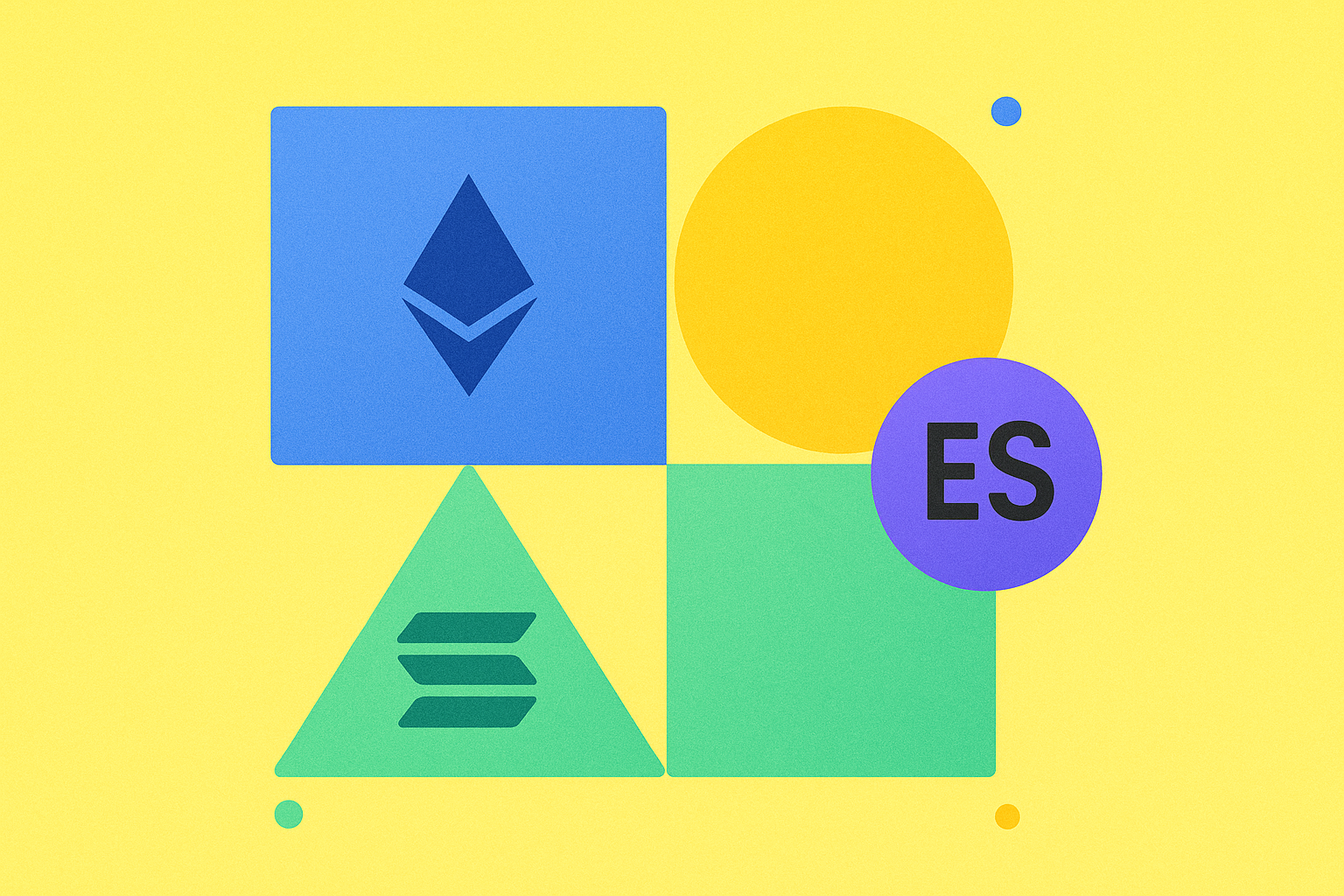
Eclipse represents an innovative Layer 2 scaling solution launched in 2025, combining Ethereum settlement, Solana Virtual Machine execution, and Celestia data availability to address blockchain scalability challenges. This comprehensive guide explores Eclipse's technical architecture, market performance, and ecosystem applications, demonstrating how it delivers Solana-level execution speed while maintaining Ethereum security guarantees. The ES token trades on Gate.com and multiple platforms, with a circulating supply of 150 million tokens. Backed by leading investors including Placeholder VC and Polychain, Eclipse serves DeFi protocols, NFT platforms, and high-frequency trading applications. The article covers Eclipse's modular design, on-chain metrics, strategic partnerships, and future roadmap, providing readers with essential insights into this emerging hybrid blockchain infrastructure and its role in cross-chain interoperability.
2026-01-22 06:45:40
What is XYM: A Comprehensive Guide to Symbol's Native Cryptocurrency and Blockchain Features

What is XYM: A Comprehensive Guide to Symbol's Native Cryptocurrency and Blockchain Features

This comprehensive guide explores Symbol (XYM), a next-generation enterprise-focused blockchain platform launched by NEM Group in 2020. Symbol addresses critical challenges in business blockchain adoption, secure asset exchange, and digital interoperability through its decentralized architecture and robust consensus mechanism. As of 2026, with over 6.34 billion XYM in circulation, Symbol operates as a mature Layer 1 solution offering secure value exchange, asset tokenization, and decentralized management capabilities. The platform delivers practical business applications through its mosaic feature, enabling efficient asset creation at lower transaction costs than alternatives. Trading on Gate.com and other exchanges, XYM empowers node operators and network participants while supporting enterprise digital transformation. Whether exploring blockchain technology or seeking enterprise solutions, Symbol provides a reliable, transparent, and scalable ecosystem for decentralized asset management and business integra
2026-01-22 06:43:14
What is MOVR: A Comprehensive Guide to Moonriver's Native Token and Its Role in the Parachain Ecosystem

What is MOVR: A Comprehensive Guide to Moonriver's Native Token and Its Role in the Parachain Ecosystem

This comprehensive guide explores MOVR, the native token of Moonriver, a fully EVM-compatible parachain on the Kusama network launched in 2021. The article examines Moonriver's role in bridging Ethereum development with Kusama's ecosystem, covering its technical architecture, decentralized consensus mechanism, and security features. With 971,966 holders and 10,585,010 circulating tokens, MOVR enables smart contract deployment, network staking, and governance participation. The guide discusses market performance, ranging from peak valuations of $494.26 to recent prices of $2.30, while analyzing core DeFi applications like Solarbeam. Readers will discover how to purchase MOVR on Gate, participate in network validation, and leverage Moonriver's cross-chain interoperability capabilities for deploying Ethereum-based applications.
2026-01-22 06:42:26
What is AVA: A Comprehensive Guide to Audio-Visual Analysis Technology and Its Applications

What is AVA: A Comprehensive Guide to Audio-Visual Analysis Technology and Its Applications

AVA is a utility token powering Travala.com, a leading cryptocurrency-friendly travel booking platform launched in 2017 to revolutionize travel payments through blockchain integration. As of 2026, AVA operates across Ethereum and Binance Smart Chain networks, serving over 3,000 token holders with practical applications including travel bookings, membership rewards, and payment processing. The token features decentralized architecture with transparent blockchain transactions, public-private key cryptography security, and fixed supply dynamics with 71.06% circulating supply. AVA trades at $0.3433 on Gate and 20 other exchanges, reflecting evolving market sentiment within the crypto travel sector. The platform addresses payment inefficiencies while offering cryptocurrency users exclusive discounts and rewards. Whether for cryptocurrency enthusiasts or frequent travelers, AVA demonstrates blockchain technology's real-world utility in traditional industries, supported by active community engagement and continued e
2026-01-22 06:42:16
Jumper to
Page