What is TradFi (Traditional Finance)? A Concise Guide to the TradFi Concept in 2026

What is TradFi (Traditional Finance)? A Concise Guide to the TradFi Concept in 2026

This guide delivers an in-depth exploration of traditional finance (TradFi), offering cryptocurrency beginners and Web3 enthusiasts a clear understanding of how centralized financial systems operate. It outlines the core components of TradFi—including banks, central authorities, and institutional intermediaries—and examines why the crypto community seeks to disrupt these systems with decentralized alternatives. The article reveals the hidden costs of traditional finance: undisclosed fees, sluggish transaction processes, and restrictive access that exclude 1.7 billion adults globally from the banking system. By contrasting TradFi with DeFi, it demonstrates how blockchain platforms such as Gate are expanding financial participation. This resource is well-suited for those examining the shortcomings of conventional banking and exploring more inclusive, transparent financial pathways.
2026-01-30 07:45:32
DeFi vs. TradFi: A Comprehensive Comparative Analysis for 2026

DeFi vs. TradFi: A Comprehensive Comparative Analysis for 2026

This guide provides a systematic analysis of the essential differences between decentralized finance (DeFi) and traditional finance (TradFi), offering a thorough explanation of how blockchain technology is reshaping banking structures that have endured for centuries. It presents an in-depth comparison of DeFi’s advantages in speed, cost efficiency, and global accessibility, alongside a detailed examination of TradFi’s regulatory safeguards, institutional stability, and consumer protection features. The article also investigates the fundamental divides in custody models, lending protocols, and access methods, and interprets the financial sector’s shift toward integration over mere opposition as we approach 2026. Whether you’re assessing trading opportunities on Gate, developing institutional investment strategies, or managing personal portfolios, this comparison provides valuable insights into the strengths and parallel development of both systems, empowering investors, developers, and financial professionals
2026-01-30 07:17:30
How will TradFi (traditional finance) shape the cryptocurrency market in 2025, and what implications will this have for 2026?

How will TradFi (traditional finance) shape the cryptocurrency market in 2025, and what implications will this have for 2026?

This comprehensive analysis examines the influence of traditional finance on the cryptocurrency market in 2025, paving the way for deeper integration in 2026. It provides a detailed assessment of institutional involvement, stablecoin interoperability, and banking innovations, highlighting their significant impact on the digital asset ecosystem. The report spotlights trends in the convergence of TradFi and cryptocurrencies, offering an in-depth review of market structure evolution and the prospects for mainstream financial integration. Designed for cryptocurrency investors, Web3 advocates, fintech experts, and institutional-level traders, this content delivers targeted insights for advanced market participants.
2026-01-30 07:08:08
What Is a Decentralized Autonomous Organization

What Is a Decentralized Autonomous Organization

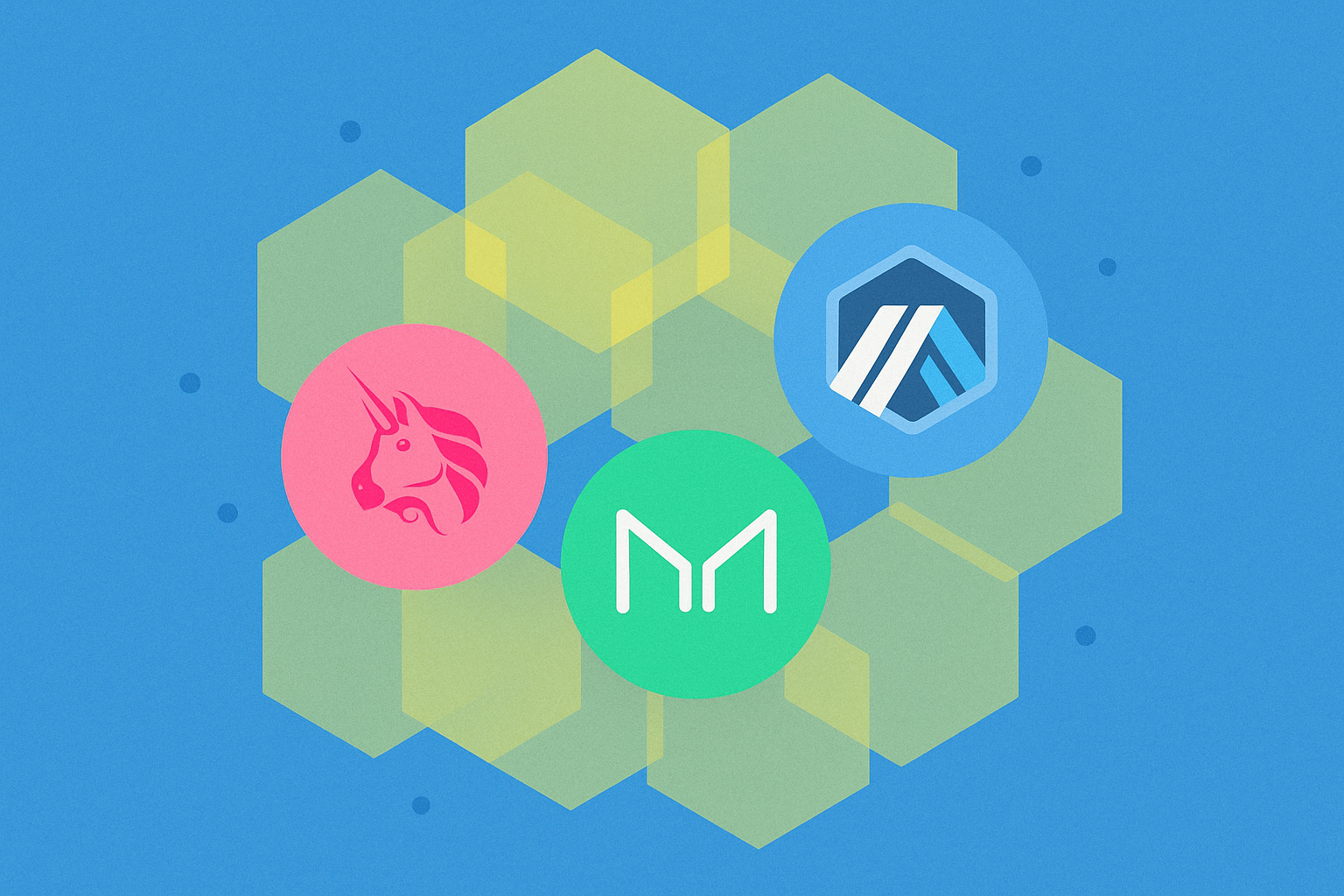
This article provides a comprehensive guide to Decentralized Autonomous Organizations (DAOs), explaining how blockchain-based communities can operate transparently without centralized leadership. It covers the evolution from the pioneering DAO of 2016 through modern implementations like Uniswap, MakerDAO, and Arbitrum on Gate and other platforms. The guide details how DAOs leverage smart contracts and governance tokens to enable democratic decision-making, where token holders collectively vote on proposals ranging from protocol upgrades to treasury management. Readers will learn the three-step DAO creation process: defining governance structure, developing secure smart contracts, and launching on blockchain. The article addresses practical use cases including decentralized finance, venture capital, content creation, and supply chain management, while candidly examining challenges such as smart contract vulnerabilities, regulatory uncertainty, and transaction costs. Whether you're a developer, investor, or blo
2026-01-30 06:56:20
What is SPARKLET: A Comprehensive Guide to the Revolutionary Micro-Learning Platform

What is SPARKLET: A Comprehensive Guide to the Revolutionary Micro-Learning Platform

Upland (SPARKLET) is a revolutionary Layer 1 gaming platform launched in 2024 that bridges virtual properties with real-world mapping through blockchain technology. Built on the EOS blockchain with an ERC-20 token infrastructure, it addresses the lack of immersive digital economies in blockchain gaming by providing genuine ownership opportunities for players, creators, and developers. The platform operates through a decentralized infrastructure where SPARKLET tokens facilitate transactions across a metaverse ecosystem supporting both Web2 and Web3 applications. With 3,692 active token holders and a market cap of $3.59 million, Upland demonstrates growing community engagement despite experiencing 26.36% yearly price volatility. This comprehensive guide explores Upland's technical architecture, market performance on Gate.com, tokenomics with 1 billion total supply, and its potential to transform virtual property gaming while navigating competitive pressures and regulatory considerations.
2026-01-30 06:50:06
What is BOX: A Comprehensive Guide to Understanding Box Storage and Collaboration Platform

What is BOX: A Comprehensive Guide to Understanding Box Storage and Collaboration Platform

Debox (BOX) is a decentralized Web3 social trading platform launched in 2024, addressing fragmentation in blockchain social interactions and community-driven asset management. Operating on a distributed, permissionless blockchain network, Debox integrates social networking with on-chain asset management, enabling transparent and secure transactions through cryptographic mechanisms. As of January 2026, BOX boasts 13,128 token holders with a circulating supply of 285.99 million tokens, currently trading at $0.012572 on Gate.com. The platform's ecosystem supports community-driven investment insights, Web3 social features, and decentralized governance. This comprehensive guide explores Debox's technical architecture, market performance, community engagement, and future roadmap, providing insights for both newcomers and experienced participants in the evolving Web3 social trading landscape.
2026-01-30 06:48:36
Is Xterio (XTER) a good investment?: A Comprehensive Analysis of Tokenomics, Use Cases, and Market Potential

Is Xterio (XTER) a good investment?: A Comprehensive Analysis of Tokenomics, Use Cases, and Market Potential

This comprehensive analysis examines whether Xterio (XTER) represents a viable investment opportunity within the Web3 gaming sector. The article evaluates XTER's current market position, trading at $0.02516 with a $3.56 million market capitalization and 141.63 million circulating tokens (14.16% of total supply). It reviews historical price movements, demonstrating significant volatility with a -93.82% decline from September 2025 peak levels, alongside detailed tokenomics analysis and supply mechanism evaluation. The guide provides short-term, mid-term, and long-term price predictions through 2031, with conservative to optimistic scenarios ranging from $0.019076 to above $0.055 levels. Core sections address investment strategies, risk management approaches including portfolio allocation ratios, secure storage recommendations, and comprehensive risk assessment covering market volatility, liquidity constraints, regulatory uncertainties, and technical platform dependencies. Readers can access real-time XTER prici
2026-01-30 06:38:49
Is LumiWave (LWA) a good investment?: A comprehensive analysis of the cryptocurrency's potential, risks, and market outlook

Is LumiWave (LWA) a good investment?: A comprehensive analysis of the cryptocurrency's potential, risks, and market outlook

LumiWave (LWA) is a Web3 intellectual property platform built on Sui blockchain, transforming traditional IP into NFTs and blockchain gaming content. This comprehensive analysis examines whether LWA represents a viable investment by evaluating its market position, price trajectory, and fundamental factors. The article reviews LWA's performance since its May 2024 launch at $0.065, current valuation of $3.57 million with 770,075,466 circulating tokens, and significant volatility including a 76.82% annual decline. Key sections analyze supply mechanics ensuring 100% token circulation, institutional adoption barriers with only 3,015 holders across 5 Gate exchanges, technology infrastructure risks dependent on Sui blockchain, and price scenarios ranging from $0.00334 to $0.01089 through 2031. Investment guidance addresses risk management through portfolio allocation, secure storage protocols for Sui wallets, and regulatory challenges in NFT and blockchain gaming sectors. The analysis concludes that LWA presents a h
2026-01-30 06:33:22
What is Web3? Key Facts About Web 3.0

What is Web3? Key Facts About Web 3.0

A complete beginner's guide to Web3 and decentralization. Explore blockchain, cryptocurrencies, and the benefits and applications of Web3. Learn the differences between Web2 and Web3, key technologies, and how to get involved in the decentralized ecosystem with Gate.
2026-01-30 06:29:25
LWA vs FLOW: A Comprehensive Comparison of Two Leading Blockchain Payment Solutions

LWA vs FLOW: A Comprehensive Comparison of Two Leading Blockchain Payment Solutions

This comprehensive analysis compares LWA and FLOW, two leading blockchain payment solutions operating in distinct market segments. LWA, launched in 2024, focuses on Web3 IP transformation and blockchain gaming through the Sui ecosystem, while FLOW, established in 2020, serves as a mature NFT and application platform designed for mainstream adoption. The article examines critical investment dimensions including historical price trends, market positioning, tokenomics, institutional adoption, and ecosystem development. Current market data shows LWA trading at $0.004626 with $12,422.71 daily volume, compared to FLOW at $0.06356 with significantly higher $1,439,653.78 daily volume on Gate. The comparison addresses investment value, asset allocation strategies for different investor profiles, and risk management considerations. Conservative investors may favor FLOW's established market presence and superior liquidity, while aggressive investors might consider LWA exposure for emerging Web3 platform opportunities. T
2026-01-30 06:29:13
BOX vs RUNE: A Comprehensive Comparison of Two Leading Blockchain Platforms

BOX vs RUNE: A Comprehensive Comparison of Two Leading Blockchain Platforms

This comprehensive analysis compares BOX and RUNE, two distinct blockchain assets with different market positioning. BOX, a Web3 social platform launched in 2024, currently trades at $0.012598 after declining 97% from its peak. RUNE, an established cross-chain liquidity protocol since 2019, trades at $0.514 with higher trading volume. The article examines historical price trends, tokenomics models emphasizing RUNE's fair launch principles, technological ecosystems, and 2026-2031 price outlooks. BOX offers higher growth potential for aggressive investors but carries liquidity risks, while RUNE provides established infrastructure and community support. Under current extreme fear market conditions, investors should prioritize diversification, risk management, and comprehensive due diligence aligned with their investment profiles and risk tolerance levels.
2026-01-30 06:23:26
Understanding Smart Contracts in Blockchain – A Simple Explanation for Beginners

Understanding Smart Contracts in Blockchain – A Simple Explanation for Beginners

This comprehensive guide explores smart contracts in blockchain technology, explaining how programmable agreements automatically execute when predetermined conditions are met without intermediaries. The article covers smart contract fundamentals, highlighting platforms like Ethereum, Avalanche, and Solana that support this technology, alongside practical applications in DeFi lending, supply chain management, and NFT marketplaces. It details the complete execution process from code writing to blockchain deployment and recording, while examining key advantages including automation, transparency, and decentralization. The guide also addresses critical disadvantages such as code complexity, immutability risks, and security vulnerabilities. Additionally, it categorizes smart contract types—from financial lending to governance contracts—and introduces no-code platforms enabling accessible smart contract creation. Whether you're a developer seeking technical knowledge or a business exploring blockchain integration o
2026-01-30 06:13:38
What Is a Self-Custodial Wallet (Non-Custodial Wallet)?

What Is a Self-Custodial Wallet (Non-Custodial Wallet)?

This comprehensive guide explores self-custodial wallets, empowering users with complete control over their cryptocurrency assets. Self-custody wallets enable users to manage private keys independently, eliminating reliance on third-party intermediaries like exchanges. The article covers three wallet types—software, hardware, and paper wallets—each offering different security and convenience levels. Key advantages include full ownership, enhanced security through local key storage, direct DeFi integration, privacy protection, and access to advanced blockchain features. However, users face significant responsibilities: permanent loss risk if seed phrases are misplaced, steep learning curves, and security vulnerabilities requiring constant vigilance. The guide compares self-custodial versus custodial options, highlighting trade-offs between autonomy and ease-of-use. Essential security practices include offline backup storage, hardware wallet usage, and multi-signature implementations. Whether suitable for tradi
2026-01-30 05:47:45
What is the Metaverse?

What is the Metaverse?

Explore the Metaverse and Web3 with this all-in-one guide covering practical applications, investment approaches, blockchain tokens, and opportunities in 2024. Gate offers everything beginner crypto investors need to get started.
2026-01-30 05:41:56
What Is Web3? Key Insights You Need to Know About Web 3.0

What Is Web3? Key Insights You Need to Know About Web 3.0

Discover Web3, the decentralized blockchain technology that puts data control back in users’ hands. Learn what Web3 is, why it matters, its benefits, and how it will shape the future of the internet. This guide also covers how to get started and highlights trading platforms like Gate.
2026-01-30 04:57:49
Jumper to
Page