


Is the real bottom yet to come? Experts warn: Bitcoin may face a "surrender sell-off" in the final dip
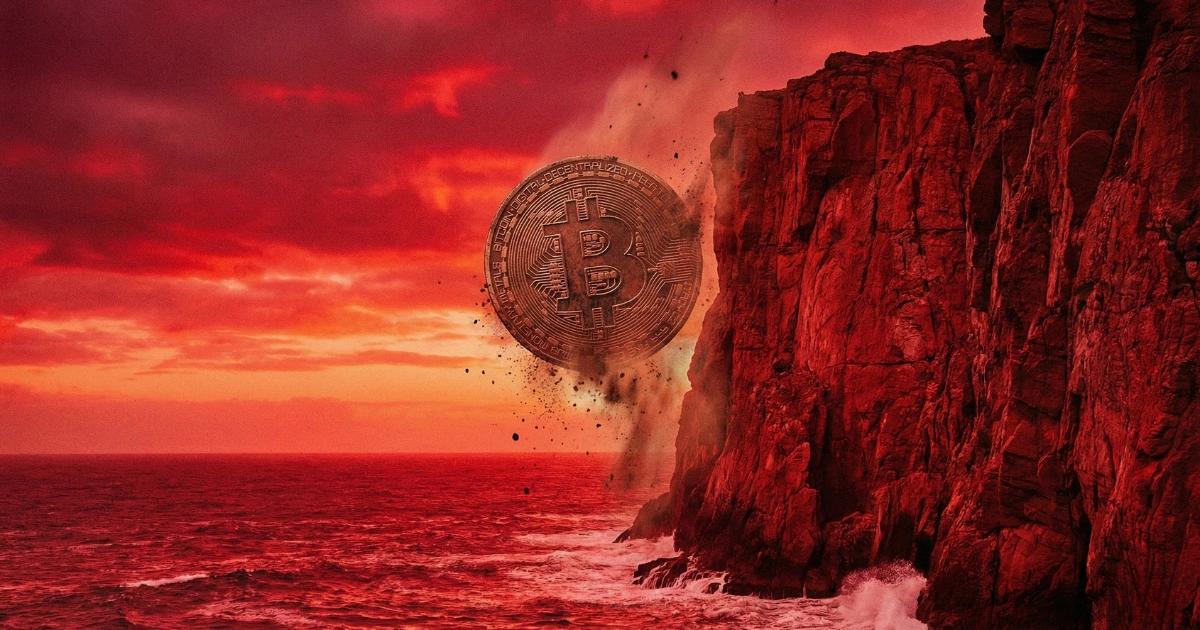
Bitcoin’s sharp decline and rebound have not yet shown futures market deep discounts, and derivative signals indicate that a capitulation sell-off has not occurred. The market may still need to experience another dip to shake out weak hands.
Just last week, Bitcoin staged a dramatic “Rage” rally, dropping over 10% in a single day and nearly breaching the $60,000 level. Although it then rebounded strongly back to around $70,000, does this rapid sell-off constitute a “capitulation sell-off”? That is, investors panic and sell at a loss, completely releasing selling pressure and paving the way for the next bull market.
However, from the perspective of the derivatives market, the answer is likely no. According to Amberdata derivatives director Greg Magadini, signals from the futures market suggest Bitcoin still has room to fall further.
In his Monday market report, Magadini pointed out that during this decline, the futures basis (the difference between futures and spot prices) reacted noticeably cold, without the sharp changes often seen in bear markets. He said:
“The futures basis hardly showed the ‘market reaction’ expected, which makes me unsure if we’ve truly experienced the capitulation moment.”
He refers to the typical relationship change between futures and spot prices during a bearish trend, especially in market clearing phases.
Futures allow traders to buy or sell the underlying asset, such as Bitcoin, at a predetermined price at a future date. Investors can bet on price movements—going long when bullish, short when expecting a decline—without holding Bitcoin itself. Therefore, the spread between futures and spot prices (the basis) often serves as an important indicator of market sentiment and positioning.
When futures prices are significantly above spot, it indicates a bullish market, with investors willing to pay a premium for future price increases; conversely, when futures trade below spot, showing a discount, it signals heavy selling pressure and market pessimism.
Looking at Bitcoin history, bear markets often bottom when futures and perpetual contracts show a “large discount.” This extreme negative spread reflects a complete collapse of market confidence, with holders panic-selling (capitulation), marking the final shakeout phase of a bear market.
However, during last week’s volatility, the futures discount was only fleeting.
Magadini notes that although Bitcoin’s 90-day futures basis did gradually decline with each dip, the fluctuation was almost never more than -100 basis points, and a deep discount did not form. Currently, Bitcoin’s fixed futures basis remains around 4%, nearly on par with risk-free US Treasury yields.
If we look back to the end of the 2022 bear market, when Bitcoin fell below $20,000, the 90-day futures premium once reached as high as 9%, clearly reflecting extreme pessimism and widespread deleveraging.
Based on historical patterns, Bitcoin may still need to dip further, forcing futures traders into full capitulation, pushing futures prices into deep discount territory—only then would a true bottom be confirmed.
- This article is reprinted with permission from BlockCast
- Original title: “Has the ‘Real Bottom’ Not Arrived? Experts Warn: Bitcoin May Face One Last ‘Capitulation Sell-off’ Drop”
- Original author: Block Sister MEL
Related Articles
Bitcoin Stuck Until Nasdaq Breaks Out, Expert Warns Amid Market Choppiness
XRP Trades Near $1.45 Support as Bitcoin Fractal Comparison Emerges
SHIB Surges 9.2% as Price Pressures $0.057215 Resistance Within Tight Trading Range
IMX Stuck Near $0.17 as Resistance and $0.20 S/R Flip Define the Current Range
Solana Price Faces Crucial Test at $86.90 Amid Bearish Trend
PEPE Holds $0.054351 Support as 4H Breakout Faces $0.054808 Resistance