


BlockFills unexpectedly suspends customer withdrawals! Bitcoin crash impacts platform liquidity
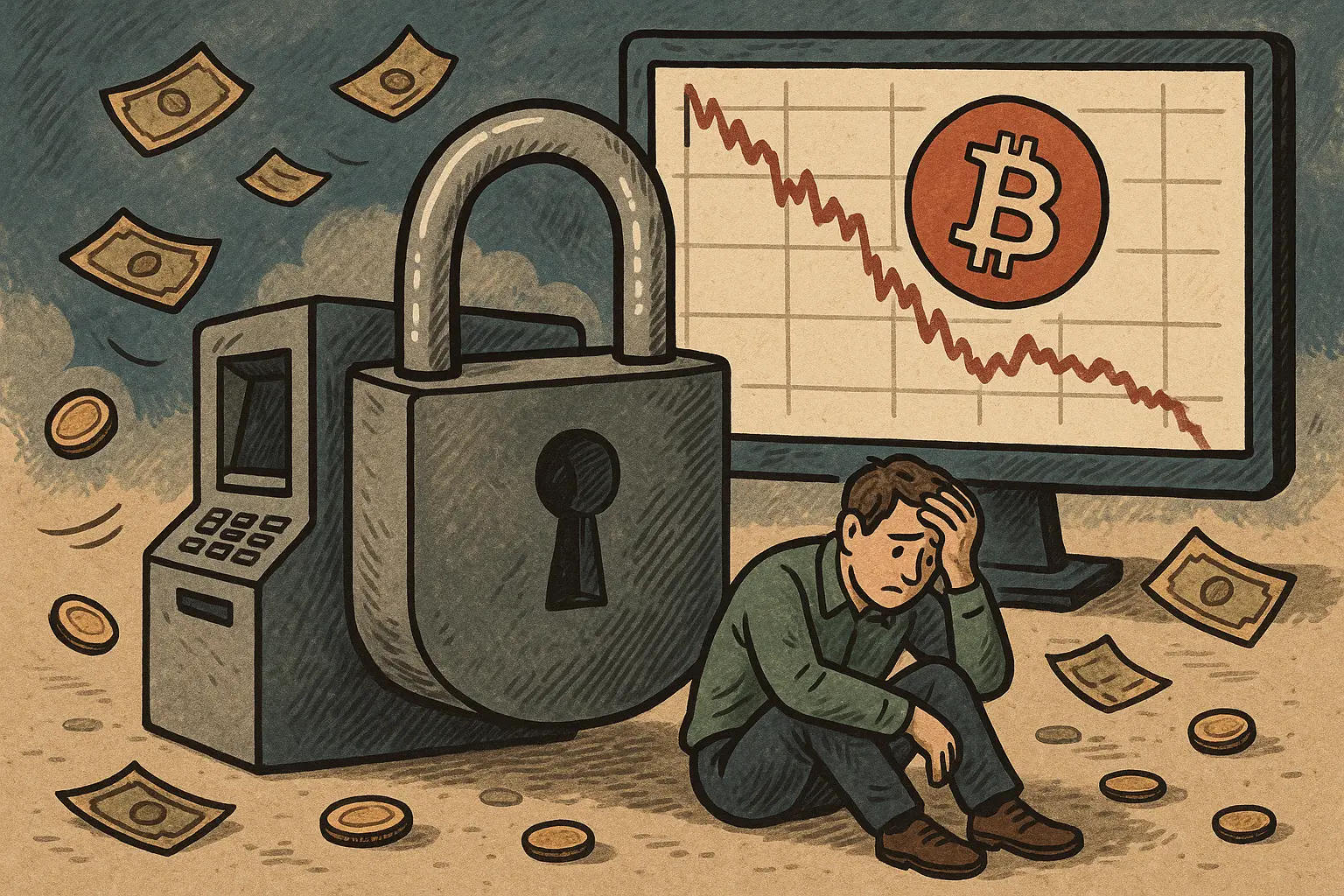
Chicago-based cryptocurrency liquidity provider and lending platform BlockFills suspended customer deposits and withdrawals last week and is currently working to restore platform liquidity. The company has over 2,000 institutional clients, with projected trading volume exceeding $61.1 billion in 2025. Despite the withdrawal suspension, clients can still open and close positions in spot and derivatives trading.
Last Week’s Withdrawal Suspension: A Full Analysis of BlockFills’ Liquidity Crisis
Crypto liquidity provider and lending firm BlockFills paused customer deposits and withdrawals amid a decline in Bitcoin’s price, indicating a chain reaction triggered by recent crypto market downturns. Headquartered in Chicago, BlockFills announced on Wednesday that it had suspended withdrawals last week and has been actively working to restore platform liquidity. A spokesperson stated that the company is engaging in ongoing communication with clients, including crypto hedge funds and asset managers.
The news of the suspension was first reported by the Financial Times. According to PitchBook data, BlockFills raised $6 million in 2021 and an additional $37 million in 2022, with investors including CME Ventures and Susquehanna Capital. CME Ventures is the strategic investment arm of CME Group, and Susquehanna is a globally renowned quantitative trading and market-making firm. Investments from these two institutions once provided strong credibility for BlockFills, but neither has commented on the suspension event.
According to the company’s website, BlockFills serves over 2,000 institutional clients, with expected trading volume surpassing $61.1 billion by 2025. Serving such a scale of over 2,000 institutions places it in the upper-middle tier among crypto service providers, likely including hedge funds, family offices, market makers, and asset managers. An annual trading volume of $61.1 billion implies an average daily volume of about $1.67 billion, a significant size for a mid-sized crypto platform.
BlockFills’ business model involves providing liquidity and lending services to institutional clients. Liquidity provision means acting as a market maker on exchanges, offering bid and ask quotes for large trades. The lending service involves offering leverage to clients, allowing them to borrow funds against crypto collateral for trading. This business model is highly profitable during bullish markets but extremely vulnerable during sharp volatility.
When Bitcoin’s price plummeted from $125,000 to $60,000, BlockFills likely faced multiple shocks. First, its own crypto holdings suffered substantial losses. Second, loans extended may have turned into bad debts as collateral values declined. Third, clients may have simultaneously requested withdrawals, creating a bank run. These combined pressures led to liquidity exhaustion, forcing BlockFills to suspend withdrawals.
Three Trigger Factors of BlockFills’ Liquidity Crisis
Losses on proprietary assets: Holdings of crypto assets evaporated as the market crashed
Loan default risk: Collateral values dropped, possibly making loans unrecoverable
Withdrawal run pressure: Panicked clients demanded withdrawals simultaneously, depleting available liquidity
BlockFills stated that, although withdrawals are temporarily suspended (a measure the company describes as “temporary”), clients can still open and close positions in spot and derivatives markets. This arrangement indicates that its trading system remains operational, with the issue limited to fund transfer capabilities. Such “trading but not withdrawal” states have appeared multiple times in crypto history, often as a stopgap when platforms face liquidity shortages but wish to continue operations.
“A spokesperson said, ‘BlockFills is tirelessly working to resolve this issue as soon as possible and will regularly update clients on the latest developments based on the situation.’” This vague statement offers no specific timeline for recovery or details on liquidity sources, which may further fuel client anxiety.
Market Collapse Triggered by Kevin Warsh Nomination: The BlockFills Incident as a Catalyst
On January 30, U.S. President Trump nominated Kevin Warsh as the next Federal Reserve Chair, leading markets to anticipate a reduction in the Fed’s balance sheet, which could decrease demand for Bitcoin. Following this news, precious metals and cryptocurrencies were heavily sold off. Digital asset prices continued to fluctuate, with a 20% drop last Thursday. The world’s largest cryptocurrency fell over 3%, trading at $66,534. Previously, in October, the coin hit a record high of over $125,000.
Why did Warsh’s nomination trigger market panic? Kevin Warsh served as a Fed governor from 2006 to 2011 and is known for a hawkish stance. He advocates shrinking the Fed’s balance sheet (“balance sheet reduction” or “quantitative tightening”), meaning the Fed would reduce holdings of Treasuries and mortgage-backed securities, withdrawing liquidity from the market. Quantitative tightening has the same tightening effect as raising interest rates, both reducing the money supply.
For the crypto market, balance sheet reduction is an extremely adverse macro environment. Crypto assets are highly sensitive to liquidity; abundant liquidity drives prices higher, while tightening liquidity causes declines. If Warsh indeed pushes aggressive QT after taking office in May 2026, it could lead to a prolonged bear market in crypto. This expectation prompted investors to sell early, triggering the market crash from late January to early February.
Bitcoin’s price fell from $125,000 to $60,000, a 52% decline—the most severe correction since 2022. During such extreme volatility, leveraged traders and lending platforms are hit hardest. As a provider of leveraged loans, BlockFills’ clients likely include many hedge funds and professional traders using high leverage. When prices plummet, these leveraged positions are forcibly liquidated, causing bad debts for BlockFills.
Worse still, during a liquidity crisis, BlockFills may find it difficult to sell assets at reasonable prices to raise liquidity. Crypto markets’ liquidity dries up rapidly during crashes, with large sell orders causing severe slippage. If BlockFills is forced to sell assets at the bottom to meet withdrawal demands, it would lock in huge losses and further deteriorate its financial health. The withdrawal suspension might be a measure to prevent this death spiral.
FTX Shadow: Is the Withdrawal Halt a Sign of Bankruptcy?
The withdrawal suspension by BlockFills immediately sparks associations with the FTX collapse. In November 2022, FTX announced bankruptcy after days of withdrawal freezes, resulting in hundreds of billions of dollars in customer funds lost. Although BlockFills is much smaller than FTX, the act of “suspending withdrawals” alone can trigger market panic.
However, there are key differences between BlockFills and FTX. FTX’s problem was misappropriation of customer funds for high-risk investments and related-party transactions—fraudulent activity. BlockFills’ issues seem to stem from poor liquidity management and market shocks, which are operational risks rather than fraud. Additionally, BlockFills still allows clients to trade, only suspending withdrawals, unlike FTX’s complete shutdown.
Nevertheless, a withdrawal halt is an extremely serious trust crisis for any crypto platform. Once customers cannot access their funds, regardless of the reason, panic and confidence collapse are likely. Other unaffected clients may try to withdraw early, worsening liquidity stress. This trust spiral is very difficult to reverse.
Currently, BlockFills’ situation is highly passive. If it can resume withdrawals within days and demonstrate financial health, some trust might be regained. But if the suspension extends to weeks or months, or if it ultimately cannot fully repay clients, it would severely damage the entire crypto lending industry’s reputation. Such a chain reaction could cause other similar platforms to face runs, posing systemic risks.
For BlockFills’ clients, the biggest concern now is: Will I get my funds back? The company claims the suspension is “temporary” and that it is “working to restore liquidity,” but this vague promise lacks verifiable details. Clients should closely monitor subsequent announcements and consider legal actions to protect their rights. Historically, once a crypto platform suspends withdrawals, full recovery is rare; clients must prepare for the worst.
Related Articles
XRP Ledger Surpasses Solana in RWA Tokenization as Soil Launches Yield Protocol
Breaking News》The Supreme Court rules that Trump's $175 billion tariffs are illegal! The White House announces contingency plans, Bitcoin hits $68,000
Sui Integrates Pyth Pro to Power High-Performance DeFi with Real-Time Data
LayerZero Co-founder Clarification: Zero will not issue any new tokens, ZRO is the only asset
Data: Today, the US Bitcoin ETF experienced a net outflow of 2,414 BTC, and the Ethereum ETF experienced a net outflow of 57,543 ETH.
Bitcoin spot ETF saw a net outflow of $166 million yesterday, marking the third consecutive day of net outflows.