


Thailand approves cryptocurrency derivatives! Stock exchanges plan to launch Bitcoin futures and ETFs
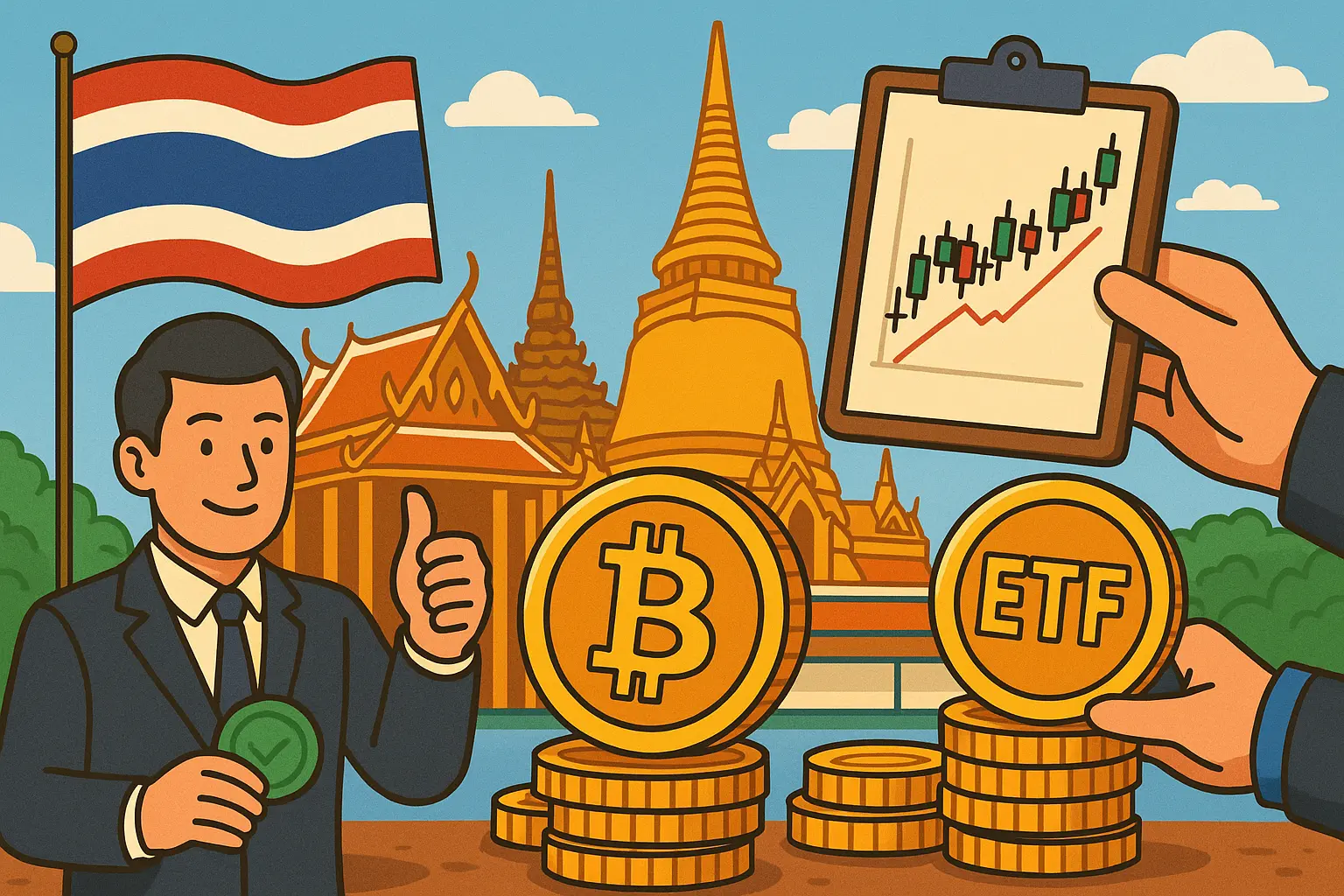
The Thai government approved a proposal from the Ministry of Finance on Tuesday, allowing digital assets to be used as underlying assets for derivatives and capital markets. This move aligns with the Stock Exchange of Thailand’s plan to launch Bitcoin futures and ETFs in 2026. However, the central bank still prohibits cryptocurrency payments, and consumer stablecoin use remains restricted. Thailand’s largest exchange, Bitkub, has a daily trading volume of $65 million, and in January, the country launched a campaign to combat “gray money.”
Derivatives Opening vs Payment Ban: Thailand’s Institutional Priority Strategy
On Tuesday, the Thai government approved a proposal from the Ministry of Finance to permit digital assets as underlying assets for derivatives and capital markets. According to the Bangkok Post, this aims to modernize Thailand’s derivatives market to meet international standards, strengthen regulation and investor protection, and position itself as a regional hub for institutional crypto trading.
The Securities and Exchange Commission (SEC) will amend the Derivatives Act to include these new asset classes, such as Bitcoin (BTC) and carbon credits. Bitcoin, as the world’s largest cryptocurrency, being included in derivatives markets is highly symbolic. The addition of carbon credits demonstrates Thailand’s strategic vision to combine crypto derivatives with green finance, potentially attracting ESG-focused institutional investors.
Thailand is actively expanding its cryptocurrency sector, targeting wealthy institutional investors. This aligns with the SEC’s plan to introduce Bitcoin futures and exchange-traded products in 2026. SEC Secretary Pornanong Budsaratragoon stated that this will “enhance recognition of cryptocurrencies as an asset class, promote market inclusivity, diversify investment portfolios, and improve investor risk management.”
However, the central bank has banned cryptocurrency payments, and consumer stablecoin use remains limited. This “open derivatives but ban payments” policy combination is highly contradictory. Institutional investors can trade Bitcoin futures and ETFs through compliant channels, but ordinary consumers cannot use cryptocurrencies for shopping or P2P transfers. The logic behind this dual-track policy may include:
Institutional trading occurs in regulated, closed environments where risks are manageable and oversight is easier. Cryptocurrency payments involve broad retail scenarios, which are difficult to regulate effectively and could threaten the Thai baht’s dominance. Institutional investment brings capital inflows and tax revenue, while crypto payments could facilitate capital outflows and underground economies. Therefore, Thailand’s strategy of opening to institutions while restricting retail aims to balance innovation with financial stability.
Thailand’s Dual-Track Crypto Policy
Institutional Level: Open derivatives trading, plan to launch BTC futures and ETFs, welcome institutional capital
Retail Level: Ban crypto payments, restrict stablecoin use, enforce strict KYC and AML procedures
In August, the government launched an app allowing short-term visitors to exchange cryptocurrencies for local currency, but users must undergo strict KYC and customer due diligence, and usage is limited to government-approved outlets. This strict restriction indicates Thailand’s cautious approach to retail crypto applications.
Bitkub’s $65 Million Daily Trading and the Gray Money Crackdown
According to CoinMarketCap data, retail trading remains popular in Thailand, with the country’s largest exchange, Bitkub, recording a daily volume of $65 million. This trading volume is among the highest in Southeast Asia, reflecting strong local interest in cryptocurrencies. As a domestic exchange licensed by the Thai SEC, Bitkub is the country’s only legitimate crypto trading platform.
$65 million daily trading translates to approximately $23.7 billion annually, surpassing the trading volume of many small countries’ stock markets. Yet, this active retail trading conflicts with the government’s ban on crypto payments. Thai citizens can buy and sell cryptocurrencies on Bitkub for speculation but cannot use crypto to buy coffee or transfer to friends. This “speculate but cannot use” policy limits the practical utility of cryptocurrencies.
In January, Thailand launched a campaign against “gray money,” targeting money laundering activities. “Gray money” refers to funds of unknown origin or undeclared for tax purposes, a serious financial crime issue in Southeast Asia. The Thai government fears that cryptocurrencies’ anonymity and cross-border transfer capabilities could be exploited for money laundering, tax evasion, and capital flight.
The crackdown includes increased oversight of exchanges like Bitkub, stricter KYC and transaction monitoring, and cooperation with law enforcement to track suspicious transactions. This tightening of regulation, alongside the derivatives opening, indicates a strategy of “opening high-end markets while tightening low-end markets,” aiming to attract institutional capital while preventing money laundering risks.
From an investor perspective, Thailand’s approval of crypto derivatives is a major positive. Institutional investors will gain access to compliant hedging and speculative tools, allowing exposure to prices without direct crypto holdings. The launch of Bitcoin futures will attract hedge funds, asset managers, and family offices, bringing capital inflows and revenue to Thailand’s financial services sector.
However, for ordinary citizens, policies remain highly restrictive. They can speculate on Bitkub but cannot use cryptocurrencies practically. This disconnect may cause dissatisfaction. In the long term, Thailand might need to relax retail restrictions gradually after successfully opening to institutions and establishing effective regulation, unlocking the full potential of cryptocurrencies.
Southeast Asia’s Crypto Center Race: Thailand’s Regional Ambitions
This move aims to position Thailand as a regional hub for institutional crypto trading. It signals Thailand’s competition with Singapore and Hong Kong for regional crypto dominance. The Monetary Authority of Singapore has already established a comprehensive crypto regulatory framework, attracting giants like Coinbase and Crypto.com to set regional headquarters. Hong Kong is also actively promoting itself as an “Asian crypto hub,” introducing a Virtual Asset Service Provider (VASP) licensing regime.
In this competition, Thailand’s advantages include lower operational costs (compared to Singapore and Hong Kong), a large domestic market (about 70 million people), and a strategic location connecting ASEAN countries. Disadvantages are a less mature regulatory framework, weaker financial infrastructure, and higher political uncertainty (frequent coups in Thailand).
Approving crypto derivatives is a crucial step in this race. If Thailand successfully launches Bitcoin futures and ETFs and attracts significant institutional capital, it could establish an advantage in “institutional-grade crypto finance.” While it may not surpass Singapore’s overall crypto ecosystem, becoming “Southeast Asia’s derivatives crypto center” remains a realistic goal.
Looking ahead, launching Bitcoin futures and ETFs by 2026 means Thailand needs to complete regulatory reforms, system development, and product design within the next few months. This tight timeline demonstrates the government’s determination and execution capability. If successful, Thailand will be among the first Southeast Asian countries to offer crypto derivatives, gaining a first-mover advantage.
Related Articles
Arthur Hayes says that if the U.S. intervenes in the Iran conflict for the long term, it could drive up Bitcoin prices
Willy Woo Warns Liquidity Breakdown Could Cap Bitcoin’s Rally Despite Short-Term Relief
Data: If BTC breaks through $69,195, the total liquidation strength of long positions on mainstream CEXs will reach $1.521 billion.
Bitcoin treasury company EmperyDigital's third-largest shareholder requests to sell 3,723 BTC and return cash
SlovakBitcoin developer releases a proof-of-concept transaction embedding a 66kB image, challenging the BIP-110 data size limit proposal