


Must-Read for Programmers: Web3 Job Hunting — Avoid These Four High-Risk Gambling-Related Platforms

Author: Shao Shiwei Lawyer Team
Xiao Wang is a programmer at a major tech company. In recent years, he has been looking to break through his career bottleneck and explore new opportunities, considering a transition into Web3. After communicating with headhunters and seeking internal referrals from friends in the industry, Xiao Wang received several Web3 job offers. The job descriptions generally read:
Design and develop core contracts for prediction markets (AMM, liquidity pools, settlement, arbitration models);
Design and develop decentralized applications for gambling games;
Urgently hiring Java engineers, with strict requirements for perpetual contracts, matching system experience, etc.
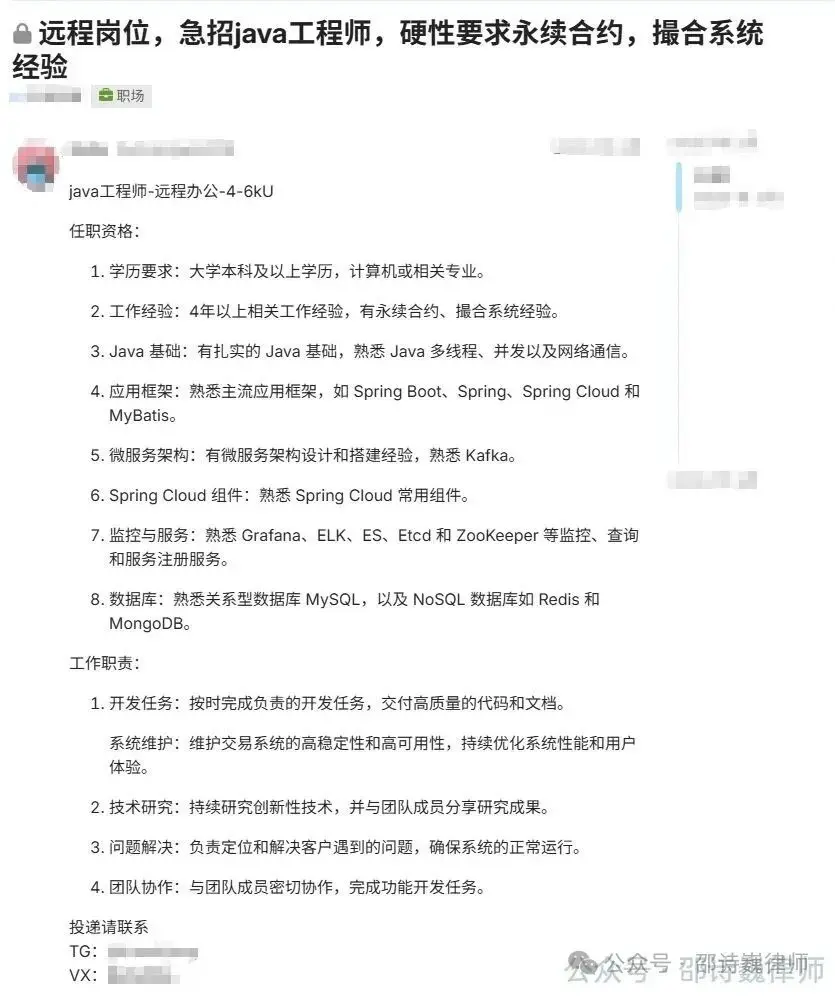


Faced with terms like “perpetual contracts,” “on-chain gambling,” and “prediction markets,” Xiao Wang feels somewhat familiar but also senses something is off: the salary offered by headhunters is quite attractive, significantly higher than his current income, and most importantly, it allows remote work—something Xiao Wang has always dreamed of as a digital nomad.
However, he also has doubts: “Are there risks in these kinds of jobs in China? But even if there are risks, so what? I’m just a technician; even if something happens, it probably won’t involve me, right?” This conflicting mindset keeps him tangled in ongoing hesitation.
Through daily case handling and consultations, Lawyer Shao has found that many applicants like Xiao Wang share similar thoughts: attracted by high salaries and remote work, yet worried about crossing legal boundaries. So, how should programmers choose their Web3 jobs? How can they “avoid pitfalls” and stay clear of legal risks?
This article summarizes common high-risk project types related to gambling platforms from the perspective of Web3 job seekers, helping you identify them at a glance. By comparing job descriptions, whitepapers, and official websites, you can check whether the project you’re joining involves gambling, and avoid inadvertently working for a “casino.”
1. Web3 Gaming Platforms: Hidden Packaging of On-Chain Gambling
Many Web3 job seekers encounter this type of position for the first time, and the job descriptions often sound very appealing:
Decentralized blockchain games, fair on-chain gambling, smart contract automatic settlement, USDT instant payout—at first glance, it looks like a cutting-edge Web3 game (GameFi) or innovative project.
But if you peel back the marketing language and focus on how money flows, you’ll find the core business isn’t complicated: users use USDT, ETH, and other cryptocurrencies as chips, choose gameplay (dice, roulette, lottery, sports betting, etc.) on the front end, then write transactions into smart contracts via Web3 libraries; once the contract receives funds, it determines wins or losses based on preset random numbers and odds, then pays out winnings from the liquidity pool, while the platform and house take a fee.
The process is transparent on the blockchain, but the essence remains organizing online betting among an unspecified majority of people, with the platform profiting from the “rake.”
In such projects, programmers often act as technical architects for gambling operations:
Responsible for writing betting contracts, lottery logic, managing liquidity pools; researching on-chain randomness to ensure fairness; developing betting interfaces, odds displays, and lottery animations; setting up data dashboards to track wins/losses and agent commissions.
Many technical staff believe they are just ordinary coders or consider themselves “technologically neutral,” but from a judicial perspective, they are recognized as key technical support roles for gambling platforms.
For example, in the EOS gambling case【Case: (2023) Su 09 Xing Zhong 372】,the involved personnel developed a gambling platform called BigGame on the EOS blockchain and accepted bets. The technical staff responsible for platform design, contract coding, and client development were deemed accessories to illegal gambling. It has been explicitly recognized that establishing gambling websites using blockchain technology and accepting bets with virtual currency constitute “running a casino” under Article 303, Paragraph 2 of the Criminal Law.
2. Perpetual Contract Development: The Gambling Nature of High-Leverage Trading
Another common type in Web3 job hunting involves positions claiming to be related to cryptocurrency exchanges or contract platforms. Job descriptions might include: developing perpetual contract matching engines, designing high-concurrency trading systems, building risk control and liquidation mechanisms… If the applicant has experience in traditional finance or matching systems, they might interpret this as working on a sophisticated financial product.
But in reality, these platforms mainly offer high-leverage perpetual contracts. Users bet on whether a coin’s price will rise or fall, with leverage up to 150x. A wrong prediction results in instant liquidation and zero balance, while the platform earns fees from trading, liquidation, and funding rates.
In Web3 contract projects, programmers often work on the “trading engine” layer: implementing high-performance matching systems, margin models, liquidation logic; building risk control systems—mainly to prevent platform losses; and supporting product features like order copying, agent rebates, and partner systems for user acquisition and growth.
While such contract-based operations may be legally permissible in some overseas jurisdictions, Chinese courts have increasingly clarified their stance: high-leverage contracts are generally regarded as gambling activities involving virtual currency. Related technical, operational, and agent personnel are unlikely to fully dissociate themselves from responsibility by claiming “I’m just an employee.”
For example, in the CCFOX case【Case No.: (2024) Ji 06 Xing Zhong 10】, the court recognized that CCFOX’s virtual currency contract trading was speculative and incidental, not under government regulation, and thus should be considered a gambling platform. The technical developer responsible for platform functions was deemed an accessory to illegal gambling.
3. On-Chain Prediction Markets: Betting Games Under the Guise of Financial Innovation
Another higher-end position in Web3 job hunting involves platforms claiming to be prediction markets, event contracts, or price forecasting games. These platforms often use flashy narratives:
Gathering collective wisdom through market prices, using trading to predict the future, assetizing all kinds of events… It sounds like a financial experiment.
But if you explore their official sites, you’ll find the core logic remains the same: the platform predicts whether a token’s price will hit a certain level on a specific day, or whether a macro event (e.g., Trump’s potential re-impeachment before the end of 2026, Fed interest rate cuts, the end date of the Russia-Ukraine conflict) will occur. Users bet with virtual currency on yes or no, up or down; after expiry, results are determined by the platform or oracles, and payouts are made based on odds. The platform takes a cut. This is essentially no different from binary options or betting on “big or small,” just dressed up as a “prediction market.”
Technical roles are often packaged as highly technical: designing prediction contract mechanisms, creating event creation and betting logic, integrating oracles, arbitration systems… But in reality, you’re still managing liquidity pools, designing odds curves, and setting settlement rules—essentially a “result betting” and “funds division” gambling setup.
According to the spirit of Guiding Case No. 146 issued by the Supreme Court, such prediction market gameplay is fundamentally no different from traditional “bet big or small, win or lose” gambling. Projects that developers consider “financial innovation” are likely to be classified and treated as gambling under Chinese law.
4. Gambling Payment Platforms: High-Risk Payment and Settlement Services
The last category, which many Web3 job seekers may overlook but carries significant criminal risks, involves providing payment, withdrawal, and exchange services for gambling platforms (i.e., gambling sites or betting websites).
Some companies market themselves as payment technology providers, settlement platforms, or third-party payment solutions, emphasizing keywords like aggregated payments, cross-border settlements, USDT payment gateways; their teams may call themselves “USDT payment solutions” or “wallet service providers.”
If you only look at the job content, it seems to be about integrating various payment channels and wallets—normal business operations. But the actual business model often involves:
- Packaging legitimate payment tools like Alipay, WeChat Pay, bank cards into “aggregated channels” and connecting to overseas gambling sites;
- Using USDT, in-game currency, or points as intermediaries to facilitate RMB and chips exchanges;
- Employing multiple accounts, channels, or intermediary wallets to “launder” funds.
In such companies, programmers typically work on:
Developing recharge/withdrawal systems, interfacing with fiat and on-chain wallets, coding currency and chip exchange logic, building transaction and settlement backends, and optimizing “success rates” and risk controls.
From a criminal justice perspective, these activities are often summarized as “providing fund settlement and payout services for gambling sites.” For example, in the case of Web3 wallet company employees arrested across provinces (see ➡ “Reflections on the Cross-Province Arrest of Web3 Programmers: Three Major Legal Blind Spots for Practitioners”), the team was investigated because some partners were suspected of operating online casinos.
5. Lawyer Shao’s Advice: Two-Step Self-Check Method to Avoid Legal Risks
Based on the four common types of gambling platforms discussed above, Lawyer Shao offers the following core advice for Web3 job seekers:
First, mentally draw a red line: any business that fundamentally involves “taking money to bet on wins or losses, with platform profits from odds or leverage,” regardless of what it’s called—contracts, GameFi, prediction markets, or payment tech—will likely be regarded as a gambling project in legal practice.
When searching for jobs, you can use a “two-step self-check” to assess risks:
Step 1: Look at the overall platform model (the big picture): carefully review whitepapers, official websites, and product features. If the overall logic resembles the Web3 gambling platforms, contract betting, or betting payment channels described earlier, be highly cautious and consider not joining.
Step 2: Examine your specific responsibilities (the details): clarify whether your role involves betting logic, lottery rules, odds models, liquidation mechanisms, deposit/withdrawal, or fund settlement—high-risk areas. If you are deeply involved, it’s difficult to claim “I’m just coding” to cut responsibility.
By identifying risks early and refusing offers decisively, you can often avoid criminal involvement. Once involved in such projects, job seekers face not only the challenge of changing jobs but also the risk of personal freedom restrictions and career disruption.
Related Articles
X Platform Launches "Paid Promotion" Label Feature, KOL and YouTuber Sponsored Content Will Be Fully Transparent
Pre-war predictions for Iran? Polymarket traders bet on U.S.-Iran war, making a profit of $1.2 million, raising questions
X allows crypto promotions but imposes regional bans; creators in the EU, UK, and Australia are restricted.
$500 million market boom forecast "big gamble on Iran," someone makes $510,000 through insider trading, the U.S. will angrily call for legislation to ban it
CONSOB orders the suspension of the SOLX token offering by Solaxy in Italy due to MiCA violations