


Kalshi's suspension before the California gubernatorial candidate, insider trading regulation enters a new phase
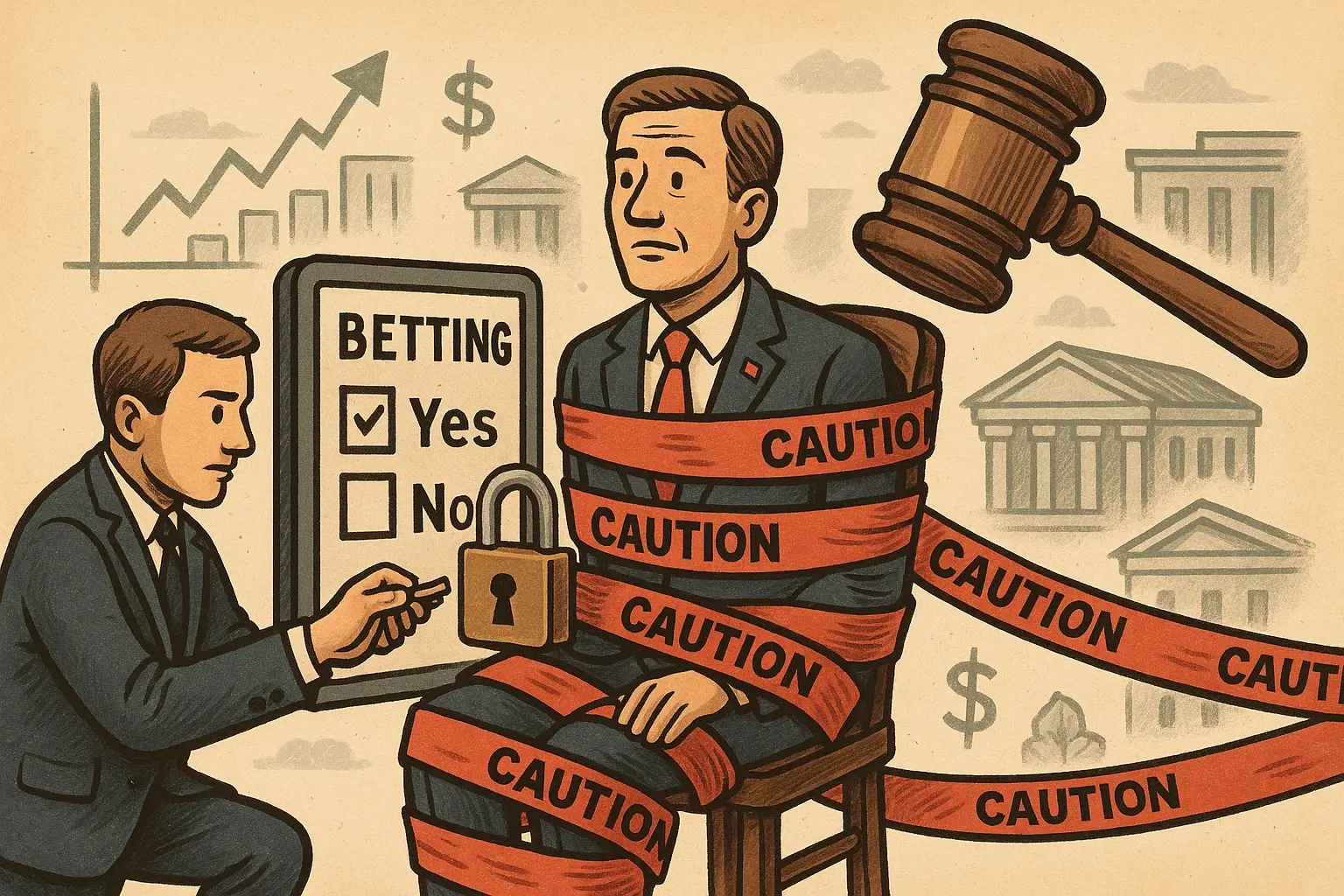
Prediction market platform Kalshi announced on Wednesday that a former California gubernatorial candidate was sentenced to a five-year suspension and a $2,000 fine for violating insider trading rules by betting on his own campaign market last year, and the case has been reported to the U.S. Commodity Futures Trading Commission (CFTC).
Politicians bet on themselves: enforcement action triggered by a $200 gamble
According to a statement by Robert DeNault, Kalshi’s head of enforcement, the politician involved bet about $200 on his victory through the Kalshi platform during the California gubernatorial campaign and publicly posted relevant posts on the X platform. Kalshi said the account never withdrew any profits and the case was moved to the CFTC.
Kalshi did not disclose the names of those involved, but the description presented characteristics closely matched those of Kyle Langford, who ran for governor of California as a Republican before turning Democratic and is currently running for California’s 26th district in the U.S. House of Representatives. Mainstream media reports revealed that Langford posted a video on the X platform on May 25, 2025, showcasing himself betting $98.76 on Kalshi to support his campaign. Cointelegraph has reached out to Langford for a response and has not received it at press time.
Case 2: Abnormal transaction statistics by YouTube editors
On the same day, Kalshi revealed another insider trading case. A YouTube editor was sentenced to a two-year suspension and a fine of approximately $20,000 for trading approximately $4,000 in the market on Kalshi via YouTube live stream between August and September 2025.
Kalshi said that the monitoring system found that it recorded a near-perfect trading success rate in a market with low odds, which is a statistically significant anomaly. The platform then confirmed its place of work with the assistance of other traders, concluding that the person most likely had material non-public information. While Kalshi has not disclosed his identity, mainstream media has widely reported that the person is suspected to be Artem Kaptur, an employee of the well-known YouTuber MrBeast.
Kalshi’s enforcement enhancements and the CFTC’s new regulatory framework
As prediction markets enter the mainstream market, regulations on insider trading are escalating significantly. Key enforcement actions taken by Kalshi this month include:
Establish a monitoring and audit committee: Establish an independent internal audit framework to systematically review platform transaction behavior
In partnership with Solidus Labs: Access to a professional platform for cryptocurrency transaction monitoring to improve market abuse detection capabilities
Cumulative case tracking: Completed investigations into over 200 cases, frozen multiple flagged accounts, and about 12 more cases are still under investigation
Reporting mechanism to the CFTC: Proactively report confirmed violation cases to regulatory agencies, forming a linkage mechanism between platform law enforcement and government supervision
Meanwhile, U.S. lawmakers introduced new bills this month aimed at restricting government insiders’ trading behavior in prediction markets. The background of the discussion includes: Last year, a Polymarket user won more than $40 in a bet related to Venezuelan President Nicolás Maduro, just hours after the U.S. military completed the relevant arrest in Caracas.
Frequently Asked Questions
Does betting on your own campaign in the prediction market constitute insider trading?
According to Kalshi’s platform rules, any act of possessing important information that has not yet been made public and trading based on it constitutes an insider trading violation. Politicians have a non-public priority right to know about their own campaign dynamics (such as whether to withdraw from the election), so betting on their own election is considered a violation at the rule level. Such violations are determined primarily based on platform compliance rules rather than insider trading regulations directly applicable to the securities market.
What is the CFTC’s regulatory function for insider trading in prediction markets?
Kalshi, as a designated contract market regulated by the CFTC (U.S. Commodity Futures Trading Commission), operates under the direct oversight of the CFTC. The CFTC has established a dedicated prediction market advisory body to work with the industry to identify market abuses. In addition to platform-level suspensions and fines, violators may also face administrative penalties or judicial prosecution by the CFTC.
What is the fundamental difference between insider trading in prediction markets and traditional financial markets?
Insider trading in traditional financial markets usually involves material non-public information about listed companies; Insider trading in prediction markets is much broader, and anyone who has non-public information about upcoming events (e.g., politicians, event organizers, media practitioners) can be violated. Due to the diverse types of events involved in prediction markets, defining regulatory frameworks is more challenging than traditional financial markets.
Related Articles
Prediction platforms are becoming the digital battlefield of postmodern warfare
Hamini's death tests the prediction market bottom line: Kalshi decides to refund "don't profit from dead people," Polymarket reports insider trading involving millions of dollars
Pre-war predictions for Iran? Polymarket traders bet on U.S.-Iran war, making a profit of $1.2 million, raising questions
Due to the increase in Polymarket trading activity, Polygon's POL burn volume in February reached a new all-time high
$500 million market boom forecast "big gamble on Iran," someone makes $510,000 through insider trading, the U.S. will angrily call for legislation to ban it