


5 important US economic reports expected to shape Bitcoin market sentiment this week
Bitcoin enters an important week of the first quarter with trading prices around $66,000, slightly down amid fragile market sentiment, limited liquidity, and geopolitical pressures.
After several weeks of recording lower highs, along with the pioneer cryptocurrency experiencing its weakest start in history, investors are now focusing on a series of key economic data from the U.S. These reports could reshape expectations for the Federal Reserve’s (Fed) interest rate policies and directly influence the direction of the cryptocurrency market.
U.S. Economic Data: Factors Shaping Bitcoin Prices This Week
Below are five key economic reports expected to significantly impact Bitcoin market sentiment this week:
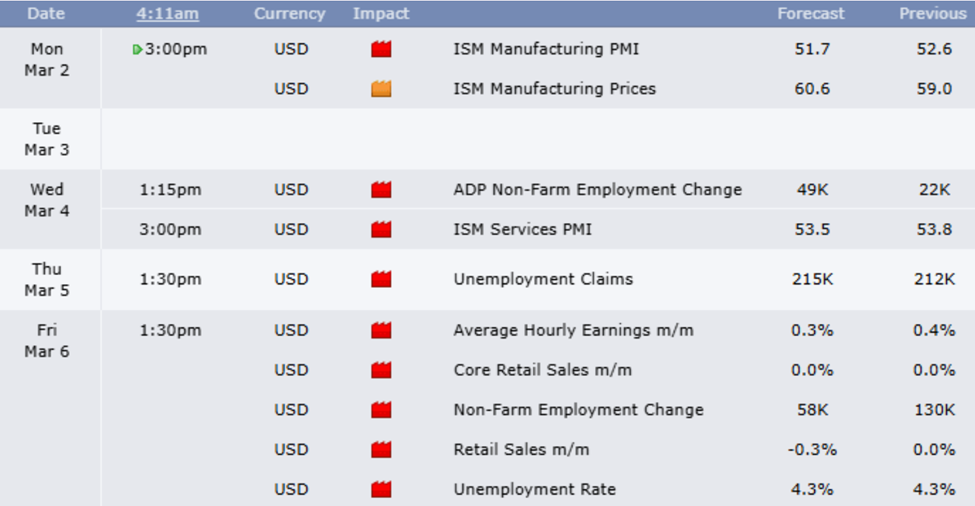 U.S. Economic Events This Week | Source: Trading Economics## Manufacturing PMI Index
The week begins with February manufacturing PMI data from S&P Global and ISM—metrics closely watched by investors.
Forecasts suggest S&P’s PMI will be around 51.2, while ISM’s index is expected to range between 52.0–52.3, after unexpectedly rising to 52.6 in January—the strongest growth since 2022.
This data could directly impact Bitcoin. If the PMI exceeds 52.5, especially with new orders and production increasing, it would reinforce the narrative of a “sustainable economy.” This scenario often causes the Fed to delay rate cuts, pushing bond yields and the US dollar higher, which puts pressure on non-yielding assets like Bitcoin.
Conversely, if the index drops near 50—indicating contraction—expectations for policy easing may accelerate. Historically, contraction combined with Bitcoin weakness often leads to strong bullish reversals.
Bull Theory analyst states: “An ISM index above 50 is a positive signal for the market.”
Although manufacturing isn’t the main driver of the U.S. economy, as the first report of the week, it can set the trend for March’s market volatility.
ADP Employment Report: A Signal for the Labor Market
On Wednesday, the ADP Employment Change report will provide an initial glimpse into the U.S. labor market for February. Economists forecast around 50,000 new private sector jobs, up from a modest 22,000 in January.
As a precursor to Friday’s Non-Farm Payrolls (NFP) report, ADP data often triggers strong market reactions. A robust figure exceeding 60,000–75,000 would indicate a resilient labor market, supporting the Fed’s stance to “maintain high interest rates longer.” This could lead to higher bond yields and a stronger dollar, pressuring Bitcoin prices.
If the report shows fewer new jobs, especially below 40,000, liquidity concerns may resurface. Signs of a cooling labor market could boost expectations for rate cuts later in the year, which generally benefits risk assets like cryptocurrencies.
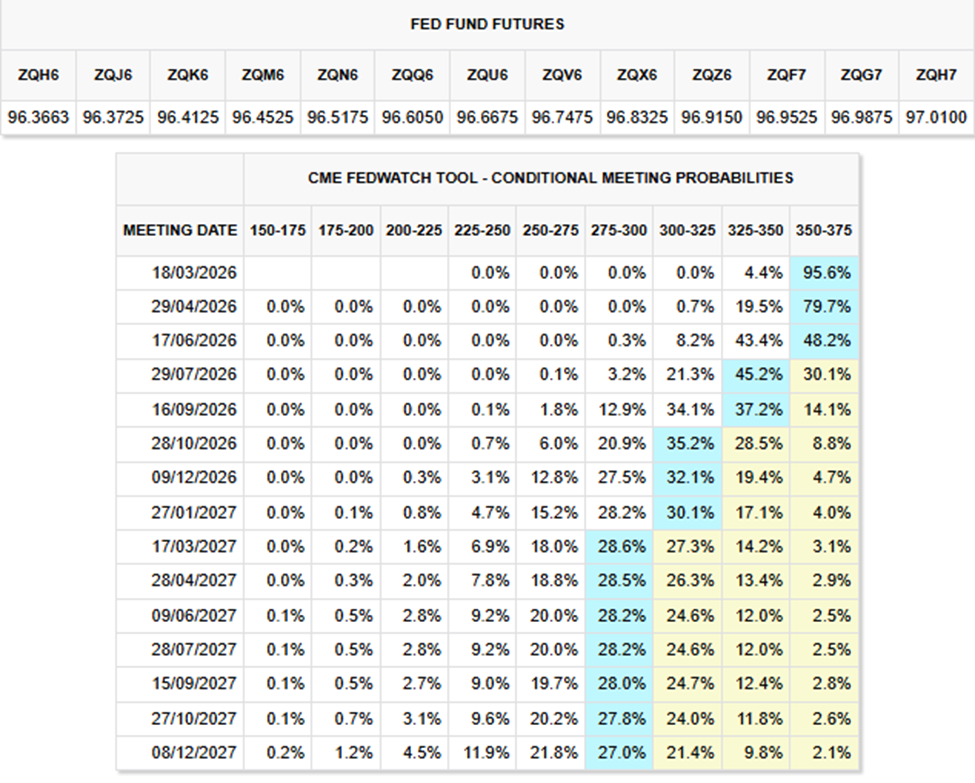 Conditional Meeting Probability | Source: CME FedWatch Tool
With the market pricing in about 2–3 rate cuts in 2026, even small surprises could reshape traders’ investment strategies.
Service Sector PMI Index
Also on Wednesday, attention shifts to the service sector with two important reports: S&P Service PMI and ISM Service PMI.
Forecasts suggest these indices will range between 52.3–53.5, indicating steady growth. The ISM Service index for January was 53.8.
Since the service sector accounts for the majority of U.S. economic activity, these reports have a greater impact than manufacturing data. Strong service PMI results, combined with positive employment data, would reinforce the narrative of a “sustainable economy,” reducing short-term easing expectations and exerting downward pressure on Bitcoin.
However, if the reports show signs of slowing demand or weaker employment, market sentiment could shift quickly. Investors remain highly sensitive to any signs of economic slowdown.
If both ADP and service PMI reports fall short of expectations, it could heighten expectations for easing policies, potentially triggering a Bitcoin rally that pushes prices above the psychological $70,000 level.
Unemployment Claims Data
Thursday’s initial unemployment claims, expected around 215,000 compared to 212,000 last week, will provide a quick indicator of labor market stress.
While often less emphasized than the NFP report, this data can significantly influence market expectations ahead of the major Friday release.
Lower-than-expected claims last week reinforced tight labor conditions, coinciding with Bitcoin dropping below $68,000.
If claims remain low, it will bolster the “hawkish” view that the labor market remains tight, reducing the likelihood of Fed rate cuts. Conversely, a surprising increase could revive easing expectations, lower yields, and provide short-term support for Bitcoin.
Non-Farm Payrolls (NFP)
Friday’s NFP report is the most significant event of the week, widely regarded as the strongest market mover. Forecasts indicate the U.S. will add about 54,000 jobs in February, a sharp decline from 130,000 in January.
The unemployment rate is expected at 4.3%, with hourly wages rising by 0.3% month-over-month.
For Bitcoin, the NFP is the most impactful macro factor. A high number, such as over 80,000 new jobs with steady wage growth, would reinforce the narrative that the economy is too strong for immediate rate cuts by the Fed. This could drive yields higher, strengthen the dollar, and cause Bitcoin to test lower support levels around $62,000–$59,000.
Conversely, a weak report—especially below 40,000 jobs or with rising unemployment—would accelerate rate cut expectations and trigger a rally fueled by liquidity.
With market sentiment fragile and Bitcoin trading below key resistance levels of approximately $72,000–$75,000, this week’s economic data could shape March’s trend.
Related Articles
Iran Conflict Poses Limited Risk to Bitcoin Hashrate, Despite $7.8 Billion Crypto Sanctions Workaround
CEXt-Linked Whale Opens 20x Leveraged Long Position on 400 BTC Worth $27.3M
Tennessee Bitcoin Reserve Bill has been submitted to the Finance, Fundraising, and Means Committee for review
Bitunix Analyst: Hormuz Risk Escalation, Oil-Gold Chain Activation, BTC Upside Short Liquidity Accumulation
Data: 220 BTC transferred from an anonymous address, routed through intermediaries, and sent to another anonymous address