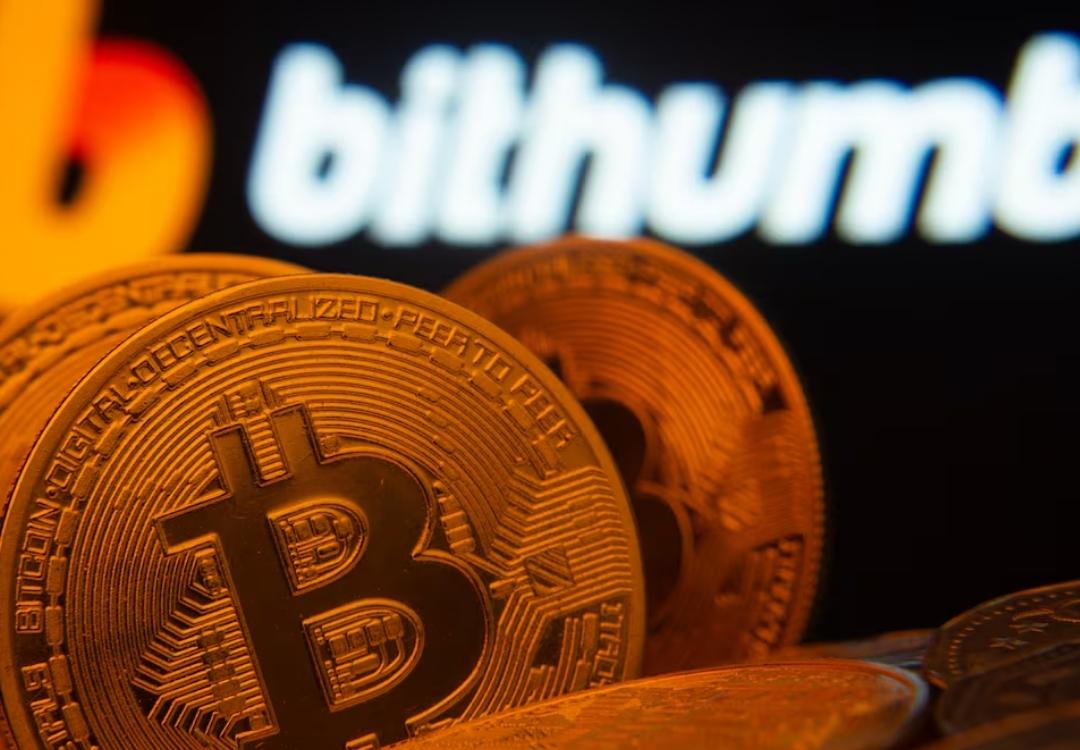
- The Bank of Korea said South Korea’s crypto market needs a circuit breaker mechanism similar to those used in stock markets.
- The central bank pointed to Bithumb’s February error, when 620,000 BTC was mistakenly distributed and not stopped for 20 minutes.
South Korea’s central bank is pushing for a circuit breaker in the local crypto market, arguing that the Bithumb giveaway blunder earlier this year exposed just how thin the sector’s operational safeguards still are.
In its latest Payment and Settlement report, the Bank of Korea said the domestic digital asset market needs a halt mechanism similar to those used in equities, where trading can be paused when extreme errors or volatility threaten to spiral.
The recommendation is notable because it comes not from a crypto lobby or exchange operator, but from the country’s central bank.
Bithumb’s mistake became the case study
The trigger was Bithumb’s February 6 fat-finger incident. As part of a promotional campaign giveaway, the exchange mistakenly distributed 620,000 BTC across hundreds of user wallets, an amount worth about $43 billion at the time.
The reported cause was almost absurdly simple. A staff member entered the reward unit in BTC instead of KRW, the Korean won.
That kind of mistake should have been caught quickly. According to the Bank of Korea, it was not.
The report said Bithumb took 20 minutes to identify the error and failed to stop the bitcoin from being moved or sold during that window, widening the losses for users. For the central bank, that delay seems to have been the more important point. Human error can happen anywhere. What matters is whether systems exist to contain it before it spreads.
The central bank sees a control gap, not just a one-off failure
The Bank of Korea linked the incident to weaker internal controls and lighter regulation in the digital asset market compared with traditional financial institutions. That comparison matters. In stock or banking infrastructure, a mistake at this scale would normally run into multiple layers of checks, automated controls and trading halts.
Crypto exchanges, by contrast, still often operate with less mature guardrails.
So the central bank’s proposal is really about market structure as much as one exchange’s mistake. A circuit breaker would not eliminate operational errors, but it could slow the damage when something goes badly wrong and give platforms a chance to intervene before an internal failure turns into a full market event.
Disclaimer: The information on this page may come from third parties and does not represent the views or opinions of Gate. The content displayed on this page is for reference only and does not constitute any financial, investment, or legal advice. Gate does not guarantee the accuracy or completeness of the information and shall not be liable for any losses arising from the use of this information. Virtual asset investments carry high risks and are subject to significant price volatility. You may lose all of your invested principal. Please fully understand the relevant risks and make prudent decisions based on your own financial situation and risk tolerance. For details, please refer to
Disclaimer.
Related Articles
Tennessee Bans Crypto ATMs Statewide, Second U.S. State After Indiana
Tennessee has become the second U.S. state to outright ban crypto ATMs, with Governor Bill Lee signing House Bill 2505 into law on April 13. The bill passed both chambers unanimously and will take effect July 1, making it a misdemeanor to operate or host the machines anywhere in the state.
CryptoFrontier2h ago
DeFi Leaders Urge SEC to Formalize Broker Guidance Into Rulemaking
DeFi Industry Pushes for SEC Rulemaking on Broker Classification
The DeFi Education Fund, alongside 35 other crypto industry leaders, has urged the Securities and Exchange Commission to formalize its recent decentralized finance interface guidance into formal rulemaking, according to a letter
CryptoFrontier2h ago
U.S. OCC Sets Draft Framework for Stablecoin Issuers Under GENIUS Act Framework
OCC draft sets federal rules for stablecoin issuers and custody services, focusing on safety and regulatory compliance.
Proposal excludes AML and sanctions rules, leaving those areas for separate coordination with Treasury agencies.
Framework marks initial step in multi-agency
CryptoFrontNews3h ago
DOJ Drops Criminal Investigation into Powell, Clearing Path for Crypto-Friendly Warsh as Next Fed Chair
Gate News message, April 25 — The U.S. Department of Justice has dropped its criminal investigation into Federal Reserve Chair Jerome Powell, clearing the way for the Senate to confirm Kevin Warsh as the incoming Federal Reserve chair. On Friday, April 24, U.S. Attorney for the District of
GateNews3h ago
US Sanctions Iran-Linked Crypto Wallets, Tether Freezes $344M USDT
U.S. Treasury Secretary Scott Bessent announced that the federal government is sanctioning multiple wallets linked to Iran as part of President Donald Trump's ongoing efforts to increase economic pressure on the country amid an ongoing ceasefire. The move comes a day after Tether froze $344
CryptoFrontier4h ago
U.S. Crypto Market Structure Bill Gains Bipartisan Support, Trump Administration Backs Legislation
Gate News message, April 25 — Senator Cynthia Lummis signaled on April 25 that Congress is positioned to advance a comprehensive crypto market structure bill with bipartisan backing and support from the Trump administration. "We have bipartisan support. We have President Trump's support. This is
GateNews6h ago


