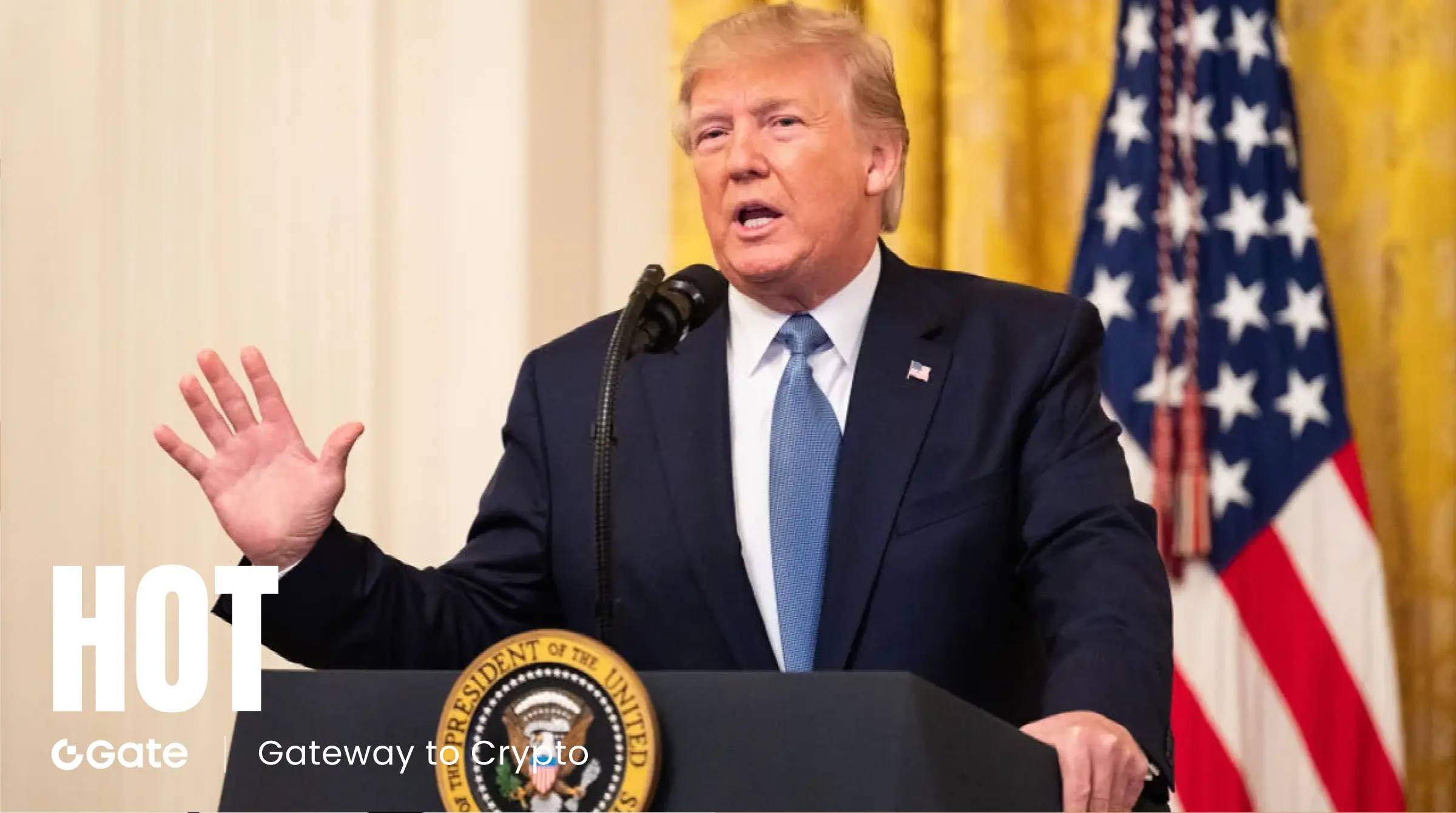
On April 1, 2026, the global crude oil market saw a sharp sell-off. WTI crude fell below $98 per barrel, down 3.78% on the day; Brent crude dropped to $104.7 per barrel, down 2.3%. The direct spark behind this move was former U.S. President Donald Trump’s public remarks about withdrawing troops from Iran. The market quickly interpreted these comments as a sign that geopolitical tensions in the Middle East may be easing, which in turn caused the “energy premium” that had been steadily priced in previously to start retreating rapidly.
From a more macro perspective, this shift is not limited to traditional energy markets. The compression of the geopolitical risk premium is changing the pricing anchor for global major asset classes. Over the past six months, energy prices have been tightly linked to inflation expectations and risk-aversion sentiment. This rapid pullback in oil, however, marks a structural reassessment of market expectations regarding how long geopolitical conflicts will persist.
Why has the geopolitical premium become the core driver of recent crude oil pricing?
Since the situation in the Middle East escalated, crude oil prices have consistently contained an unquantifiable layer of a “war premium.” Even against a backdrop of weak global demand expectations, oil prices have stayed elevated due to the risk of supply disruptions. The mechanism behind the formation of this premium is, at its core, the market pricing uncertainty.
Trump’s troop-withdrawal remarks triggered such a sharp reaction because they touched the premium’s fundamental basis—whether the conflict will further expand or move toward resolution. When the market recognizes that there may be room for the situation to ease, the risk priced in based on the worst-case scenario faces concentrated release. Thomas Mathews of Capital Economics also noted that even if the conflict ends quickly, its impact will still persist across many dimensions. This assessment highlights the key contradiction in today’s market: there is a clear time mismatch between the near-term trajectory of events and the long-term inertia of structural impacts.
How does the crude oil sell-off affect crypto market liquidity conditions?
As crude oil is one of the world’s most important risk assets and an anchor for inflation, price volatility impacts the crypto market primarily through two transmission paths.
The first is liquidity expectations. When crude oil prices fall, inflation pressures typically ease, which in turn reduces expectations that the Federal Reserve will continue maintaining a tight monetary policy. Based on historical experience, expectations of looser liquidity tend to favor high-risk assets, including crypto. But because the market still has concerns about inflation recurring, the positive boost to liquidity from the decline in oil may be reflected with a delay.
The second is risk appetite. If a sharp drop in crude oil is seen as a “recession signal,” it could trigger broad risk-off sentiment, which would be unfavorable for the crypto market in the short term. Therefore, the current market is in a tug-of-war phase between interpretations that crude oil’s decline is “good news” and those that it is “bad news.” As of April 1, 2026, Gate data shows that within a few hours after the drop in oil, Bitcoin and Ethereum did not show a clear one-sided trend, reflecting disagreement among market participants about the macro signal.
What does lower energy cost mean for crypto mining?
Energy cost is one of the core variables in crypto mining, especially Bitcoin mining. A pullback in crude oil prices often comes with downward pressure on electricity costs and natural gas prices, which is a meaningful positive for miners’ marginal costs.
If energy prices stay at current lower levels, miners’ break-even points will move down, helping to relieve the computing-power “capacity clearing” pressure caused previously by high electricity prices. More importantly, the fading of the energy premium could mean that the geographic logic of mining operations may shift again. Mining expansion plans that had been temporarily shelved because energy prices were high could return to execution.
But it’s worth noting that a decline in energy prices can also reflect the risk of weakening global macro demand. If an economic slowdown further transmits to the manufacturing sector and the semiconductor supply chain, it may instead constrain the real-world rollout capability for expanding computing power.
What does the reversal of the geopolitical narrative mean for the crypto industry’s landscape?
For a long time, the crypto market has been given two narratives: a “safe-haven asset” and a “geopolitical hedge tool.” This crude oil sell-off reveals a key signal: when the traditional geopolitical risk premium starts to shrink, can crypto assets still maintain their independent narrative logic?
Judging by market reaction, crypto assets did not move in tandem with crude oil into a clearly one-sided trend; instead, they showed a degree of resilience. To some extent, this validates the trend that the crypto market is transitioning from “macro-sensitive” to “structural value-driven.” In other words, as the energy premium ebbs, the market refocuses attention on fundamentals within the crypto industry itself—internal factors such as on-chain activity, changes in stablecoin supply, and the evolution of regulatory policy.
What scenarios might the future market follow?
Based on the current situation, two main evolution scenarios can be projected.
The first is a “rapid convergence” scenario. If the Middle East situation continues to ease in the near term, crude oil prices would further revert toward supply-and-demand fundamentals, and global inflation expectations would be lowered in parallel. In this scenario, the crypto market will face a double effect: improved liquidity and reduced demand for hedging. Market structure would be more inclined toward wide-range consolidation rather than a one-sided trend.
The second is a “risk resurgence” scenario. As Capital Economics has pointed out, in previous phases the situation also released positive signals but ultimately did not pan out. If geopolitical conflicts escalate again in the future, crude oil would rapidly reprice the premium, and the crypto market could once again enter a stage of high linkage with macro risks. At that time, demand for the “digital gold” narrative may be reactivated.
Regardless of which scenario plays out, the current market node is in a period of reshaping geopolitical pricing logic, and an amplification of volatility is likely.
What potential risks does the current market face?
Although the crude oil sell-off eases inflation anxieties in the short term, the market still faces multiple structural risks.
First is the “expectation gap” risk. The market’s interpretation of the troop-withdrawal remarks is highly optimistic, but there is a high degree of uncertainty in policy implementation. If the actual withdrawal progress falls short of expectations, or other geopolitical frictions emerge, crude oil prices could quickly make up for the sell-off, triggering a second round of market volatility.
Second is the liquidity segmentation risk. If crude oil declines persist, it could lead to asset reallocation by some sovereign wealth funds or institutional investors that rely on energy exports, creating indirect capital outflow pressure on the crypto market.
Finally is regulatory-side risk. As the energy premium fades, some countries’ policy tolerance for crypto mining may weaken, especially on issues related to energy subsidies and carbon emissions, where there may be a potential shift in regulatory stance.
Summary
The crude oil sell-off triggered by Trump’s troop-withdrawal remarks is, on the surface, a price adjustment driven by a geopolitical event. In practice, it exposes the vulnerability of global markets’ pricing mechanism for the energy premium. For the crypto industry, the significance of this event lies not only in short-term macro correlation, but also in pushing the market to reassess how the weight is allocated between the “geopolitical narrative” and “fundamental value.”
As the energy premium retreats, the crypto market instead gets a window period to reduce overreliance on macro factors. Over the next six to twelve months, the industry’s core competitiveness will be more reflected in technological evolution, compliance capabilities, and the construction of real application scenarios, rather than passive reactions to traditional risk events. For market participants, understanding this structural shift is far more important than tracking momentary volatility from a single event.
FAQ
Q: Why would Trump’s troop-withdrawal remarks lead to a sharp drop in oil prices?
A: The market had previously priced in a higher geopolitical conflict premium in crude oil. The troop-withdrawal remarks were interpreted as a signal that the situation may ease, causing this portion of the premium to be compressed quickly.
Q: Is a decline in crude oil bullish or bearish for crypto assets?
A: There are two sides. On one hand, it eases inflation pressure and improves liquidity expectations; on the other hand, the market may interpret it as a recession signal, triggering short-term risk-off sentiment.
Q: Will the crypto mining industry benefit from lower energy prices?
A: Marginally, yes—miners’ operating costs decline. But be cautious: if the drop in energy prices behind the scenes reflects weakening macro demand, it could constrain the expansion of computing power.
Q: Will future geopolitical risks still affect the crypto market?
A: Yes. If the situation escalates again, crude oil prices could rebound quickly, and the crypto market’s linkage with macro risks would strengthen again.


