


Trump to Announce Federal Reserve Chair! Bitcoin-Friendly Kevin Wash's win rate soars to 95%
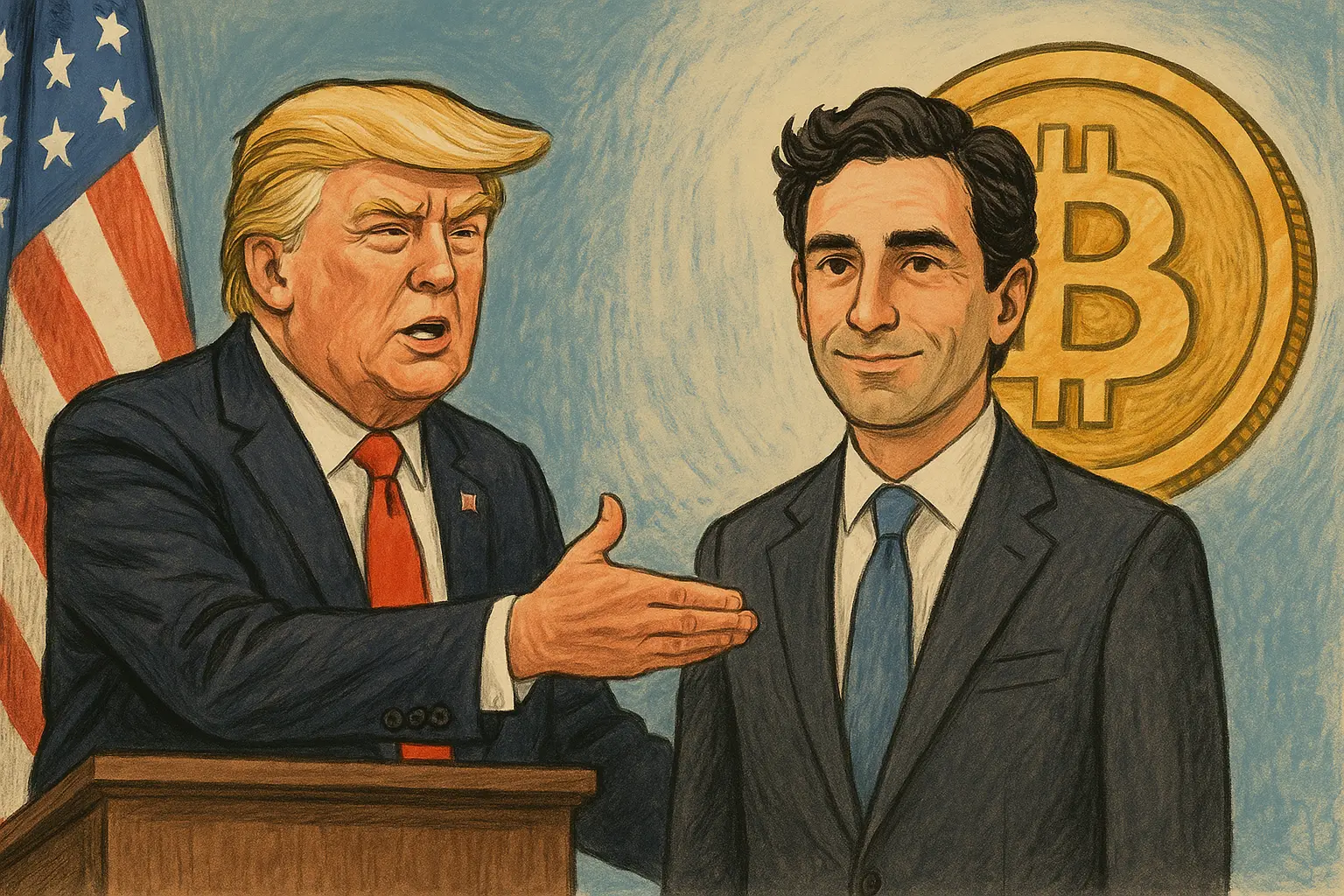
Trump announced his candidacy for Fed chairman on Friday, and Bloomberg called Kevin Walsh a foregone conclusion. Polymarket odds soared from 30% to 95%, and BlackRider fell to 3.4%. Walsh was seen as a hawk who would push for tightening, stating in July that Bitcoin could provide market discipline to “help policymakers understand right from wrong.” The market is expected to be hawkish, and the US dollar is strong, and US bond yields have risen.
Polymarket odds soar from 30% to 95%
Trump said on Thursday that he will announce his successor to current Federal Reserve Chairman Powell, whose term ends in May, on Friday morning. Bloomberg reported that people familiar with the matter revealed that the president is preparing to announce the nomination of Walsh. Reuters previously reported that Trump met with Kevin Walsh, who served as a Federal Reserve governor from 2006 to 2011, on Thursday, and a person familiar with the talks said Walsh impressed the president.
On prediction market Polymarket, Walsh’s odds of being nominated as the next Fed chairman surged from 30% to 95%, while the odds of previous frontrunner, BlackRock executive Rick Reed, plummeted to 3.4%. This drastic change in odds indicates a fundamental shift in market judgment on Trump’s decisions in a short period of time. Polymarket is a prediction market based on real money bets, and its odds tend to reflect market consensus more accurately than traditional polls.
Walsh has a 93% chance of being selected as a candidate for Fed chairmanship by Trump, similar to the odds of Reed and economist Kevin Hassett being selected as candidates at 5% and 2%, respectively. This overwhelming market expectation suggests that unless something unexpected happens, Walsh is almost certain to be Trump’s nominee. However, nominations still need to be confirmed by the Senate, and this process may trigger new variables.
Comparison of policy positions between Walsh and Reed
Monetary Policy: Walsh is hawkish and reed, while Reid is relatively moderate and dovish
Bitcoin attitude: Walsh acknowledges the role of Bitcoin supervision, while Reed’s position is unclear
Wall Street Background: Walsh is academic and policy-oriented, and Reed comes from BlackRock with rich practical experience
Bitcoin can oversee the disruptive discourse of policymakers
Walsh has a much more positive view of Bitcoin than Bauer, who essentially dismisses the role of cryptocurrencies in the U.S. economy. In an interview with the Hoover Institution in July, Walsh refuted the idea that Bitcoin could weaken the Fed’s ability to manage the economy, stating that Bitcoin could “provide market discipline.”
“Bitcoin doesn’t bother me. I think it’s an important asset that can help policymakers understand whether what they’re doing is right or wrong,” Walsh said at the time. “I think it can often be a very good overseer of policy.” This discourse is extremely rare among Fed officials, as most central bankers view Bitcoin as a threat or an insignificant speculative target.
Walsh’s logic is that when governments adopt overextended monetary policies, the market expresses distrust by allocating Bitcoin. The rise in Bitcoin prices often signals a decline in market confidence in fiat currencies, and this signal can serve as a warning to policymakers. Conversely, if monetary policy is appropriate and market confidence in fiat currencies is solid, Bitcoin’s relative attractiveness will decline.
This framework of “Bitcoin as a policy watchdog” has sparked heated discussions in the crypto community. Proponents see this as an official endorsement of Bitcoin as a store of value, while opponents question whether Walsh will actually adopt this concept in actual policy or if it is merely an academic discussion. In any case, if Walsh does become the chairman of the Federal Reserve, it will be the first time that someone has explicitly endorsed the role of Bitcoin in charge of U.S. monetary policy.
In contrast, Powell has repeatedly stated during his tenure that Bitcoin is a “speculative asset” with no practical use and is more suitable to be called “digital gold” rather than currency. This negative attitude has led the Fed to distance itself from cryptocurrencies during the Powell era and even remain silent on the SEC’s enforcement actions against the crypto industry. Walsh’s arrival could mark a historic shift in the Federal Reserve’s stance on cryptocurrencies.
A hawkish tightening stance is a double-edged sword for the crypto market
Walsh, widely seen as the nominee for Fed chairman, will push for fiscal tightening, reduce inflation, and exit quantitative easing. As the market increasingly expects Trump to choose a more hawkish Wash over Reed and Hassett, the dollar strengthens and US Treasury yields rise. This market reaction sheds light on the impact of Walsh’s potential policy stance.
A hawkish stance is a double-edged sword for the crypto market. On the one hand, tightening policies mean higher interest rates and lower liquidity, which puts pressure on assets like Bitcoin that do not generate cash flow. Historically, the Fed’s rate hike cycles have often corresponded to bear markets in cryptocurrencies as investors shifted to yield-bearing assets like Treasuries. If Walsh really pushes for aggressive tightening, it could be detrimental to the crypto market in the short term.
On the other hand, Walsh’s endorsement of Bitcoin as a “policy watchdog” could provide an official endorsement for Bitcoin, enhancing its status as a hedge against inflation and currency devaluation. If the Fed chairman publicly acknowledges Bitcoin’s supervisory role, it may trigger more institutions to include Bitcoin in asset allocation, viewing it as a hedge against central bank policy risks. This institutionalized demand will provide long-term support for Bitcoin.
Walsh’s hawkish stance may also clash with Trump’s political demands. Trump promised lower interest rates and stimulus during the campaign, but the hawkish Fed chairman may insist on independence and not cooperate with the White House’s political timeline. This potential policy clash could put Walsh’s nomination in the Senate confirmation process facing resistance. Democratic lawmakers may question whether Walsh will succumb to Trump’s political pressure, while Republican lawmakers may worry that excessive austerity will hurt economic growth.
Friday’s official announcement will provide more details, including Walsh’s specific views on the current economic situation, the policy path he plans to take, and his detailed stance on Bitcoin and cryptocurrency regulation. The crypto market will closely monitor these statements as the Federal Reserve chairman’s monetary policy stance has a significant impact on crypto asset prices.
Related Articles
Non-farm payrolls may unexpectedly increase by only 70,000! White House: It's not an employment recession, but a productivity revolution
Kevin Wash's Federal Reserve New Policy! Using AI to tame inflation, refusing to be a big buyer of U.S. bonds
Charlie Munger: How do I respond when assets drop by 50%?
Wosh is about to succeed as Federal Reserve Chair! The probability of a rate cut in June skyrocketed to 46%, boosting risk assets.
Gate Daily (January 30): Trump declares a national emergency and Cuban tariffs; The United States will announce a new chairman of the Federal Reserve next week
Why has Bitcoin's rebound today stalled? The Federal Reserve maintains interest rates, and the strong dollar returns.