


Bitcoin ATM Ban Coming: Minnesota Fights $540K Elder Fraud Epidemic
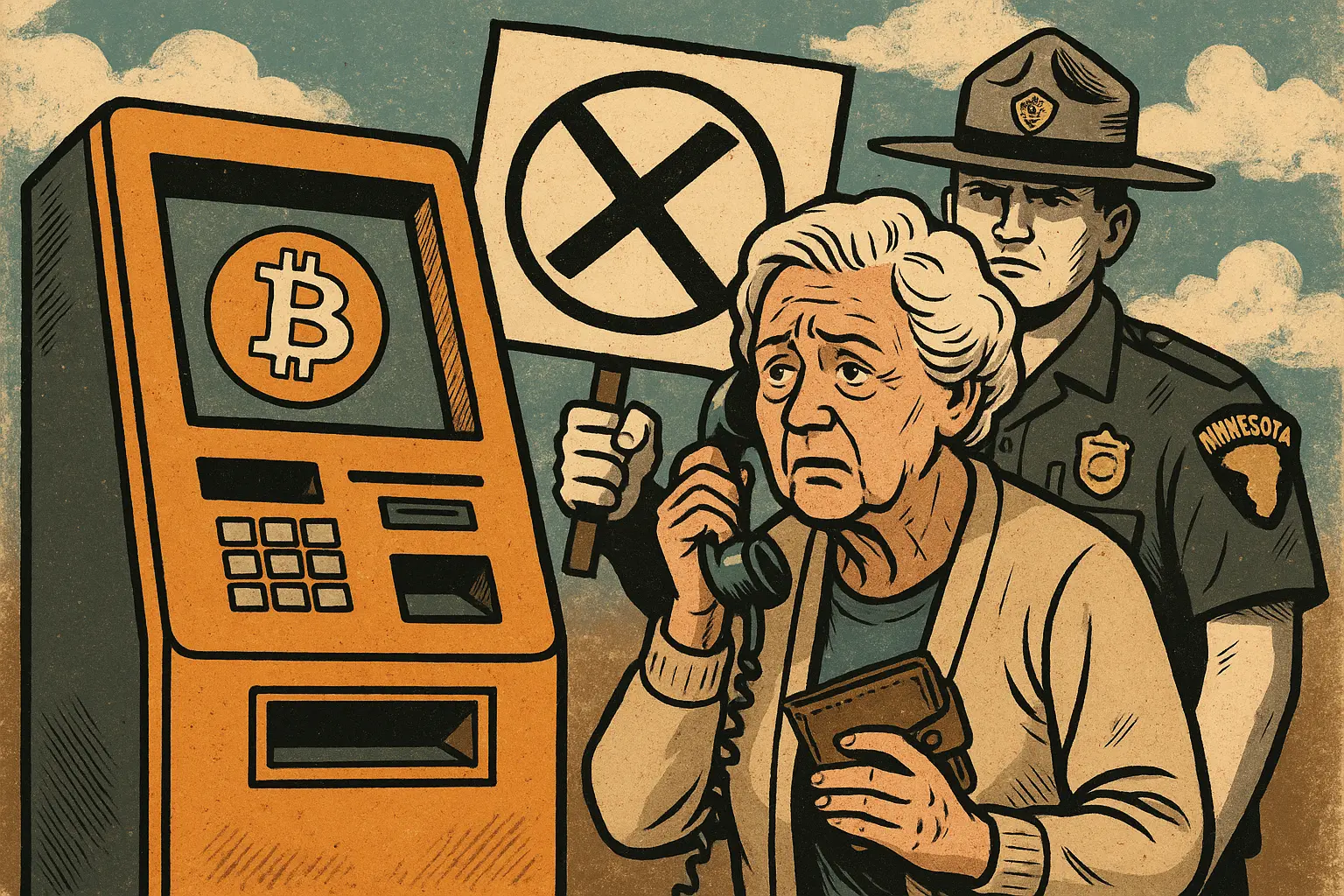
Minnesota Bill HF3642 bans Bitcoin ATM after 70 fraud complaints ($540K) targeting seniors. FBI reports $247M in Bitcoin ATM fraud nationally in 2024, with over-60s suffering 86% of losses. Kentucky chooses regulation over ban.
The $540,000 Minnesota Bitcoin ATM Fraud Crisis
In joint effort between Minnesota lawmakers, local law enforcement, and Department of Commerce, legislation has been introduced to ban crypto ATMs across the state in response to widespread fraud and financial abuse, particularly targeting elderly residents. Bill HF3642 would prohibit use of virtual currency kiosks accepting cash and debit cards following 70 official complaints of financial fraud totaling over $540,000 in 2025.
The catalyst for legislation was single incident in which police officers responded to call about senior citizen who appeared confused at gas station Bitcoin ATM. Upon further investigation, police discovered that she had been giving 50% of her monthly income to scammers, leaving her on verge of having to live out of her car. This heartbreaking case illustrates how Bitcoin ATM fraud destroys victims’ financial security and quality of life.
According to law enforcement, scammers often target elderly using false identities and emotional stories to gain power over them and coerce them into parting with pensions or retirement savings. The manipulation tactics are sophisticated, with criminals posing as grandchildren in trouble, IRS agents threatening arrest, or romantic interests requesting financial help. Once trust is established, scammers direct victims to Bitcoin ATM locations and walk them through transactions step-by-step over phone.
For scammers, appeal of cryptocurrency is obvious—converting cash into digital currency makes it nearly impossible for law enforcement to trace money and make arrests. Unlike bank wire transfers which can be reversed or frozen, Bitcoin ATM transactions are irreversible once confirmed on blockchain. This finality combined with cryptocurrency’s pseudonymous nature creates perfect storm for fraud that law enforcement struggles to combat effectively.
Nationwide Bitcoin ATM Fraud Reaches $247 Million
The Minnesota crisis represents microcosm of national Bitcoin ATM fraud epidemic. Nationwide, Americans reported losing $247 million in crypto ATM-related fraud in 2024—a 31% increase from 2023, FBI data shows. This acceleration demonstrates scammers are increasingly exploiting these machines as preferred fraud vehicle, refining tactics and scaling operations.
Among cases where victims’ ages were known, people over 60 accounted for 86% of losses in 2024. This staggering statistic reveals systematic targeting of elderly population who may be less familiar with cryptocurrency technology and more vulnerable to social engineering tactics. The average loss per incident exceeds $20,000, representing life savings or significant retirement fund portions for many victims.
Why Seniors Are Prime Bitcoin ATM Fraud Targets:
Technology Unfamiliarity: Less experience with cryptocurrency makes verification difficult
Trust Tendencies: Generational inclination toward trusting authority figures scammers impersonate
Financial Resources: Accumulated savings and regular pension income provide attractive targets
Social Isolation: Loneliness makes emotional manipulation tactics more effective
Limited Reversibility Knowledge: Unaware that Bitcoin ATM transactions cannot be reversed unlike credit cards
Gary Adkins, former felony prosecutor for Kentucky and AARP Kentucky volunteer state president, explains criminals stay on phone with victims “directing them step-by-step as they’re putting thousands of dollars into these machines.” The grift often starts with phone call “to get people thinking with their heart and not their brain—to get them excited or afraid,” Adkins states.
Crypto Industry Opposes Bitcoin ATM Bans
Cryptocurrency platforms are opposing the ban, arguing they’re being unfairly punished for criminal behavior beyond their control. Larry Lipka, in-house counsel at digital currency platform CoinFlip, acknowledges the problem but opposes proposed legislation.
“The scammers are vigilant. They’re terrible, and they’re stealing from Americans,” he told Gizmodo before arguing that existing safety protocols, including transaction limits and holding periods, were sufficient protection. “I know that these tools work because we’ve got 8,000 customers in the state, we have 12,000 transactions that happened in last year and less than 1% of those were refundable by customers.”
CoinFlip’s argument emphasizes that overwhelming majority of Bitcoin ATM transactions are legitimate, with fraud representing small minority of total volume. The company contends that education and enhanced security measures represent better solutions than outright bans that would punish legitimate users alongside criminals.
However, the Commerce Department disagrees with industry’s self-regulation approach. Sam Smith, government relations director at Department of Commerce, points to fact that just 48% of consumer complaints resulted in refund, while those refunds averaged just 16% of total fraud amount, as evidence that additional legislation is necessary. These statistics suggest existing industry protections are inadequate to prevent or remedy Bitcoin ATM fraud.
The refund data is particularly damning: when victims do receive refunds (less than half the time), they recover only fraction of stolen funds. This means majority of Bitcoin ATM fraud victims lose their money permanently despite reporting incidents to authorities and cryptocurrency operators. From regulatory perspective, this failure rate justifies more aggressive intervention than voluntary industry standards.
How Bitcoin ATM Scams Operate
Understanding Bitcoin ATM fraud mechanics reveals why these machines have become scammers’ preferred tool. The typical fraud sequence follows predictable pattern that law enforcement and advocacy groups have documented across thousands of cases nationwide.
Typical Bitcoin ATM Scam Sequence:
Initial Contact: Scammer calls victim posing as authority figure, romantic interest, or distressed family member
Urgency Creation: Story emphasizes immediate need for money (legal trouble, medical emergency, investment opportunity with tight deadline)
Isolation: Scammer keeps victim on phone throughout process to prevent consulting family or friends who might recognize fraud
Direction to Bitcoin ATM: Victim told to withdraw cash and visit specific Bitcoin ATM location
Transaction Guidance: Scammer walks victim through Bitcoin ATM interface step-by-step, often claiming victim is “protecting” money or “helping” someone
Irreversible Transfer: Once Bitcoin ATM transaction completes, funds are immediately transferred to scammer’s wallet and cannot be recovered
Repeat Exploitation: Successful scams often lead to additional requests as scammers drain victims completely
The sophistication of these operations should not be underestimated. Scammers use psychological manipulation techniques refined over decades, exploiting cognitive biases and emotional vulnerabilities. By maintaining phone contact throughout Bitcoin ATM transaction process, scammers prevent victims from pausing to think critically or seeking second opinions that would expose fraud.
Kentucky’s Regulatory Approach as Alternative Model
While Minnesota pursues outright Bitcoin ATM ban, Kentucky takes regulatory approach through House Bill 380 rather than prohibition. Daniel Roe, AARP Kentucky state advocacy manager, says organization is pushing for passage of this legislation to regulate machines rather than eliminate them entirely.
The regulatory framework acknowledges Bitcoin ATM technology has legitimate uses while implementing safeguards specifically targeting fraud scenarios. This balanced approach may prove more politically viable than outright bans, as it addresses fraud concerns without completely restricting access for legitimate cryptocurrency users who rely on Bitcoin ATMs for convenient crypto purchases.
AARP Kentucky is also combating Bitcoin ATM fraud through education via series of Scam Jam events highlighting criminals’ tactics. The free events include speakers from financial institutions, law enforcement and Better Business Bureau, with sessions held in Elizabethtown, Hopkinsville and Pikeville throughout 2026.
“If we can educate public about frauds and scams, people are better able to spot one,” Adkins says. “And if you can spot scam, you can stop scam.” This educational approach complements regulatory efforts, empowering potential victims to recognize manipulation attempts before losing money.
The Broader Debate: Access vs. Protection
As more senior citizens fall victim to fraud, state lawmakers face difficult policy balance. Bitcoin ATMs provide legitimate service allowing cryptocurrency purchases without bank accounts or complex exchange registrations. For unbanked populations and cryptocurrency enthusiasts valuing privacy, these kiosks offer accessibility traditional platforms don’t provide.
However, this same accessibility makes Bitcoin ATMs ideal fraud tools. The ease of converting cash to cryptocurrency without extensive identity verification or transaction reversibility creates environment where scammers thrive. Unlike credit card purchases that offer chargeback protections, or bank wires that can be frozen, Bitcoin ATM transactions are final within minutes.
Digital currency companies argue that outright bans represent overreach punishing innocent users. They contend that education, enhanced transaction limits, mandatory holding periods, and improved identity verification represent better solutions than prohibition. CoinFlip’s data showing less than 1% refund rate could indicate either that their protections work (preventing fraud) or that fraud goes unreported (victims don’t seek refunds).
The Commerce Department’s contrary interpretation—that 48% refund rate and 16% average recovery indicate protection failures—suggests existing measures are inadequate. If half of fraud complaints don’t result in any refund, and successful refunds recover only sixth of stolen amounts, then current Bitcoin ATM operator protections are clearly insufficient from consumer protection standpoint.
National Implications of Minnesota’s Bitcoin ATM Ban
As of now, approximately 350 licensed cryptocurrency kiosks operate in Minnesota, but digital currency companies across United States could be affected by legal precedent this bill sets. If Minnesota successfully implements Bitcoin ATM ban and demonstrates measurable fraud reduction, other states may follow similar approaches creating domino effect across crypto ATM industry.
The nationwide network of Bitcoin ATMs has grown dramatically in recent years, with tens of thousands of machines operating across United States. This expansion occurred largely without comprehensive federal regulatory framework, creating patchwork of state and local rules. Minnesota’s ban attempt could catalyze federal action establishing nationwide standards for Bitcoin ATM operation, consumer protection, and fraud prevention.
Crypto industry fears that state-level bans will fragment markets and create regulatory compliance nightmares for operators attempting to maintain nationwide networks. However, consumer protection advocates argue that absent effective industry self-regulation, state-level intervention represents necessary response to Bitcoin ATM fraud epidemic disproportionately harming vulnerable populations.
FAQ
Why are Bitcoin ATMs being banned in Minnesota?
Minnesota lawmakers introduced Bill HF3642 to ban crypto ATMs after 70 fraud complaints totaling $540,000 in 2025, with senior citizens comprising primary victims. One case involved elderly woman giving 50% of monthly income to scammers, nearly forcing her into homelessness.
How much money is lost to Bitcoin ATM scams nationally?
Americans lost $247 million to Bitcoin ATM fraud in 2024, up 31% from 2023 according to FBI data. People over 60 accounted for 86% of losses in cases where victim ages were known.
Why can’t Bitcoin ATM fraud money be recovered?
Bitcoin ATM transactions are irreversible once confirmed on blockchain. Unlike bank wires or credit card purchases, there’s no chargeback mechanism. Converting cash to cryptocurrency also makes tracing nearly impossible for law enforcement.
What protections do Bitcoin ATM operators currently provide?
Operators like CoinFlip implement transaction limits and holding periods. However, only 48% of fraud complaints result in refunds, with average recovery of just 16% of stolen amounts, suggesting protections are inadequate.
How do Bitcoin ATM scammers target victims?
Scammers call victims posing as authority figures, romantic interests, or distressed family members. They create urgency, keep victims on phone throughout process, direct them to Bitcoin ATMs, and walk them through transactions step-by-step to prevent critical thinking.
Are other states banning Bitcoin ATMs?
Kentucky is pursuing regulatory approach through House Bill 380 rather than outright ban. Minnesota’s legislation could set precedent inspiring other states to implement similar prohibitions if fraud rates don’t decrease through voluntary measures.
Related Articles
The US-Iran conflict escalation impacts global markets: oil prices surge, Asian stock markets decline, Bitcoin remains steady at $66,000
NYDIG: If AI leads to "loose monetary policy," Bitcoin could benefit
NYDIG Warning: AI May Trigger Monetary Easing Cycle, Potential Macro Bullish Signal for Bitcoin