


Iranian conflict does not shake Bitcoin mining hash rate; Iran accounts for less than 1% of global hash power.
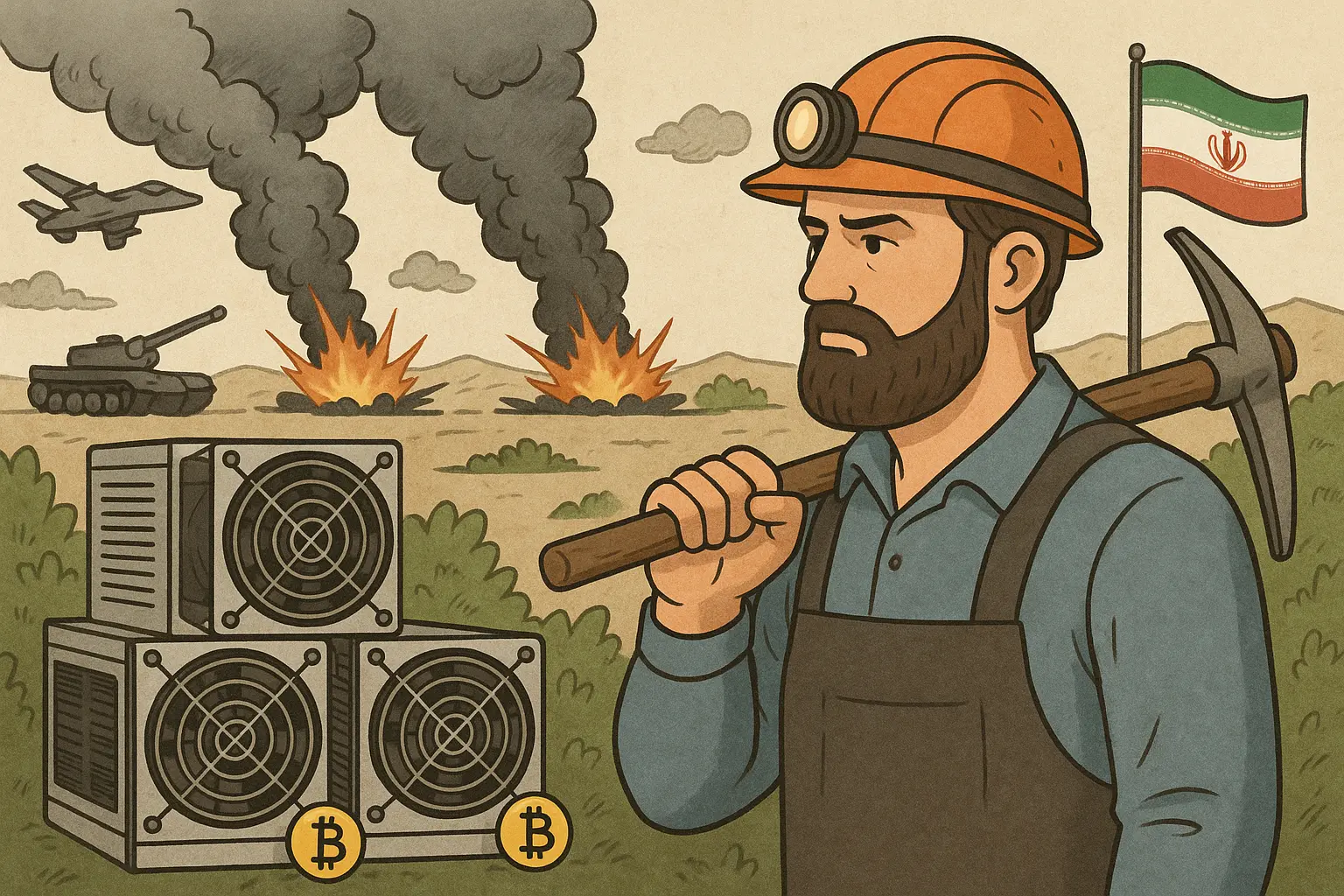
Industry analysts and mining operators agree that the escalation of military actions by the US and Israel against Iran is unlikely to cause significant disruptions to the global Bitcoin mining network, countering rumors circulating on social media platforms. Wolfie Zhao, Research Director at TheMinerMag, stated, “I believe this will not have any major impact on Bitcoin.” He denied claims that power outages triggered by the Iran conflict would materially affect the Bitcoin network.
Social Media Rumors vs Reality: Iran’s Hashrate Share Is Seriously Exaggerated
After the US and Israel launched the first strikes against Iran, panic spread rapidly on X platform. One widely circulated tweet warned: “If the Iranian regime collapses, ‘billions of dollars worth of Bitcoin will be sold off or lost forever,’ ‘5% of the global hashrate will disappear overnight,’ ‘427,000 mining machines will stop operating.’” However, industry data contradict these claims.
Ethan Vera, COO of Luxor Technology, estimates Iran’s actual share of global Bitcoin hashrate is less than 1%, far below the 5% figure circulated in rumors. “If there is a disruption, block times will not be significantly affected, and there will be no impact on the security of the Bitcoin network,” he pointed out.
Key Data on Iran Conflict and Bitcoin Mining Hashrate:
- Iran’s Global Hashrate Share: Less than 1% (Ethan Vera estimates), industry considers the 5% figure to be seriously exaggerated.
- Bitcoin Hashrate Data: About 986.19 EH/s after the first strikes on Feb 28; peaked at 1.1361 ZH/s on March 1; dropped slightly below 1 ZH/s on Tuesday morning.
- Hashrate Resilience: Even if Iran’s entire hashrate disappears, the impact on Bitcoin block times would be minimal.
- Historical Comparison: China’s comprehensive mining ban in 2021 caused a short-term global hashrate drop of over 50%, but Iran’s hashrate scale is not comparable.
- Mining Structure: Iran’s mining industry has long faced structural challenges such as unstable power supply, high equipment import costs, and complex regulations.
Vulnerability of Iran’s Crypto Ecosystem and Capital Outflows During Crisis
Although Iran legalized cryptocurrency mining in 2019, its development has been hampered long-term by unstable electricity, high import costs, and regulatory complexities. Chainalysis reported in January that Iran’s crypto activities are highly correlated with domestic and international political events, estimating that by 2025, Iran’s broader crypto economy could reach $7.78 billion, with a significant portion linked to state-affiliated entities.
Elliptic, a blockchain analytics firm, reported that within minutes after the US and Israel’s initial strikes, crypto asset outflows from Iranian exchanges surged by 700%, reflecting that ordinary Iranians view crypto assets as a tool to hedge against local currency volatility.
Analysts point out that the market volatility in Bitcoin caused by the war stems from overall risk sentiment shifts and geopolitical uncertainty, rather than supply chain disruptions from Iran’s mining activity interruptions.
Frequently Asked Questions
Why won’t the Iran conflict significantly impact Bitcoin’s hashrate?
Iran’s actual share of global Bitcoin hashrate is estimated to be below 1%, far less than the 5% rumor circulating on social media. Even if Iran’s entire hashrate disappears, it would not materially affect Bitcoin block times or network security, unlike the 2021 Chinese mining ban which caused a short-term global hashrate drop of over 50%.
Why are the rumors about a 5% hashrate collapse on social media wrong?
Iran’s mining industry has long faced structural issues such as unstable power and high equipment import costs, limiting its scale. Industry analyst Ethan Vera estimates Iran’s actual hashrate share to be less than 1%. Even if it vanished completely, the technical impact on the Bitcoin network would be negligible.
What is the real impact of the Iran conflict on the crypto market?
The true market impact comes from changes in risk sentiment and geopolitical uncertainty, not supply chain shocks. The 700% surge in crypto asset outflows from Iranian exchanges within minutes after the strikes indicates local residents are using crypto to hedge against domestic currency risks, rather than signaling a major disruption to global mining operations.
Related Articles
Lantern Festival coincides with a Blood Moon "once every 46 years"! Both the Taiwan stock market and the US stock market happen to be on the edge of a cliff—coincidence or fate?
Turkey Proposes 10% Crypto Tax: Presidential Power Could Shift Rates
New York Investment Maintains Federal Reserve Rate Cut Expectations, Oil Prices Surge Short-Term Difficulty in Shaking Policy Path
Japan's Financial Services Agency collaborates with GMO Coin and Bitbank to develop a crypto anti-money laundering pilot program, accelerating institutional investor deployment
The closure of the Strait of Hormuz can't stop Bitcoin's rebound! BTC, ETH, XRP prices rise across the board today