


Why did Bitcoin rise today? Iran signals negotiations, Trump announces maritime energy trade insurance
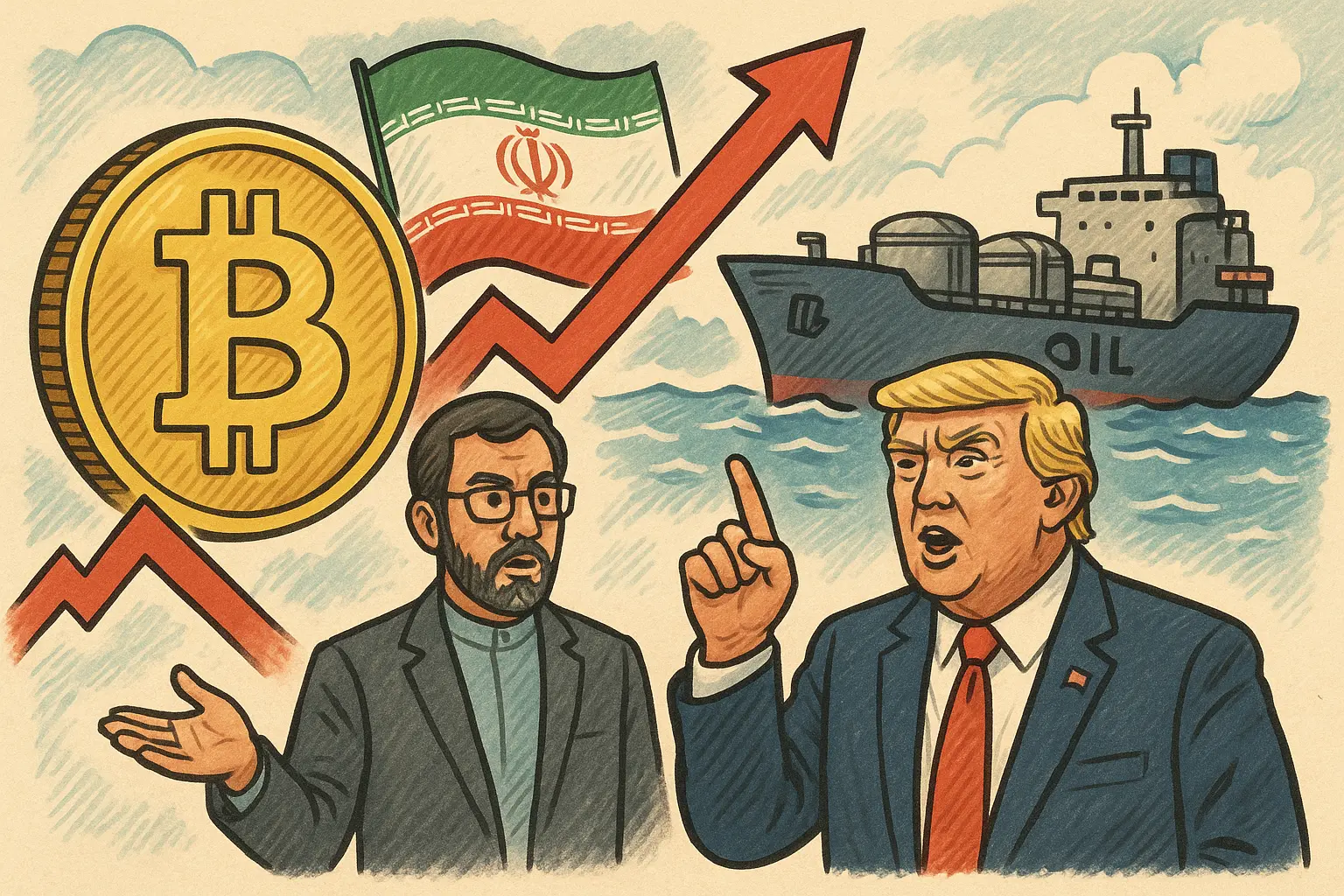
Bitcoin broke through the $72,000 key resistance level on March 5, driven by three major macro factors emerging simultaneously: Iran indirectly contacting the US CIA to send diplomatic signals, Federal Reserve official Steven Miran reaffirming support for potential rate cuts, and US Treasury Secretary Yellen announcing a series of arrangements to support oil transportation through the Persian Gulf.
Triple Macro Bullish Factors Co-Occurring
First: Iran Diplomatic Contact Signals De-escalation
The New York Times reports that Iranian intelligence personnel contacted the US CIA through indirect channels one day after the airstrike, exploring the possibility of negotiations. Market participants believe that any “contact signals” could ease pricing pressures from worst-case scenarios, although US officials remain skeptical of short-term de-escalation.
Second: US Announces Commitment to Energy Supply Chain Security
President Trump announced plans to provide political risk insurance for maritime trade through the Persian Gulf and to escort oil tankers through the Strait of Hormuz if necessary. Treasury Secretary Yellen stated on Wednesday that the US will issue “a series of announcements” regarding energy transportation in the Persian Gulf. Jim Awad, Senior Managing Director at Clearstead Advisors, noted that these statements reduce concerns over oil market disruptions and boost confidence for capital inflows into tech stocks.
Third: Fed Officials Reiterate Support for Rate Cuts
Fed official Steven Miran delivered a speech reaffirming that, despite ongoing inflation concerns, he supports potential rate cuts, citing a soft labor market as room for accommodative monetary policy, directly boosting market risk appetite.
Wednesday’s Economic Data Supports Risk Sentiment
Strong Wednesday data provided additional support for the rally. The ADP report showed 63,000 new private-sector jobs in February, beating expectations of 50,000; the ISM Services PMI rose to 56.1, above the forecast of 53.5, indicating accelerated service sector expansion.
However, S&P Global composite PMI fell to 51.9, and Nela Richardson, Chief Economist at ADP, pointed out that the “job hopping premium” dropped to record lows, indicating the labor market is not broadly strengthening. Market pricing for Fed rate cuts has become more cautious—total bets for rate cuts this year have fallen below 50 basis points.
Why Did Bitcoin Rise Today: Key Drivers at a Glance
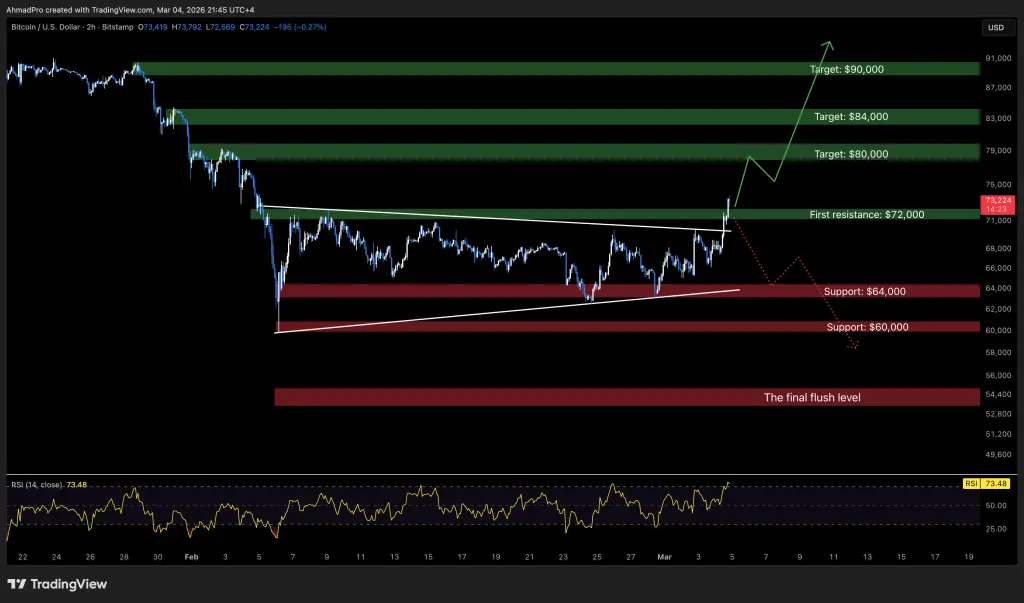
(Source: Trading View)
Geopolitics: Iran’s contact with CIA signals de-escalation of worst-case scenario pricing
Energy Supply: US escort commitments reduce risks of disruption in the Strait of Hormuz
Monetary Policy: Fed’s Steven Miran reaffirms support for rate cuts, dovish stance heats up
Economic Data: ADP employment beats expectations (63K vs. 50K); ISM Services PMI rises to 56.1
Technical: Breaks multi-week downtrend, reclaims $72,000 level
FAQs
How does Iran’s contact with the CIA affect Bitcoin?
Iran’s contact with the US CIA to explore a ceasefire is interpreted by the market as a potential de-escalation, easing the pricing pressure from geopolitical crisis fears accumulated over the past week. As a highly liquid risk asset, Bitcoin is also boosted by the overall market risk appetite recovery.
How does Fed rate cut expectations drive Bitcoin higher today?
Miran’s reaffirmation of support for rate cuts is seen as a continuation of dovish signals. Expectations of rate cuts typically lower the opportunity cost of capital, encouraging investors to increase holdings in risk assets including cryptocurrencies. However, not all Fed members agree on this path, and policy uncertainty remains.
What are the next technical levels to watch after Bitcoin surpasses $72,000?
Technical analysis indicates that breaking the multi-week downtrend and reclaiming $72,000 is a key short-term momentum shift. If this level becomes support, the first upside target is $80,000; if it falls back below $72,000, key support levels are at $64,000 and $60,000.
Related Articles
Spot and derivatives trading volumes have long ranked among the top three globally.
The top account in Coincoin's real trading profits is currently long on $30.31 million worth of ETH and BTC.
Overview of popular cryptocurrencies on March 5, 2026, with the top three in popularity being: Bitcoin, Ethereum, XRP
PI (Pi) increased by 7.51% in the past 24 hours
XRP Today News: Ripple Implements AI-Driven Secure Ledger, Upgrades Security After Vulnerability Exposure