I. Many People Misunderstand Web3
When people first encounter Web3, they often focus on “blockchain technology,” such as:
- How blockchain works
- What a consensus mechanism is
- How mining operates
These topics are important, but for most users, they’re not the key to understanding Web3. What truly determines how Web3 operates is something more fundamental: the account system.
In other words, in the world of Web3, the most important questions aren’t about “what the chain is,” but rather:
- Who controls the assets
- How assets are controlled
- How permissions are verified
Understanding this is the true entry point to Web3.
II. Web2 Accounts: Platform-Granted Permissions
In the Web2 world, almost all internet services rely on an account system. Users need to register accounts, set passwords, and then log in to platforms to use their features.
This account model has several obvious characteristics:
- Accounts are created by the platform
- Permissions are granted by the platform
- Data is stored on platform servers

When you log in to a platform, you’re essentially proving one thing to the platform: “I am the user of this account.” If the platform accepts this, you can continue using its services; if it rejects you, you lose access.
Therefore, the essence of Web2’s account system is a centralized identity verification mechanism. The platform is both rule-maker and enforcer.
III. The Shift in Web3: Accounts Are No Longer Controlled by Platforms
In Web3, the concept of accounts has changed significantly.
On blockchain networks, each user corresponds to an address. This address looks like a string of random characters, but in reality, it represents a whole new way of establishing identity.
Unlike Web2, Web3 addresses have these features:
- No registration required
- Not dependent on any platform
- Generated by cryptographic algorithms
More importantly, behind each address is a private key—which is the core of the entire system.
Simply put:
- Address: Public identity
- Private key: True control
Whoever holds the private key controls the assets associated with that address.
IV. What Exactly Does a Private Key Mean?
The importance of private keys is reflected in several aspects:
- Ability to sign transactions
- Ability to transfer assets
- Ability to authorize contract operations
When you perform actions in Web3—such as transferring funds, trading, or participating in DeFi—it all boils down to one thing: using your private key to sign an operation.
The blockchain network doesn’t care who you are; it only checks whether an operation is signed by the correct private key. If verification passes, the transaction executes.
Therefore, from a system design perspective, Web3 has no concept of “account login,” only:
- Signature
- Verification
- Execution
This is why Web3 is often called a “trustless system.”
V. The Essence of Wallets: More Than Asset Storage—They’re Signature Tools
Because private keys are at the core of Web3, the role of wallets is often misunderstood.
Many users think of wallets as “places to store coins,” which isn’t entirely wrong in terms of usage. For example, hardware wallets (cold wallets) are often used for long-term asset storage, so they feel like “bank accounts.”
But technically, assets are not stored in wallets—they’re always recorded on the blockchain. What wallets actually control is access and operation permissions for these assets.
In other words, the core functions of a wallet are:
- Managing private keys
- Initiating and signing transactions
- Serving as the user’s gateway to interact with the blockchain
So rather than calling wallets “storage tools,” it’s more accurate to say they’re asset control tools and identity/permission management tools.
Currently, common wallets in Web3 include MetaMask and Gate Wallet.
These wallets typically provide several core functions:
- Generating and managing private keys
- Connecting to blockchain applications
- Signing transaction requests
- Viewing on-chain asset status
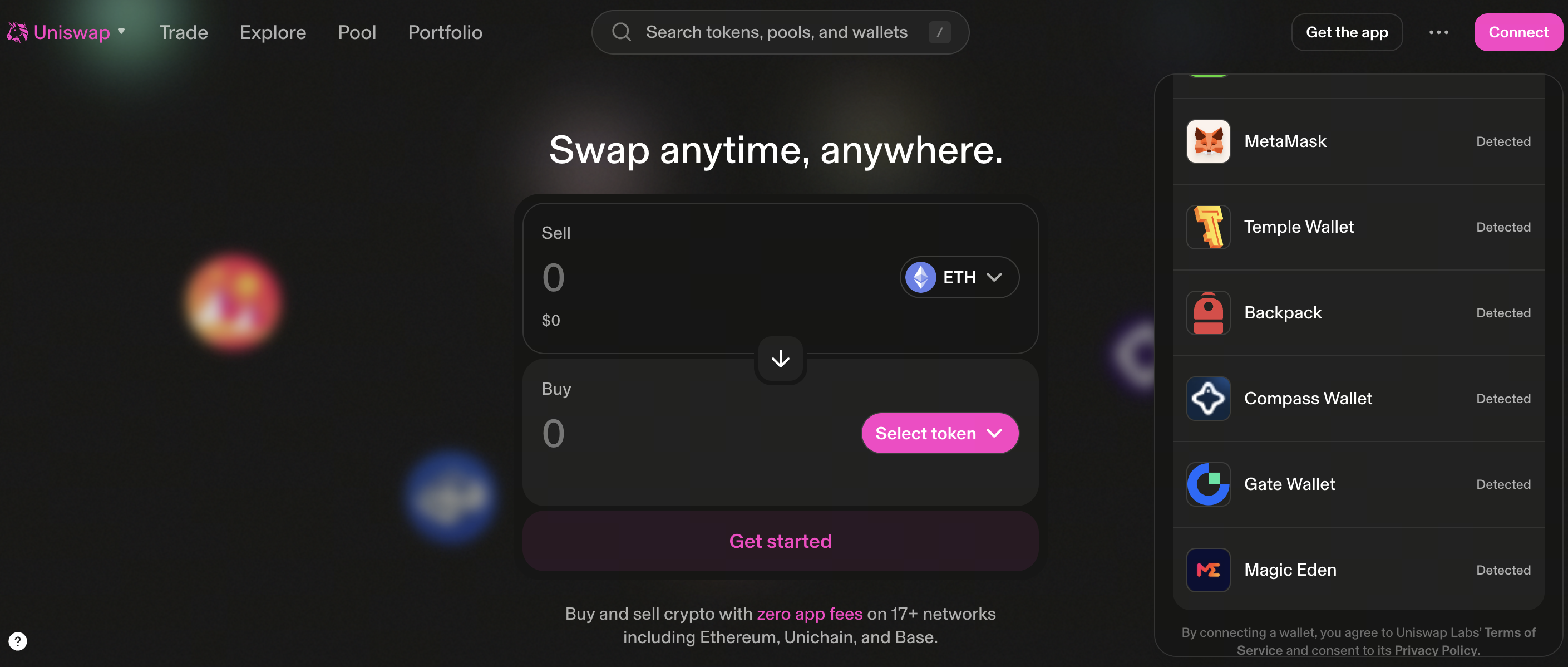
Image source: Uniswap official website
When accessing a DeFi or NFT application, you’ll often see a button: Connect Wallet. This step isn’t about “logging in” in the traditional sense—it allows the application to read your address information and request corresponding signature authorization.
VI. The Real Logic of Web3 Through Account System Changes
From a broader perspective, the difference between Web3 and Web2 can be summarized as a change in account systems.
In Web2:
- Platforms own account systems
- Users are dependent on platforms
- Permissions are distributed by platforms
In Web3:
- Users own private keys
- Users directly control their assets
- Applications can only request authorization
This shift leads to an important outcome: applications no longer own users—they compete for them.
That’s why so many new protocols and applications appear in the Web3 ecosystem—users can switch at any time without having to rebuild their identity.
Many call this model: an internet where users own their identities.
VII. New Challenges: Managing Private Keys Isn’t Easy
While private key systems give users true control, they also introduce new challenges.
For ordinary users, managing private keys is very serious business. One mistake could mean permanent loss of assets.
Common risks include:
- Mnemonic phrase leaks
- Signing on phishing websites
- Malicious contract authorization
- Improper private key storage
For these reasons, security has always been one of users’ top concerns in Web3.
As the market grows, these issues become increasingly complex, making it hard for regular users to assess risks on their own.
VIII. AI Is Starting to Change This
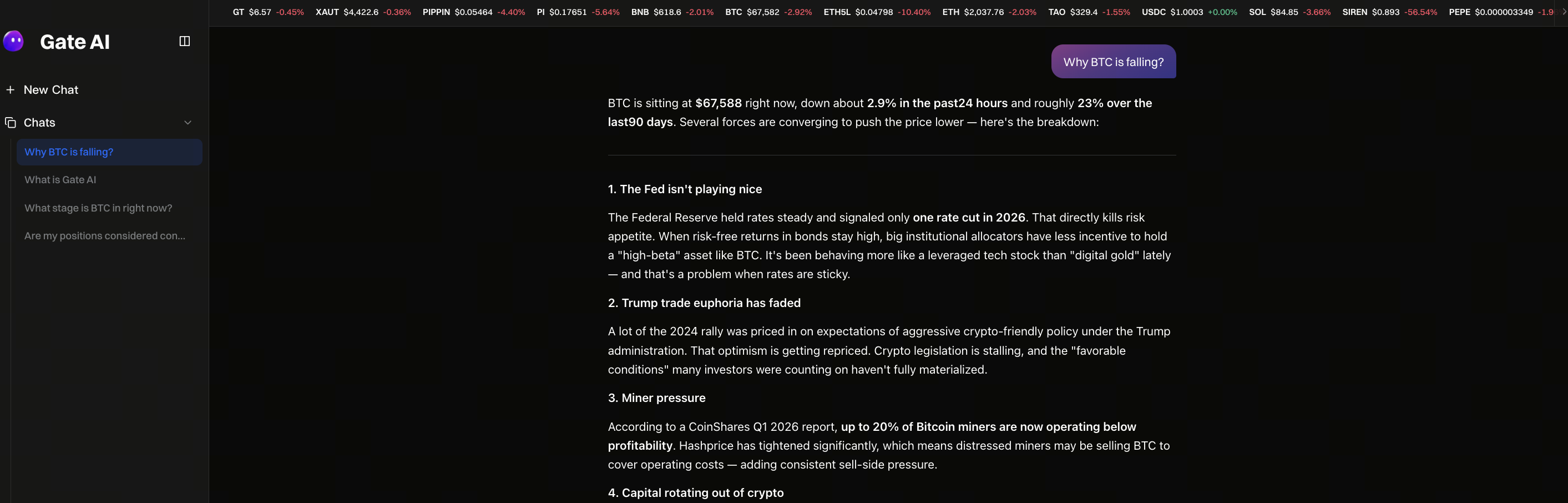
Image source: GateAI page
With advances in AI tools, Web3’s account system is becoming easier to understand and manage.
AI mainly plays several roles here:
- Helping identify risky transactions
- Analyzing address behavior
- Explaining complex contract operations
- Providing security alerts
For example, some AI tools can analyze an address’s transaction history and detect abnormal risks. Other systems can alert users to potential problems before they sign a transaction.
Gate’s Gate for AI tool suite aims to integrate AI with trading, data analysis, and wallet usage scenarios—helping users get more information before making decisions.
In the long run, this model may become an important development direction for Web3: users control private keys while AI helps them understand risks.
IX. The True Significance Behind Account Systems
Understanding Web3’s account system means understanding a much bigger shift.
The internet used to be about platforms controlling users; now Web3 aims to build a new relationship:
- Users own assets
- Users own identities
- Users have data access rights
Applications are no longer control centers—they’re service providers.
This isn’t just a simple technical upgrade; it’s a redesign of internet structure.
So when we talk about Web3, we’re not just discussing blockchain—we’re talking about changes in the structure of internet power.