I. The Default Structure of the Internet: Platforms Control Everything
Before understanding Web3, we need to answer a more fundamental question: How does the internet operate today?
The social platforms, trading platforms, and content platforms we use daily are essentially all part of Web2. In this structure, users create content and data, while platforms store, manage, and distribute this data. Users seem to be “using the internet,” but in reality, they are “using platforms.”
This model can be simplified as:
- Users generate data (content, transactions, behavior)
- Platforms store data (servers/databases)
- Platforms set rules (recommendations, bans, monetization)
This structure has dramatically increased efficiency over the past twenty years, allowing internet products to expand rapidly. However, it carries an important premise: data ownership and control do not belong to users, but to platforms. In other words, users are not asset owners—they are more like “participants in the platform ecosystem.”
II. Core Contradiction: Users Create Value But Don’t Own Value
The problem with Web2 is not about “insufficient functionality,” but about its underlying structural asymmetry.
Users invest time, energy, and even money on platforms, gradually accumulating accounts, followers, content, and influence—but these assets lack true “ownership.” Once users leave the platform, this value often cannot be taken or continued.
This contradiction is mainly reflected in several areas:
- Assets cannot be transferred: accounts, followers, and data cannot migrate freely
- Rules are uncontrollable: platforms can change algorithms or policies at any time
- Earnings depend on distribution: monetization depends on platform design
A common example: An account with many followers is instantly worthless if banned. This isn’t an isolated case—it’s a widespread phenomenon under the Web2 structure.
The core problem of Web2 is that users help create value but do not truly own that value.
III. The Starting Point of Web3: Beginning with Bitcoin
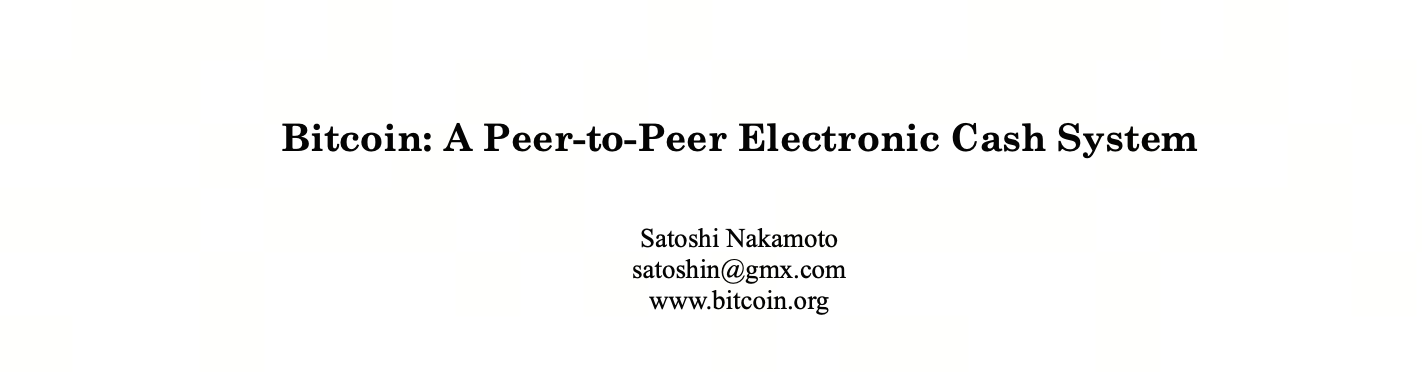
Source: Bitcoin Whitepaper
Web3 didn’t emerge to “optimize experience”—it arose to address these structural issues. This shift is generally seen as beginning with Bitcoin. Although it was initially designed as a peer-to-peer electronic cash system, its real significance lies in giving digital assets “ownability” for the first time.
Bitcoin’s core innovations can be summarized as three points:
- Assets are recorded on the blockchain, not platform databases
- Ownership is controlled by private keys, not account systems
- Data cannot be arbitrarily altered and is publicly verifiable
These three points jointly establish a new asset structure. In this structure, users no longer rely on platforms to prove or maintain assets—they directly control assets through cryptographic mechanisms.
This is also the essential difference between Web3 and Web2.
IV. Structural Change: From “Account System” to “Private Key System”

Source: X Platform Registration/Login Page
In Web2, users participate via “accounts”:
- Log in to accounts
- Use platform features
- Accept platform rules
Accounts are essentially “permission containers,” with control always held by the platform.
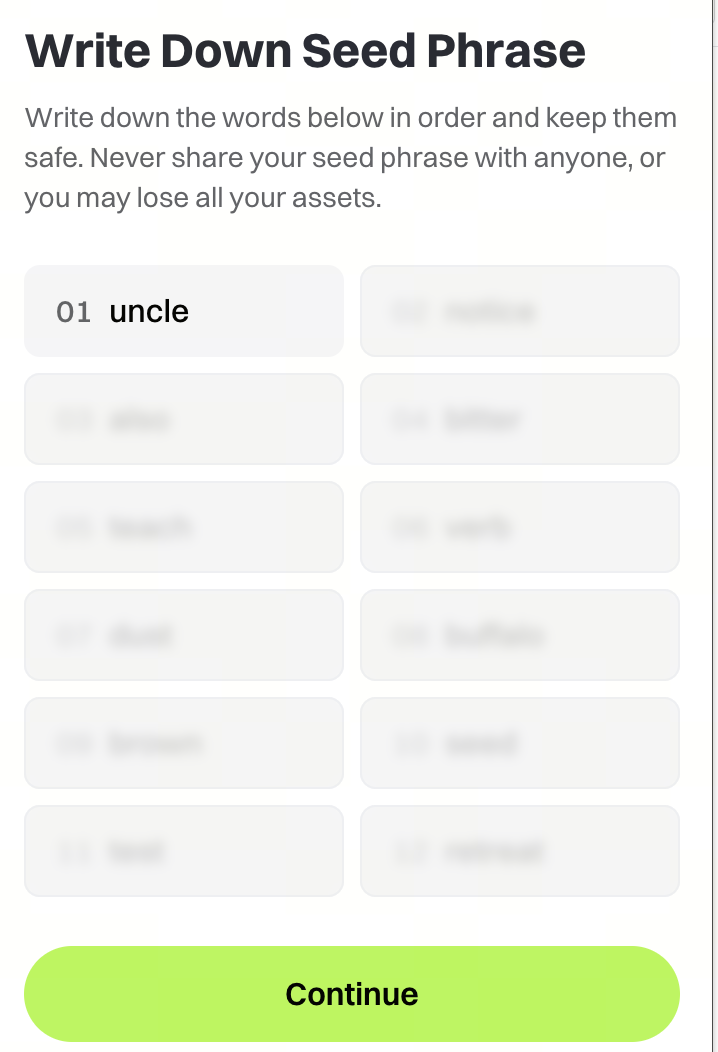
Source: Gate Wallet Page
In Web3, the core is no longer accounts—it’s “private keys.” A private key can be understood as a unique key with these characteristics:
- Held by the user personally
- Cannot be altered or revoked by third parties
- Directly corresponds to asset control
In practice, private keys usually aren’t presented as long strings of complex characters; instead, they appear in a more recordable form called a “Mnemonic Phrase.”
A mnemonic phrase typically consists of 12 or 24 English words; essentially, it’s an encoded expression of the private key. With these words, users can recover their full private key whenever needed and regain asset control.
Thus, we can understand it as:
- Private key: actual control (underlying layer)
- Mnemonic phrase: readable backup form of private key
Because a mnemonic phrase can restore a private key, if leaked, it’s equivalent to full asset control being transferred. This is the most critical security point in Web3.
The shift from account systems to private key systems marks the internet’s transition from “platform control” to “user control.”
V. The Core Change in Web3: Reconstructing Ownership Structure
When assets no longer depend on platforms but exist directly on the blockchain, the entire logic of internet operation changes.
Structurally, this shift can be understood as:
- Web2: User → Platform → Asset
- Web3: User → Blockchain → Asset
In Web2, the platform is an intermediary; in Web3, the blockchain becomes infrastructure.
This brings several key impacts:
- Users can truly “own” digital assets
- Assets can be transferred freely without platform permission
- Rules are more transparent and executed by code
Thus, Web3 is often described as “decentralized,” but more accurately, it redistributes asset control from platforms back to users.
VI. Owning Assets ≠ Understanding Assets
Once Web3 solves the “ownership problem,” a new issue arises. Compared to Web2, Web3 is more complex:
- On-chain data is hard to interpret
- Protocol mechanisms are intricate
- Many types of tokens exist
- Market information is highly fragmented
Users may have asset control but still face high cognitive barriers in practice.
Specifically, these challenges include:
- Difficulty judging project quality
- Difficulty identifying potential risks
- Difficulty understanding market structure
- Difficulty making sound decisions
In other words, Web3 solves “who owns assets,” but not “how to understand assets.”
VII. The Arrival of AI: Filling the Gap in Understanding and Decision-Making
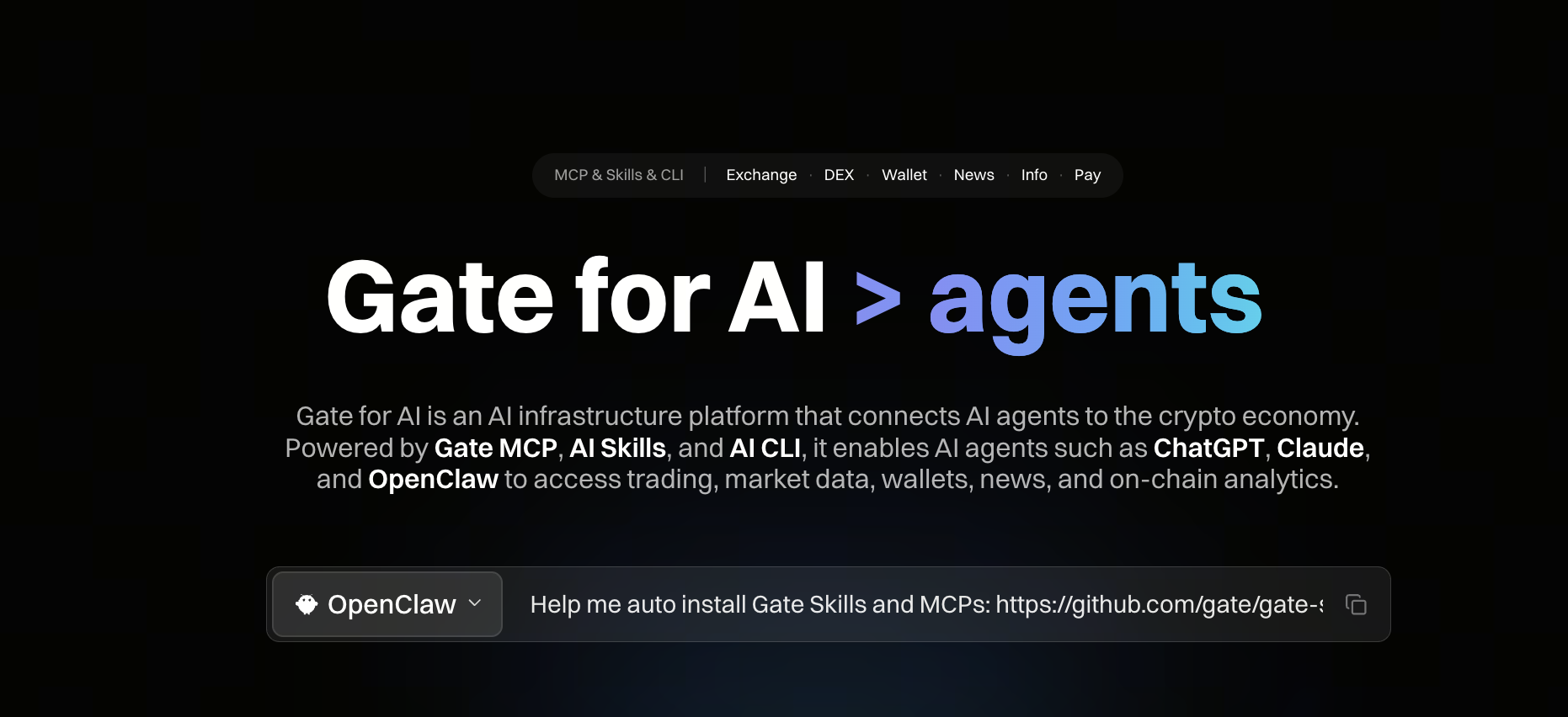
Source: Gate for AI Page
This is where AI starts entering Web3.
AI’s role isn’t to replace blockchain—it’s to supplement its capabilities so users can understand and use Web3 more efficiently.
In practice, AI mainly serves these functions in Web3:
- Information organization: turning complex data into structured conclusions
- Risk identification: analyzing address behavior and potential risks
- Market analysis: integrating market trends, news, and on-chain data
- Decision support: providing strategic references and operational advice
Tools like Gate for AI have begun embedding AI into trading, data analysis, and information access scenarios—the goal is to lower users’ cognitive costs so that Web3 isn’t limited to just a few “tech-savvy” individuals.
But it’s important to note that current AI has clear capability boundaries—it cannot replace users in making final decisions.
These boundaries mainly include:
- Information dependency: AI analysis relies on existing data/models and information quality; conclusions aren’t guaranteed accurate
- Understanding limitations: AI explanations for complex protocols or new mechanisms may be simplified or even biased
- Real-time constraints: On-chain data changes rapidly; AI may not always reflect the latest status in time
- Non-replaceable judgment: AI provides references but cannot bear risk; final decisions must still be made by humans
Therefore, AI should be seen as a tool for improving understanding efficiency—not a system that replaces judgment.
In Web3’s highly volatile and complex environment, AI’s value lies in lowering cognitive barriers—not eliminating risk itself.
VIII. Moving Toward the Next Stage: Intelligent Web3
As Web3 and AI gradually merge, a new direction emerges—“Intelligent Web3.”
The core features of this stage are:
- Users not only control assets,
- but also use AI to understand assets,
- and progressively achieve intelligent decision-making and execution.
This evolution can be viewed as three stages:
- Web2: solves the “connection problem”
- Web3: solves the “ownership problem”
- AI: solves the “understanding and execution problem”
With all three combined, the internet will evolve from an “information network” into a network driven by both “value and intelligence.”
IX. Lesson Summary: Understanding the Starting Point of Web3
Back to the original question—what problem is Web3 solving?
It can be summarized in three points:
- The core problem of Web2 is users don’t own assets
- The core change in Web3 is restructuring ownership
- The addition of AI enables users to truly understand and use these assets
Therefore, Web3 is not just a collection of blockchain or cryptographic technologies—it’s a transformation in how assets, power, and information are distributed.
Understanding this is the first step into the world of Web3.